



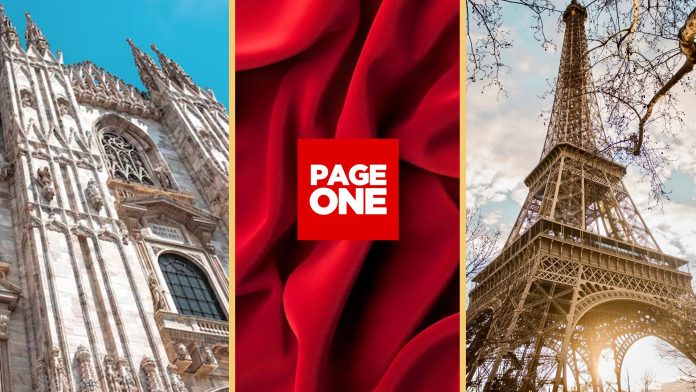






From a chance meeting at a pop-up store to a sofa turned into a runway piece, the guests and creatives of Milan Fashion Week reveal how people find their way in, and why fashion still has something to say.
From the outside, Milan Fashion Week looks like a parade of perfect moments: the front row, the flashbulbs, the final walk. From the inside, it looks a little different.
“I think people don’t understand how much logistics it is and how much you’re not going to have time to even eat,” says stylist Ilaria Bressi, who attended the DAVii show this season. “You’re just going to go from event to event drinking and having small bites, and that’s all you’re going to have, but it’s super fun.”
That mix of exhaustion and delight ran through every conversation PAGEONE Media’s Fashion Correspondent Arne Gogo had in Milan. Behind the spectacle are smaller stories: how a guest earns a seat, who dresses them, and whether the clothes on the runway still carry an idea of their own.
The Invitation: How A Seat Is Really Won
For many guests, the road to a Milan front row does not begin with a press list. It begins with a person.
Dr. Dharma, the creator known online as the Nagging Doctor, traces her invitation to a shopping trip in San Miguel, Mexico, a few years ago. She wandered into a pop-up store and was struck by the clothes.
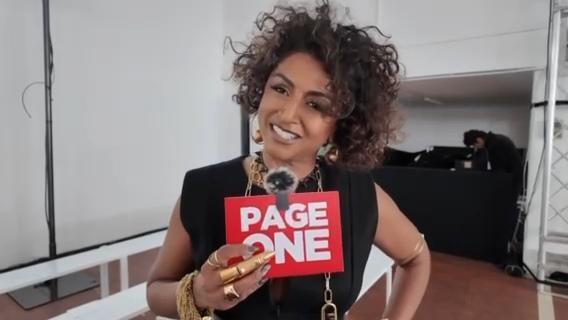
“I thought, this is amazing design. How do I get some? And he’s like, I designed it,” she recalls. “I was like, he did not design this stuff. And he’s like, no, I’m the designer.”
The designer was Neithan Herbert. She bought a few pieces, then suggested drinks. “That was the beginning of the end,” she laughs. “We have been friends.” Her takeaway is simple: “Being nice to people really will work out sometimes in your favor.”
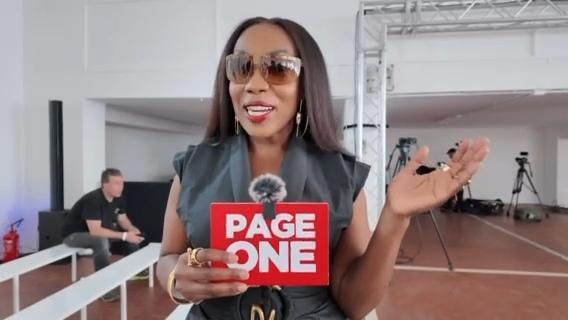
Sarah, attending her first Neithan Herbert show this season, arrived the same way, one connection removed. “It’s kind of magical, I can’t believe it,” she says. “A friend of mine met Neithan over a year ago and had such a great connection that she got invited and I got to come along.”
Two guests, two paths, one common thread. At a show like this, the guest list is shaped less by status than by relationships, built at a pop-up counter or over a drink, and passed from one friend to the next.
Inside The Week: Dressed, Seated And On The Move
Once inside, the experience is personal down to the last thread. Dr. Dharma arrived dressed head to toe by Herbert himself, in a look from his previous season: a wool-blend piece paired with a sheer skirt. She says wearing it made her feel amazing.
The outfit was the result of a friendly negotiation. Herbert leans toward a purist approach, but he made room for a touch of what he jokingly calls her “American excess.” His guiding advice was simple: “If you love it, wear it.” For Dr. Dharma, that styling made all the difference.
For Sarah, the most memorable moment came from the seat beside her. She met Pepe, a fashion designer who had moved to Milan from elsewhere in Italy and who arrived dressed entirely in red, a choice that, to Sarah’s surprise, echoed elements of the collection on the runway. She describes the coincidence as almost surreal.
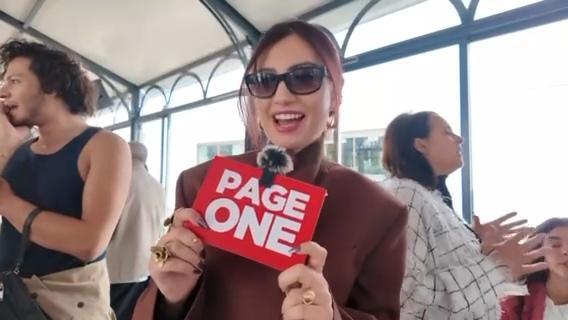
Behind those front-row moments is the pace Bressi describes: back-to-back events, little time to sit down, and meals reduced to small bites between shows. It is tiring, but by her account, it is also a great deal of fun.
What stands out in these accounts is how little of the week is about the runway alone. The clothes matter, but so do the conversations around them, the trust between a designer and the person wearing his work, and the chance encounters that happen between seats. Fashion Week is often imagined as a display meant to be watched from a distance, yet for those inside it, the experience is shaped just as much by the people they meet and the small, personal choices they make along the way.
Clothes That Still Speak
Fashion today is often described as a business of brands, visibility and logos. Simone Botte, creative director of Simon Cracker, answers that idea through his materials.

“For me it’s very important, the home, like an inspiration and material too,” Botte says. Since entering the fashion system, he has built his work on upcycling household fabrics: “home textile and sofa and other things.”
In his hands, the idea lives in the cloth itself. A garment cut from a sofa cover carries a past life, a domestic memory and a quiet argument against waste before anyone reads the label.
Dr. Dharma reached a similar conclusion from the other side of the transaction, as a wearer. What drew her to Herbert’s work was not the name. “I love the fact that his clothes have meaning and are much more authentic than maybe some of the other little trinkets I buy,” she says.
A designer and a guest, speaking separately, arrive at the same point. Clothes can still speak for themselves, as long as there is something in them worth saying.
Milan, A Second Home
When asked where everyone ends up once the shows are over, Botte does not name a bar or a party. He names the city.
“It’s not important which fashion week you show your collection. It’s Milan,” he says. “Milan is very important, because for me it’s home. A lot of years I’m here and it’s a second home, I think.”
That may be the truest picture of Fashion Week from the inside. Invitations are passed between friends, outfits are negotiated between purists and maximalists, and meals are traded for small bites. And Milan stays the place people keep coming back to.
Dr. Dharma needed only a few words for it: “Fashion heaven, baby.”
For all its polish, Milan Fashion Week is ultimately held together by people. A friendship sparked at a pop-up store becomes a front-row seat, a designer’s styling becomes a guest’s confidence, and a worn sofa cover becomes a statement about what clothes can mean. Through Arne Gogo’s conversations on the ground, a quieter side of the week comes into view, one built on connection, care and conviction rather than spectacle alone. The runway may be where fashion is shown, but it is in these personal stories that fashion proves it still has something to say.


