



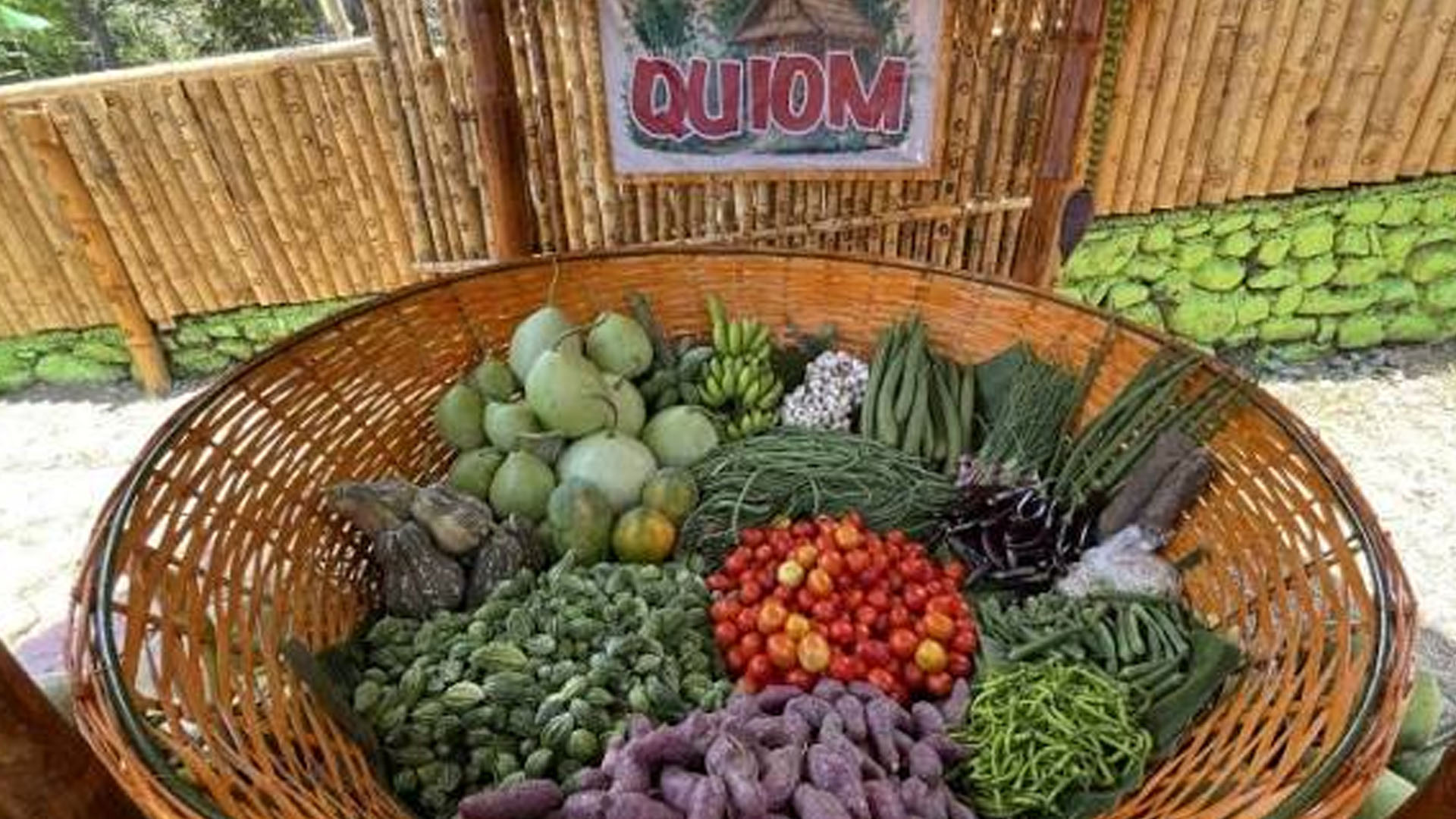







The establishment of climate-resilient food gardens is being promoted in Ilocos Norte as a practical way to strengthen household and community food security amid the increasing effects of climate change.
Funded by the Department of Science and Technology-Philippine Council for Agriculture, Aquatic and Natural Research and Development (DOST-PCAARRD) under its Galing PCAARRD Kontra Krisis program, this initiative encourages families, schools, barangays, and community groups to grow vegetables, indigenous food plants, and other nutritious crops using sustainable and climate-adaptive gardening practices.
In Ilocos Norte, the program is being implemented in partnership with the state-run Mariano Marcos State University, through its Natural Resources Conservation and Management Center (NRCMC), to help communities address economic, environmental, and energy-related challenges through science, technology, and innovation in agriculture, aquatic, and natural resources.
Dr. Menisa Antonio, project leader of the food garden project, told the Philippine News Agency on Thursday that the program promotes practical solutions aimed at strengthening food security, generating livelihood opportunities, and building community resilience.
Among its initiatives are the distribution of quality root-crop planting materials, promotion of root-crop food products as sustainable food alternatives, agri-based livelihood assistance, and adoption of science-based practices such as vermicomposting, natural pest management, fertigation, and efficient water-use technologies.
“Site screening is ongoing with interested partners. Beneficiaries are in group including Barangays, 4Ps (Pantawid Pamilyang Pilipino Program), TUPAD (Tulong Panghanapbuhay sa Ating Disadvantaged/Displaced Workers), senior citizens, or schools,” she said.
The approach is consistent with current efforts in the province to promote climate-smart agriculture, community food gardens, kitchen gardens and sustainable food production.
The National Nutrition Council has been promoting home and community gardens as part of climate-resilient nutrition strategies, while Ilocos Norte has also been expanding household composting to support backyard food production.
School principal Rolen Oracion of the Eladio V. Barangay Elementary School in San Nicolas town said a food garden provides a steady source of fresh food while reducing household dependence on market supplies.
“A garden grows more than vegetables —it grows joy,” she added, as her school promotes the cultivation of lowland and indigenous vegetables for school children to appreciate gardening and for their parents to be inspired by it.
Ilocos Norte’s experience with Gulayan sa Barangay and community foodscapes demonstrates how unused spaces can be transformed into productive gardens that promote food security, healthy eating, and community participation.
Climate-resilient gardening is already being practiced in households here, particularly in rural areas where practices such as water-efficient irrigation, composting, crop diversification, use of locally adapted varieties, and soil improvement are being adapted.
These measures help gardens remain productive despite drought, heavy rains, and other weather-related challenges.
More than simply growing vegetables, the initiative empowers communities to become more self-reliant, environmentally responsible, and resilient. (PNA)


