



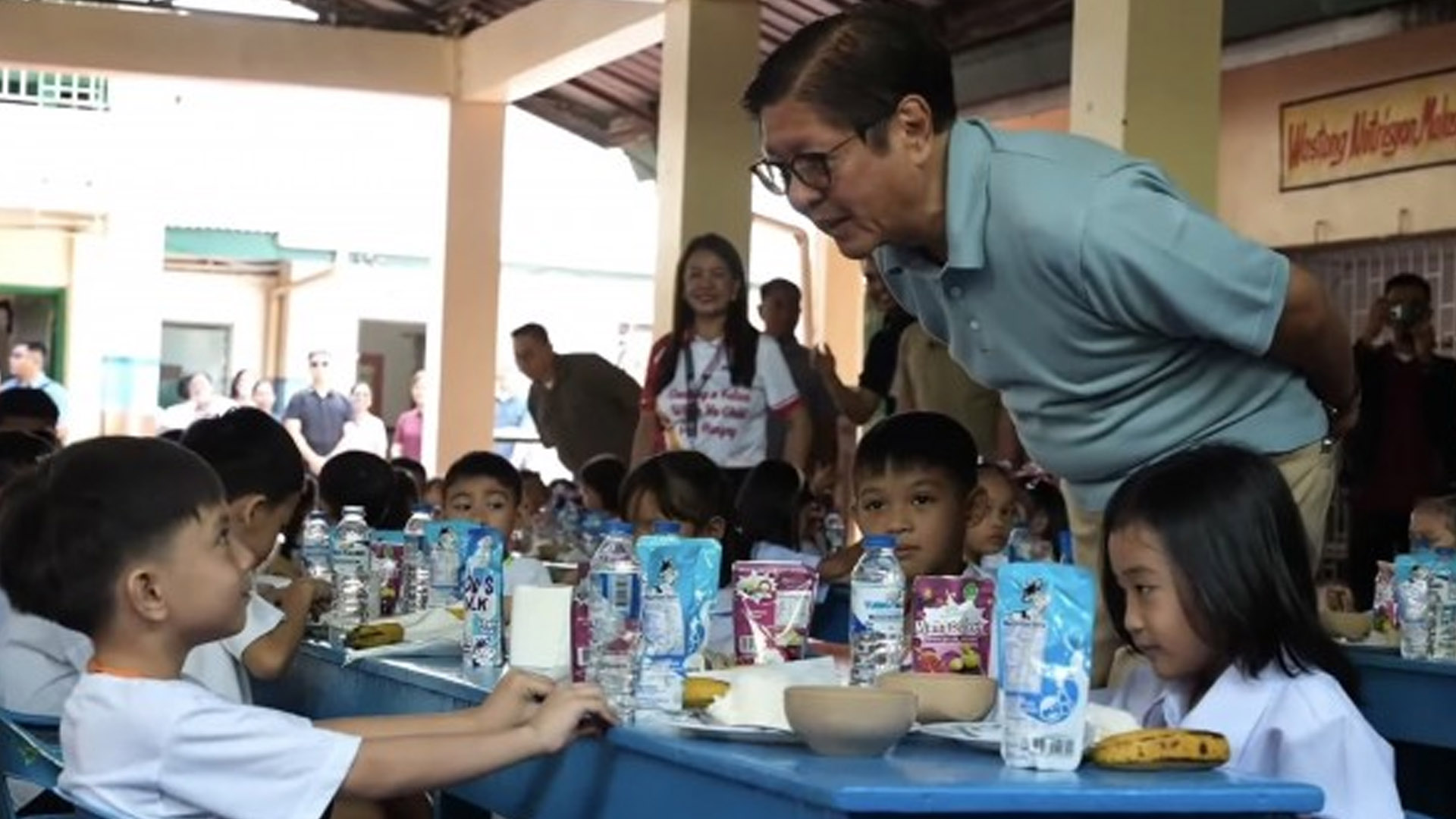






President Ferdinand R. Marcos Jr. on Wednesday led the nationwide rollout of the expanded School-Based Feeding Program (SBFP), saying the government is removing hunger as a barrier to learning by ensuring more public school children receive nutritious meals.
Leading the national kick-off of the SBFP and Milk Feeding Activity, Marcos said the administration decided to expand the program after recognizing that hunger affects far more learners than previously covered.
“Ito’y napakalaking bagay para sa akin dahil alam naman natin na minsan ang nagiging dahilan kung bakit hindi makapag-aral nang maigi ang kabataan ay kulang sa pagkain (This is very significant because we know that one reason children cannot study well is hunger),” he said.
“Kaya tinanggal na natin ‘yang problema na ‘yan para tiyak tayo na lahat ng pupunta sa eskwelahan ay hindi na iintindihin ang kanilang kakainin. Ang pamahalaan na ang tutulong at ang pamahalaan na ang magpapakain (We have removed that problem so we can be sure that every child going to school no longer has to worry about what to eat. The government will provide the assistance and the meals),” he went on.
The President said the expanded initiative will cover all Kindergarten and Grade 1 learners nationwide, veering away from the old system of assessing and choosing who will be part of the initiative.
Marcos said the program is being rolled out simultaneously across the country to ensure that no child studies on an empty stomach.
The President also cited the program’s contribution to addressing child malnutrition and stunting while also creating a stable market for local farmers and food producers, as government procurement for the initiative will prioritize locally sourced products.
“Hindi kami bumibili sa malalaking grocery. Hangga’t maaari lahat ng feeding program… inuuna pong bilhin ang mga lokal na produkto. Mula ngayon, garantisado na ang kanilang mga merkado. Dito natin dadalhin para ipakain natin sa ating mga kabataan (We do not buy from large grocery chains. As much as possible, the feeding program will purchase local products first. So, from now on, they have a guaranteed market because their products will be used to feed our children).”
The program is the Department of Education’s (DepEd) flagship nutrition intervention implemented under Republic Act 11037, or the Masustansyang Pagkain para sa Batang Pilipino Act.
For School Year 2026-2027, the program will implement universal feeding for all Kindergarten and Grade 1 learners nationwide, while continuing to provide hot meals, nutritious food products, and milk to learners in Grades 2 to 6 identified as wasted or severely wasted, as well as other eligible beneficiaries under DepEd nutrition initiatives.
The launch also featured the serving of hot meals and the signing of a Joint Administrative Order between DepEd and the Department of Agriculture to strengthen program implementation.
According to DepEd, the expanded program aims to reduce hunger and malnutrition, improve school participation and learning outcomes, and promote the overall health and development of Filipino learners. (PNA)


