



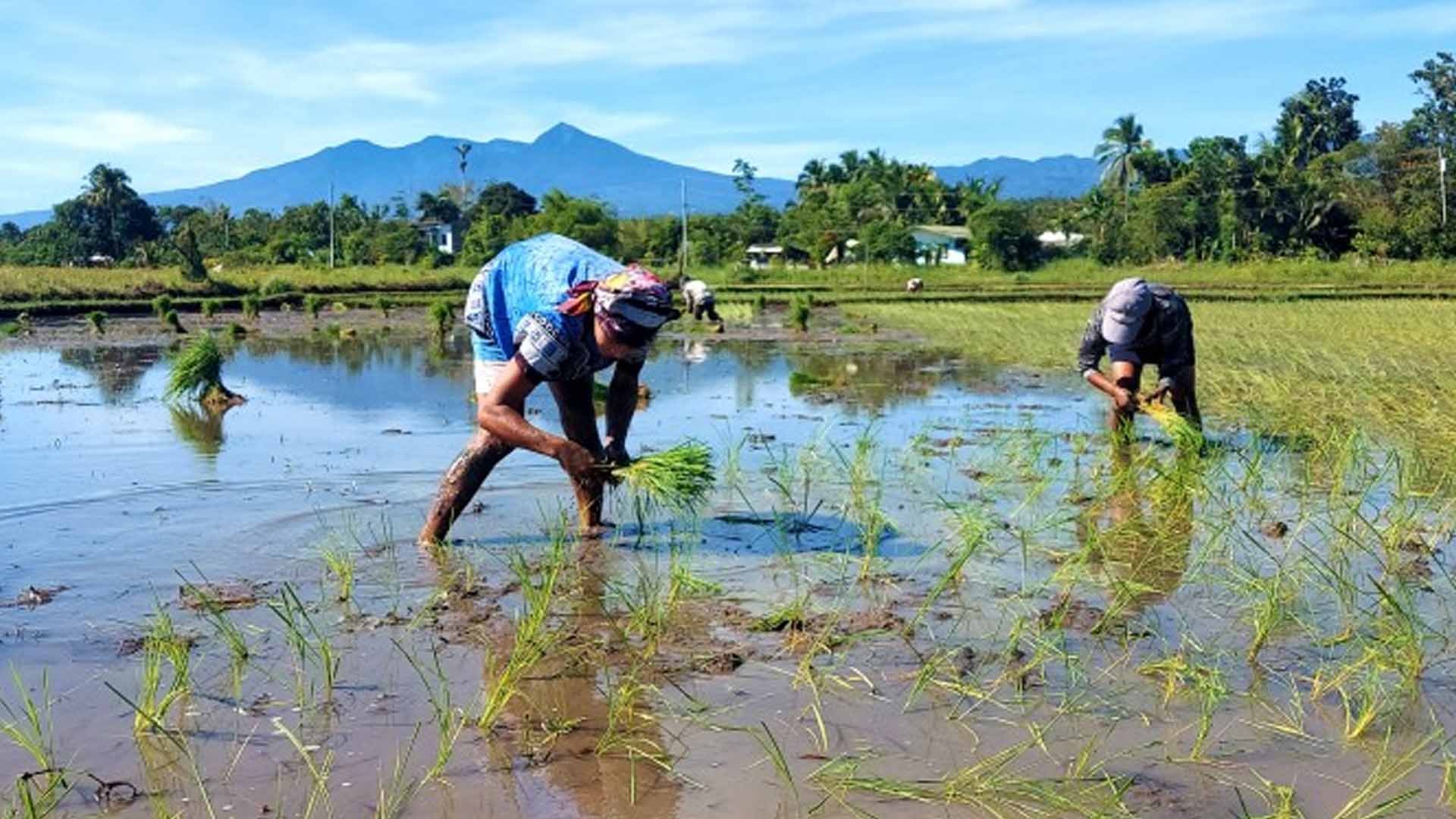






The Department of Agriculture (DA) on Wednesday said higher budgetary support and intensified government action propelled a full-year growth in the country’s agri-fisheries sector.
The Philippine Statistics Authority’s (PSA) recent data showed that the country logged 2.6 percent or PHP1.77 trillion year-on-year growth, the highest in five years.
In a statement, DA Secretary Francisco Tiu Laurel Jr. said the ongoing investments in the agriculture sector allow the government to shift from “reaction to resilience.”
“We’re now laying the groundwork for a smarter, climate-resilient agriculture,” he said.
These include investments in cold storage, drying facilities, silos, upgraded rice processing systems, greenhouses, and smart irrigation.
DA spokesperson Assistant Secretary Arnel de Mesa also attributed last year’s production increase to higher budget support.
“Nagpapasalamat tayo sa ating Pangulo (President Ferdinand R. Marcos Jr.), sa Kongreso sa pag-recognize ng (We thank the president, the Congress for recognizing the) importance of the sector,” he said in a press conference.
“Of course, itong pondo na ito, nata-translate doon sa (these funds translate to) actual project implementation on the ground,” he added.
De Mesa said initiatives that helped cushion pressures on food inflation include the provision of production inputs, use of fewer varieties of palay (unhusked rice) seedlings, and other mechanisms to reduce post-harvest losses.
Among the agri-fishery subsectors, poultry gained the highest increment during the fourth quarter of 2025, valued at PHP78.18 billion.
“‘Yung (The) poultry remains to be the most vibrant among the sub-sectors, growing 8.9 percent last quarter and at 9.1 percent for the whole year of last year,” the DA official said.
It was followed by fisheries, which rose by 4 percent, at PHP66.13 billion; and livestock at PHP68.42, increasing by 1 percent.
For the hog sector, the DA said less flooding and government actions including biosecurity and government-controlled vaccination against African swine fever (ASF) have been helpful in advancing recovery and growth.
The number of ASF-affected barangays recorded in the middle of January was down to eight from the 98 affected barangays on Dec. 31, 2025, according to the Bureau of Animal Industry (BAI).
The crops sector, however, contracted by 2.5 percent, worth PHP274.30 billion.
Meanwhile, de Mesa said although a “reasonable budget” is necessary, proper program execution and timing are also crucial to sustain growth.
He said the DA remains optimistic about sustaining the upward trend of agri-fishery production in the country in 2026.
“Kayang-kayang i-sustain (We can definitely sustain it). Kailangan lang talaga ng (We only need an) impetus through resources, innovation, technology, plus strong research and development para mapalakas talaga yung sektor ng agriculture (to boost the agriculture sector),” De Mesa said. (PNA)


