



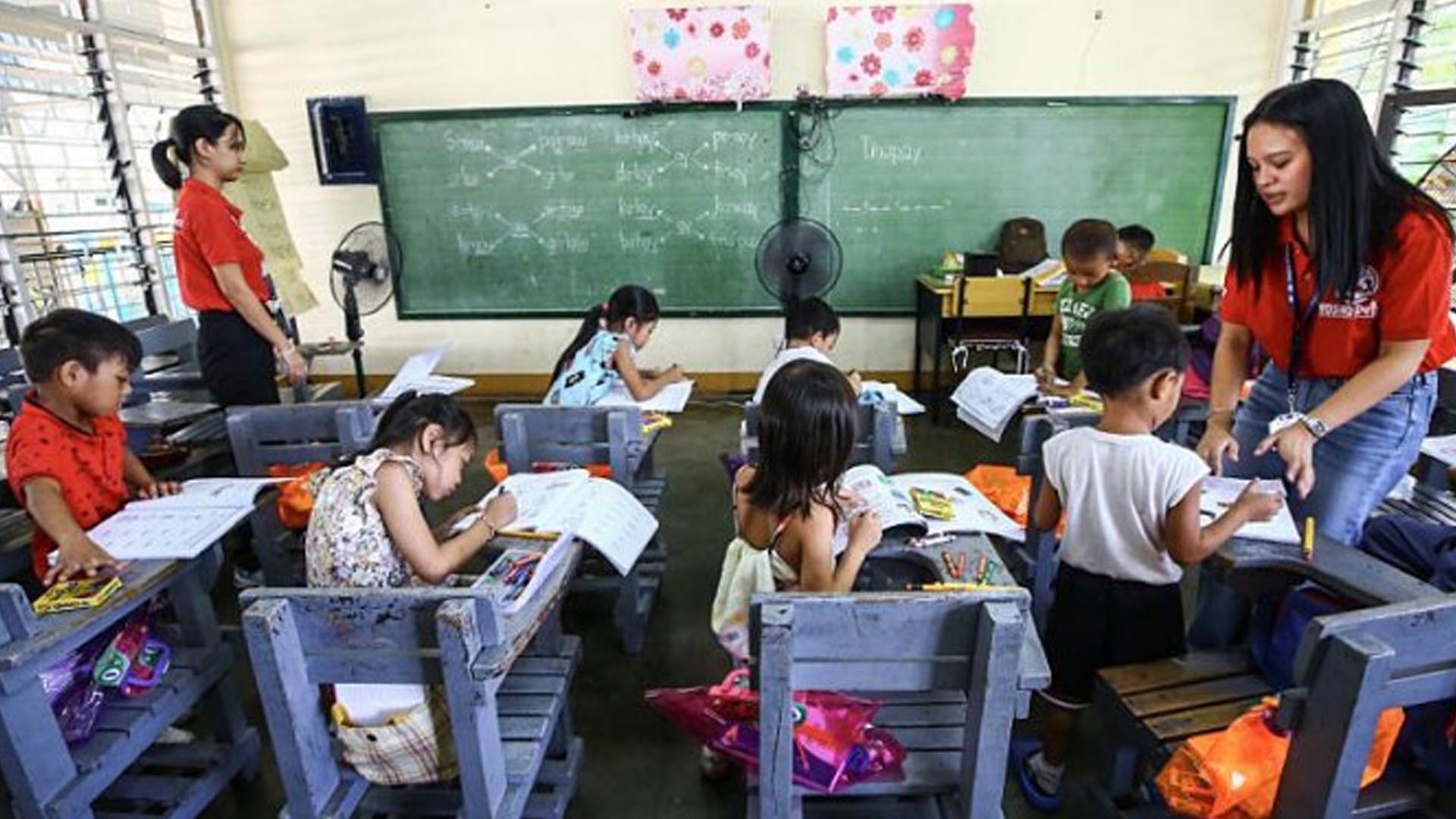






Senate Committee on Finance chairperson Senator Sherwin Gatchalian on Monday said the 2026 national budget would be designed as an “education budget,” aligning with President Ferdinand R. Marcos Jr.’s State of the Nation Address (SONA) where education was identified as priority.
“This will be an education budget. Napakinggan din natin sa Pangulo natin at doon sa speech niya, malaking portion ay naka-dedicate sa education (We heard from the President and in his speech, a large portion was dedicated to education),” Gatchalian said during the Kapihan sa Senado media forum.
Gatchalian said the Senate is working to raise the education budget to at least 4 percent of the country’s gross domestic product (GDP), from its current level of 3.8 percent to 3.9 percent.
“May mga times in the past na umabot tayo sa 4 percent pero bumaba. So this 2026, pipilitin naming maging 4 percent of GDP ang education budget (There were times in the past when we hit 4 percent, but it went down. This 2026, we will push to reach that target),” he said.
He clarified, however, that prioritizing education does not mean neglecting other essential sectors.
“We will just put emphasis and priority on education,” he added.
Gatchalian outlined key areas that would receive increased funding under the 2026 budget, consistent with the recommendations of the Second Congressional Commission on Education (EDCOM II).
He said the Senate would push for expanded funding for the Department of Education’s (DepEd) ARAL Program, which provides tutoring and targeted interventions for early grade learners who struggle with reading and numeracy.
“In line with EDCOM II’s recommendation, we will strengthen early grade reading and numeracy from Kindergarten to Grade 3. Popondohan natin ang ARAL Program para masigurado na ang mga batang hindi nakakapagbasa, hindi nakakapagbilang sa early stages ay mabigyan ng tutor at interventions (We will fund the ARAL Program to ensure that children who cannot yet read or count at early stages receive support),” he added.
Gatchalian said addressing the classroom backlog remains a top priority.
He is recommending the revival of the “counterparting program” with local government units (LGUs), wherein both national and local governments co-fund classroom construction.
“Ang isang recommendation ko kay (DepEd) Secretary Sonny Angara ay ibalik yung counterparting program. Para mabilis ang construction, national government maglalagay ng pondo, local government din, at sila ang magpapatayo (My recommendation to Secretary Angara is to bring back the counterparting program so that construction moves faster —both the national and local governments contribute funds, and the LGUs handle the building),” he added.
The senator also highlighted the need to hire more teacher aides to reduce the non-teaching workload of public school teachers, allowing them to focus on instruction.
“Nabanggit ng ating Pangulo na madami nang ginagawa ang mga guro natin na hindi naman pagtuturo. Magha-hire pa tayo ng mas maraming teacher aides (The President noted that teachers are burdened with tasks beyond teaching. We will hire more aides to help with administrative work),” Gatchalian said.
Gatchalian said these strategic investments would not only help meet the 4 percent of GDP target for education, but also ensure that reforms are aligned with measurable outcomes in student learning and teacher support. (PNA)


