



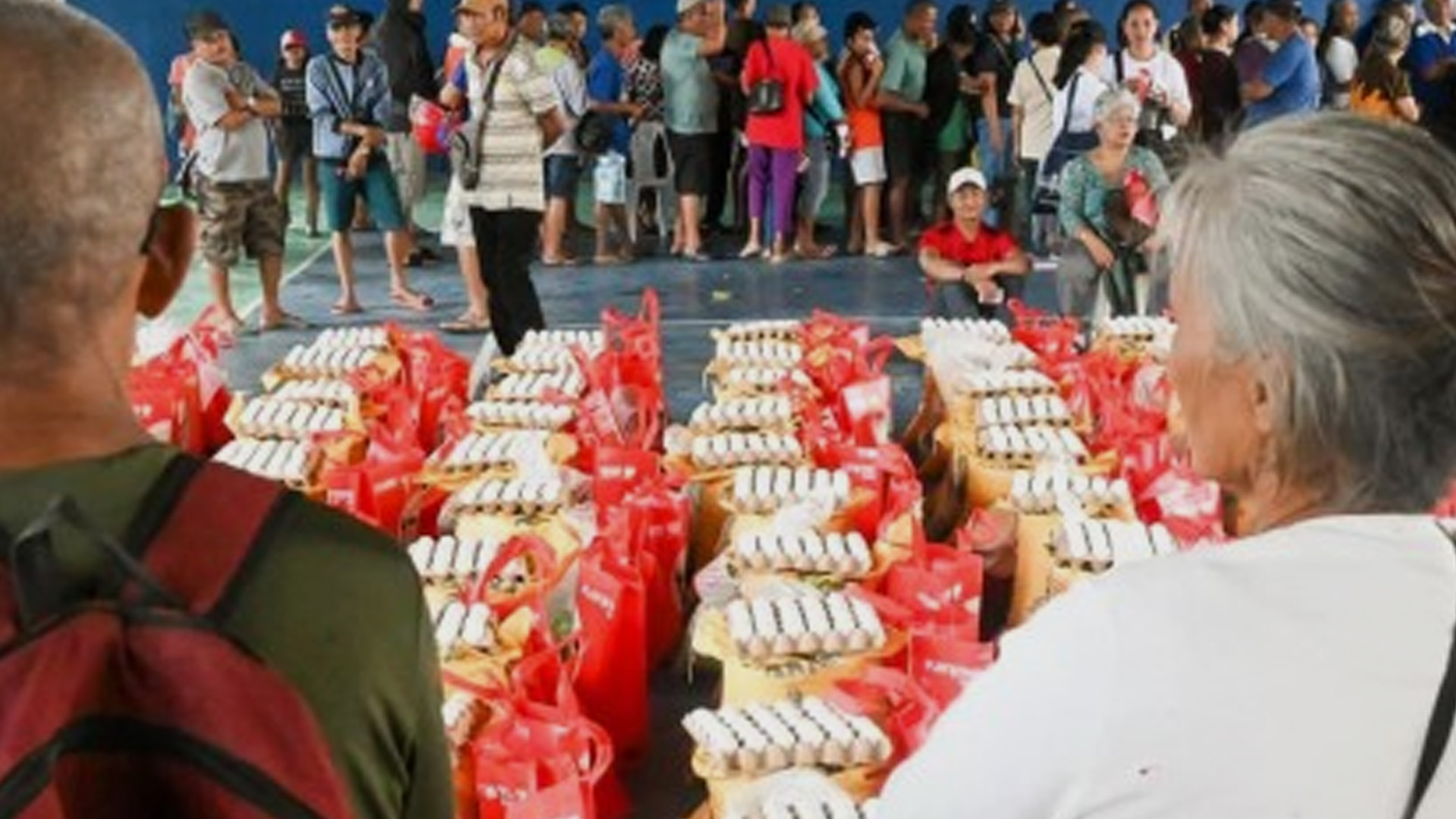






Almost 1,500 residents from nine municipalities in Albay have received food assistance through the Walang Gutom Program food redemption activity of the Department of Social Welfare and Development (DSWD) 5 (Bicol).
In a report on Thursday, DSWD-5 Director Norman Laurio said with strong support from President Ferdinand R. Marcos Jr., the Walang Gutom Program would continue to serve the vulnerable sectors of the communities, empowering the development of socially responsible citizens by augmenting the insufficient access to food and healthy quality of life.
Laurio said the 1,482 beneficiaries from the municipalities of Libon, Oas, Pioduran, Polangui, Camalig, Daraga, Ligao, Guinobatan, and Jovellar redeemed their food provisions worth PHP3,000 each on Feb. 20 and 21.
He said qualified beneficiaries were given their electronic benefits transfer (EBT) card to redeem their food credits provided by the agency through its partner retailers.
The cards are pre-loaded and then scanned by the staff of the partner retailers to avail the food provisions consisting of rice, dressed chicken, and selected vegetables.
Laurio said the beneficiaries included senior citizens, persons with disabilities (PWDs), and solo parents.
“The program is committed to reducing involuntary hunger by providing food assistance to households in need, ensuring that no one is left behind,” he said.
Laurio said the DSWD remains steadfast in its mission to create a more inclusive society for all.
Pili, taro production
Meanwhile, the Department of Agriculture (DA) 5 has extended technical assistance to farmer groups from Albay and Camarines Sur to enhance their business plan to boost pili and taro production.
The five-day activity that will end Friday aims to equip the Pilinio Federation of High-Value Crops Growers Inc. (PFHVCGI) and the Socio-Economic Development Program Multi-Purpose Cooperative (SEDP MPC) with knowledge and skills to develop comprehensive and viable business plans for their respective enterprises.
The PFHVCGI is planning to invest in the Pilinio Taro Production, Processing, and Marketing Enterprise in Pili, Camarines Sur, while the SEDP MPC is preparing a business plan for its proposed Pili Project in Daraga, Albay.
They were also provided with technical assistance in formulating their technical assumptions and financial analysis.
Bicol is among the top producers of pili in the Philippines. As of 2023, data from the Philippine Statistics Authority (PSA) showed that there are 132,664 bearing trees in Bicol.
The DA’s Bicol Registry System for Basic Sectors in Agriculture (RSBSA) has recorded 3,595 pili farmers with 4,103.60 hectares of land area devoted to pili production.
Moreover, according to PSA and RSBSA data, the region is also one of the major producers of the indigenous crop, taro or “gabi,” with 17,417.54 metric tons of volume of production and 1,215.73 area harvested, and 1,786 farmers engaged in taro production in 2023. (PNA)


