



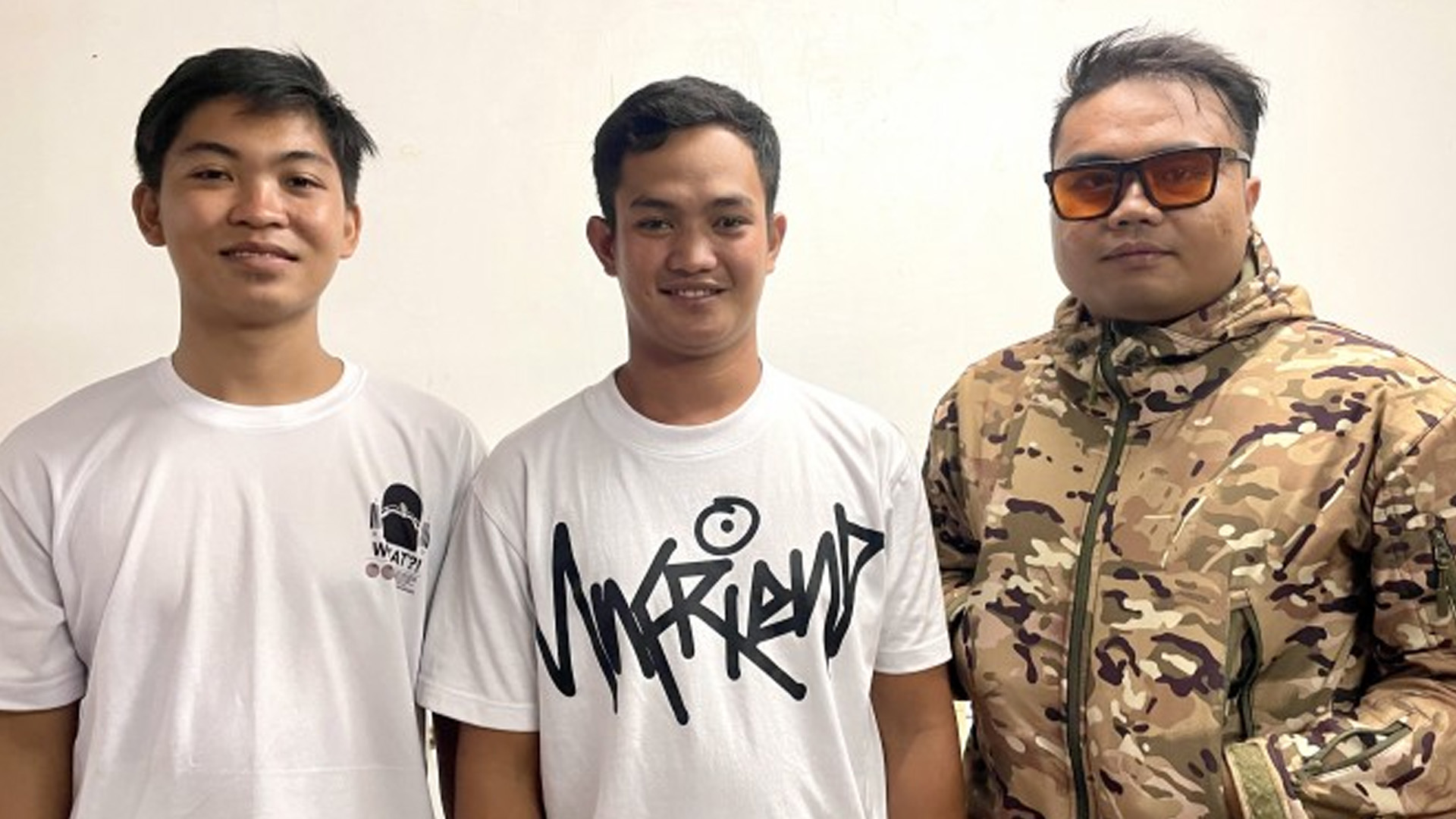






Three young farmers from Piddig, Ilocos Norte got fresh insights on agriculture as an enterprise and are now ready to embark on cattle fattening and premium rice production.
Ephraim Laureta, 25, and Julius Manuel, 21, just came home from an 11-month immersion program in Taiwan under the International Farm Youth Exchange program, while Windell Dela Cruz, 24, also underwent a similar training program in Japan.
Both programs are being implemented by the Department of Agriculture- Agricultural Training Institute (DA-ATI) and are aimed to develop deserving youth to become farmer leaders and empowered agricultural entrepreneurs.
Being an out-of-school youth who failed to finished a degree in college due to hardships in life, Laureta said his 11-month intensive on-farm training in Taiwan has inspired him to pursue cattle fattening in his village in Santa Maria.
In five years time, Laureta said he envisions to become a producer of fattened cattle for beef production, upholding the highest standards of health and services to consumers.
His agribusiness plan got the nod of the ATI, earning him some PHP50,000 financial grant to jump start his project.
“The amount is minimal but it could go a long way to start my project,” he told the Philippine News Agency on Tuesday after receiving his check.
With some savings from his allowance during his training in Taiwan plus the financial assistance he received from the government, Laureta said he would use the amount to buy some cattle and to build an animal shelter, including the planting of Napier grass as foliage.
Like Laureta, Dela Cruz also wants to venture into cattle raising as their town is actively engage in wagyu and branded beef development program.
He, likewise, received PHP50,000 financial support from ATI.
“My family have been into livestock raising. This time, I will apply all the knowledge and skills I learned in Japan to make it more profitable,” said Dela Cruz, as he shared Japan’s best agricultural practices and wise utilization of modern technologies and equipment, with minimal environmental impact.
“In Japan, nothing is wasted. They make use of all available modern technologies and equipment, which makes farming a profitable business,” he said.
They are also precise and efficient in the management of farm operations given the strong support from their government to promote sustainable agriculture.
Manuel, on the other hand, plans to venture into premium rice production and other high value crops.
With his training and with the support of various government agencies, he is hopeful that the risks and difficulties associated in farming will be minimized.
According to Manuel, Taiwanese rice farmers utilized their own inbred rice for planting with an average yield of eight tons per hectare.
“I hope to replicate this in my country and hopefully, share the technology to other farmers,” he said. (PNA)