



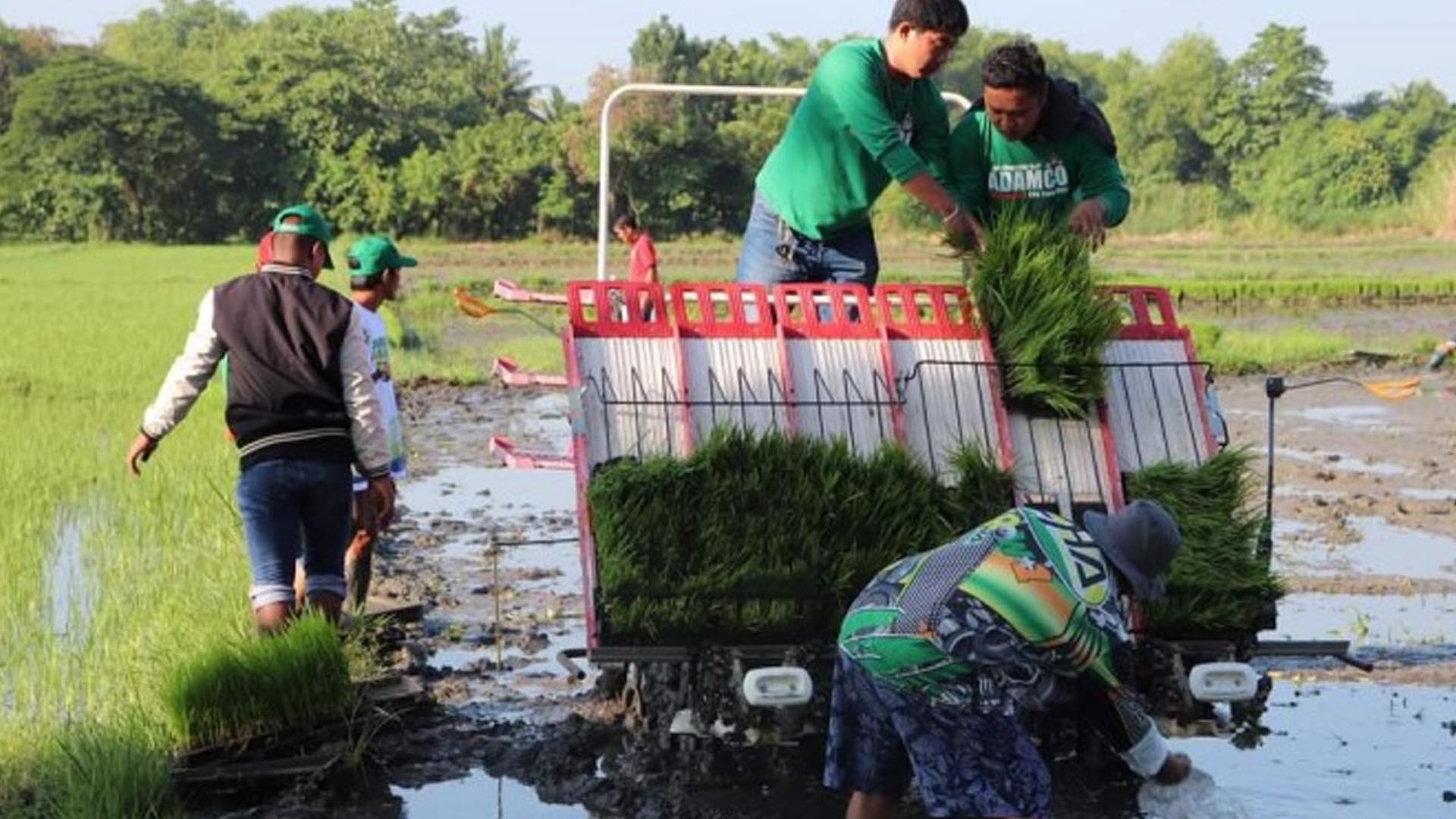






Pangasinan’s corporate farming program will get boost through a new set of agricultural machinery from the Philippine Center for Postharvest Development and Mechanization (PhilMech).
In a phone interview on Monday, provincial agriculturist Dalisay Moya said PhilMech will donate a four-wheeler tractor, a combined harvester, two riding-type transplanters, and six walk-behind transplanters to the province
“These machinery and equipment will be used for the implementation of the corporate farming,” she said, noting that an agreement will be signed in the coming days.
The donation is the second time for the province’s Rice Competitiveness Enhancement Fund (RCEF) mechanization program aimed to support the national government’s food sufficiency thrust under the Masagana Program for Agriculture.
Pangasinan has reached 209 percent rice sufficiency in 2023 after rice farmers produced 1.3 million metric tons from the 267,946.14 hectares of land.
The combined output of yellow and white corn varieties reached 419,577.5 metric tons.
Last year, PhilMech donated six hand tractors, 10 combined harvester, two multi-pass rice mills, and a walk behind transplanter.
Moya said the six walk-behind transplanters that they will get this year will be given to the six districts of the province while the other machinery will be allocated depending on the needs of the farmer-groups.
About 23 of the 48 towns and cities of Pangasinan, covering around 650 hectares, are included in the corporate farming program.
Moya said there are around 685 farmers from 25 farmer-cooperatives and associations who benefit from the program.
The flagship program aims to enhance food production and transform farming into a lucrative and sustainable economic enterprise through the so-called convergence approach among farmer cooperatives and associations, local government units, the Department of Agriculture and its attached agencies, various national government entities, the private sector, and financial institutions.
In an earlier interview, Gov. Ramon Guico III said the program resulted in reduced palay production cost per hectare by 9.08 percent or PHP6,464 for hybrid and 8.04 percent or PHP5,091 for inbred palay in 2023.
These figures were based on the baseline data from PHP71,200 to PHP64,736 for hybrid and from PHP63,320 to PHP58,229 for inbred per hectare.
For the cost of production for palay per kilogram, there was a reduction of 18.73 percent for hybrid and 20.80 percent for inbred palay, Guico said.
“An increase of 10.62 percent in yield per hectare or additional 14.40 cavans for hybrid from the average yield per hectare of 6.06 metric tons or 121 cavans and 13.87 percent for inbred or additional 16.39 cavans as compared to the average yield of 5.09 metric tons or 102 cavans were achieved on the pilot,” he said. (PNA)