



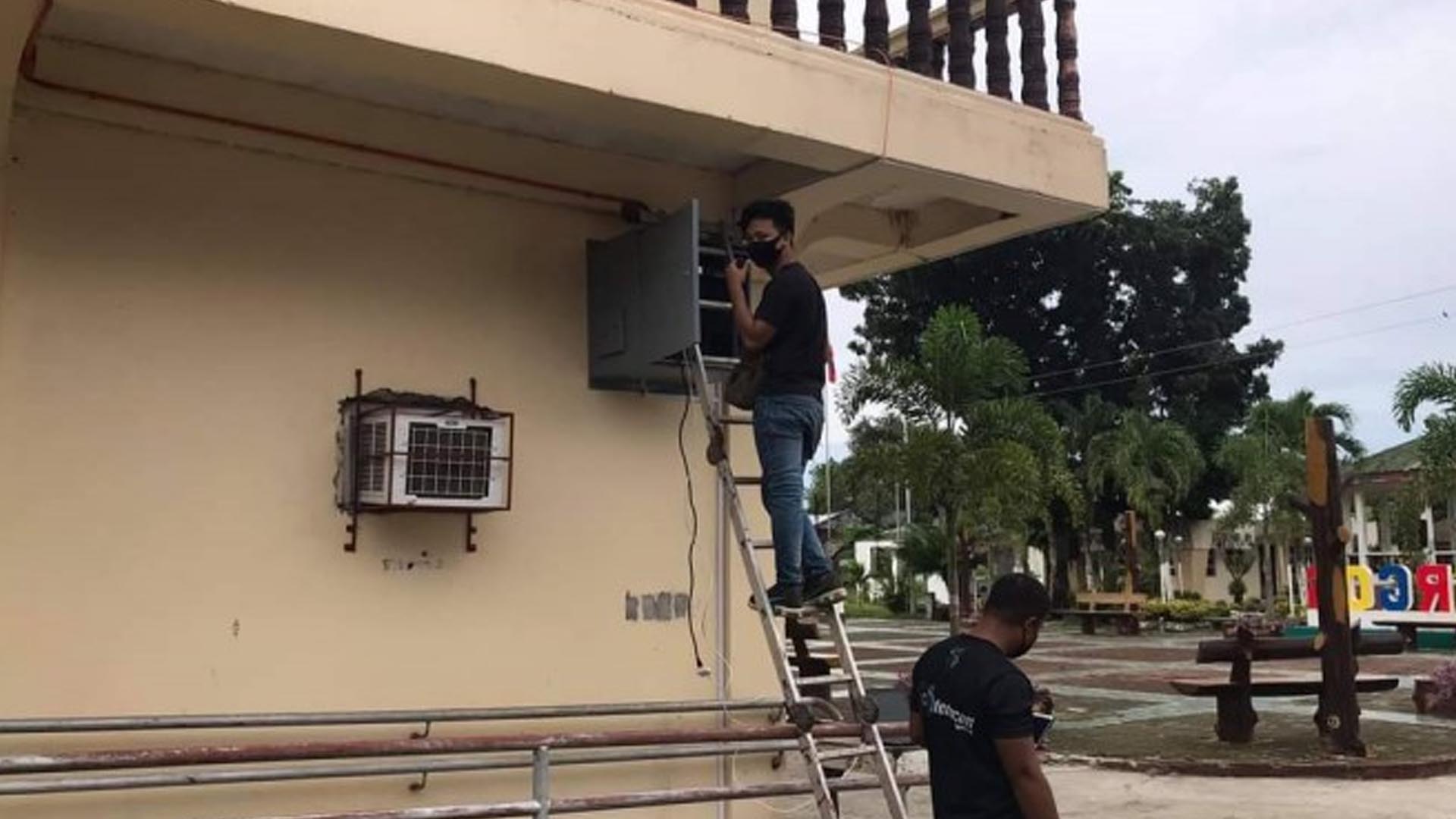






President Ferdinand R. Marcos Jr. on Monday vowed to further expand the government’s free WiFi program and to use policy reforms and streamlined common tower processes to provide better internet connectivity to the farthest reaches of the country.
During his third State of the Nation Address (SONA) at Batasang Pambansa in Quezon City, Marcos said the Free WiFi program of the Department of Information and Communications Technology (DICT) has so far served almost 10 million unique user devices in more than 13,000 places in the country.
“Nasasagap ito sa marami nating mga paaralan at mga malalayo at liblib na mga pook (These are available in many schools and in remote communities),” he said.
He vowed to continuously expand the program to ensure more Filipinos benefit from having free WiFi.
Both power and internet services, he said, were continuously being upgraded in both capacity and connectivity to serve more Filipinos.
On the other hand, he said the first phase of the National Fiber Backbone has already been completed and operationalized.
Phases two and three began early this year and are set to be completed by 2026.
“This fiber backbone will give us sufficient capacity in terms of bandwidth,” he said.
As of 2022, an estimated 77 percent, or 20.6 million households in the country were connected to the internet.
“This is much too low. Together with our private sector partners, we will efficiently harness the concept of common towers to provide connectivity to Filipinos who are at the far end of the last mile,” he said.
He assured telecommunications companies of “full government support” in having more common towers through policy reforms and streamlined processes.
With internet services continuing to improve nationwide, he said the recently launched National Cybersecurity Plan was the government’s response to the need for stronger and more impervious cyber defense.
“I have directed the agencies concerned to ensure that the speed and quality of our information technology (IT) development always mirrors the pace and trajectory of our economic aspirations,” he said. (PNA)


