



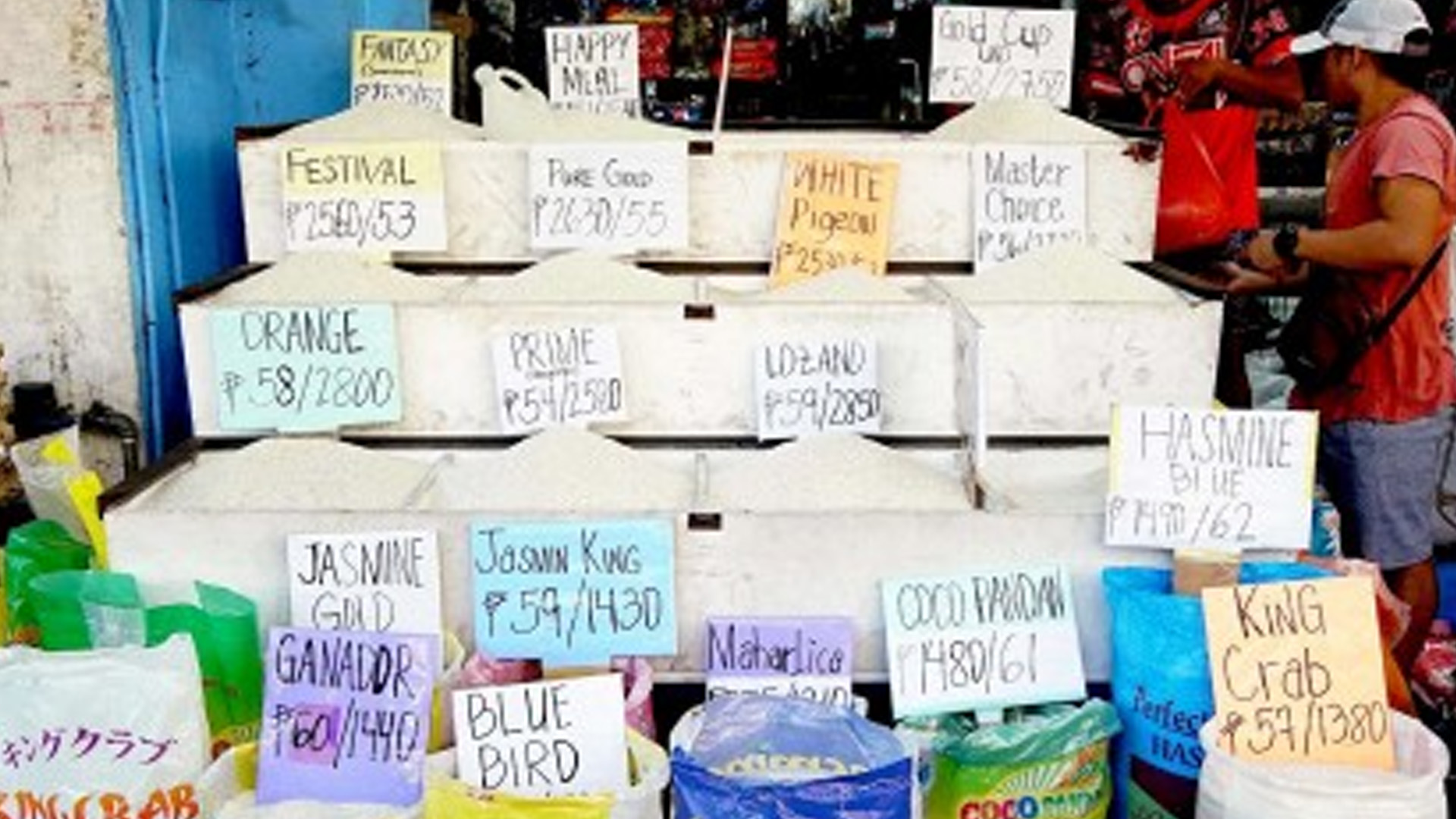






The Department of Agriculture (DA) is planning to put labels on local and imported rice to prevent the mixing of rice varieties.
In an interview, Agriculture Assistant Secretary Arnel de Mesa said labeling rice in retail markets “provides the needed information to consumers who want locally-produced or imported rice varieties.”
“That’s very important. We also plan to check on mislabeling activities on the ground,” he said.
“Definitely, may mga ganyang posibleng mislabeling. Paghaluhin, kung mas mura iyong isang klase ng bigas tapos ihahalo doon sa mas mahal tapos ibebenta nang mas mahal (there’s the possibility of mislabeling. The cheaper class or rice is mixed with the more expensive, then it’ll be sold at the higher price),” De Mesa noted.
Federation of Free Farmers Cooperatives national manager Raul Montemayor agreed with the DA official, noting that some imported rice looks similar to local produce and can easily be mixed.
He also pointed out that while some traders typically blend rice “to satisfy the requirements of their market,” unscrupulous traders are known to “re-bag” imported rice and sell it as local rice to gain higher profits.
As of Thursday, the imported regular milled rice ranges from PHP48 per kilogram to PHP51/kg; and well-milled rice ranges from PHP51/kg to PHP54/kg.
On the other hand, the local regular milled rice is pegged at PHP50/kg while the well-milled rice ranges from PHP48/kg to PHP55/kg.
Montemayor said this is due to the price dynamics between the lowering trend in the global price of imported rice, and the increasing trend in farmgate prices, which ranges from PHP27 to PHP30.
“It’s like a gamble on the part of the local traders that they will buy palay at a high price, knowing na pagdating nila sa retail, makakalaban nila iyong imported rice na medyo pababa ang presyo (that when it comes to the retail market, they will be going against the imported rice that is getting cheaper),” he said.
Meanwhile, the DA assured that it is looking into the gap between the farmgate and retail prices of rice.
“Iyon ang pinag-uusapan, pinag-aaralan bakit mataas talaga iyong presyo despite na hindi naman ganoon kalaki, kataas iyong presyo sa farmgate (That’s what we are talking about, we are reviewing why the [retail] price remains high despite the fact that the farmgate prices are not that high),” De Mesa said. (PNA)


