



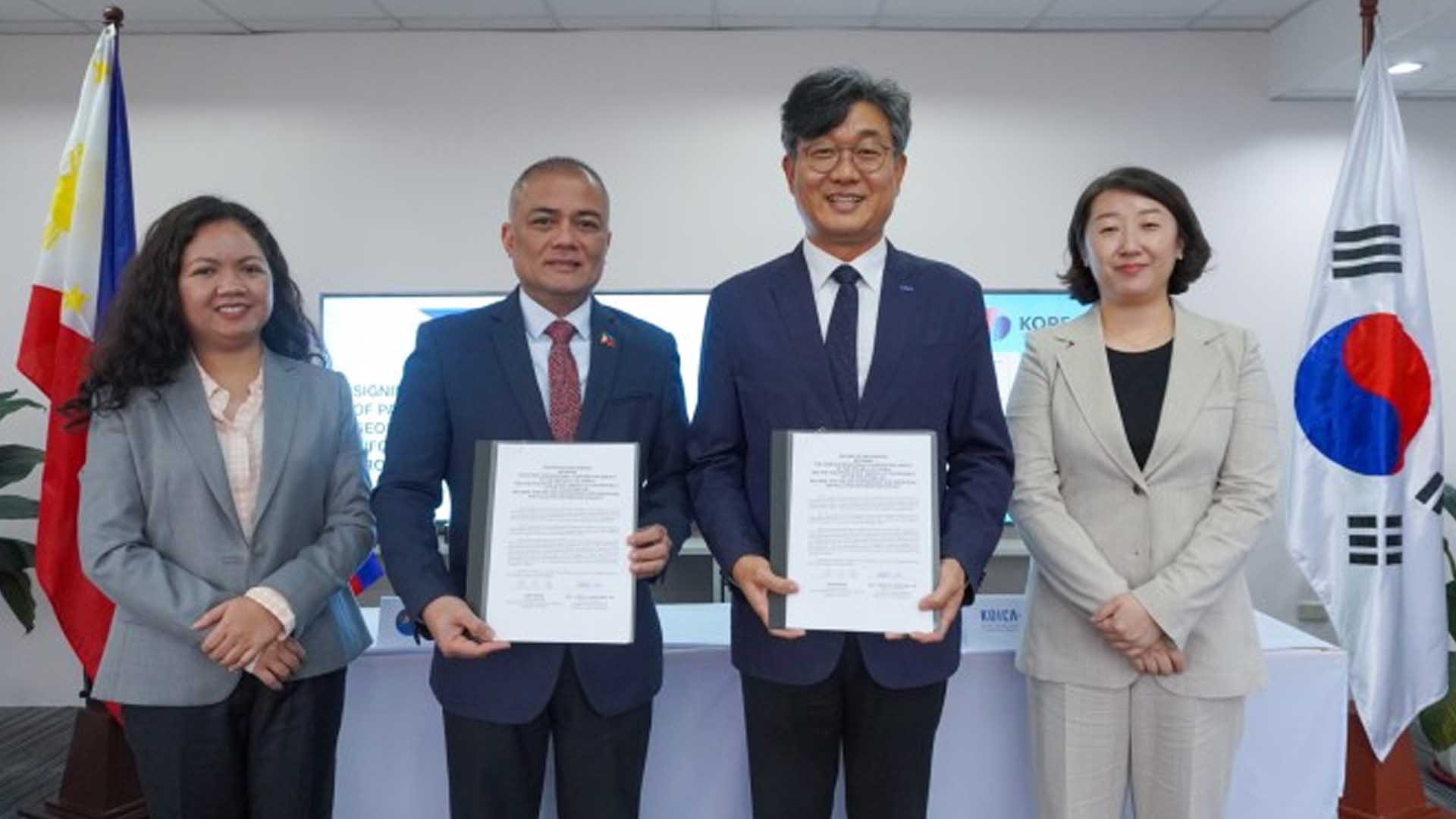






The Philippines and South Korea will work together to boost the former’s capacity in monitoring and crafting plans and policies concerning air quality.
On Friday, the Philippine Space Agency (PhilSA) announced that it has inked partnership with the Korea International Cooperation Agency (KOICA) for the Pan-Asia Partnership for Geospatial Air Pollution Information and the Pandora Asia Network (PAPGAPI-PAN) project.
This involves technology transfer, data sharing, and capacity building initiative on air pollution using data from the Geostationary Environment Monitoring Spectrometer (GEMS) aboard Korea’s GEO-KOMPSAT-2B satellite complemented by ground-based remote sensing instruments called Pandora.
GEMS is reportedly the world’s first geostationary satellite sensor for air quality monitoring, enabling hourly monitoring of air pollution levels in almost 20 countries in Asia, including the Philippines.
PAPGAPI-PAN will enable PhilSA to combine satellite and ground measurements for a comprehensive overview of air quality in the country.
Earlier, PhilSA Director General Joel Marciano Jr. said through remote sensing technologies and ground validation techniques, trends such as air quality patterns and environmental characteristics such as climate change vulnerabilities will be properly accounted for, described, analyzed to inform decisions on climate change mitigation and adaptation programs and in disaster risk response and management efforts.
Pandora instruments will be installed in the country within the year. This will provide real-time standardized, calibrated, and verified air quality data and help to craft more evidence-based policies to address air quality issues.
KOICA and PhilSA will provide technical and operational support to implement the project in the identified sites: Puerto Princesa, Palawan; Manila Observatory in Quezon City; and Metro Manila.
The proposed Pandora sites were selected considering different concentrations of air pollutants, such as nitrogen dioxide and particulate matter, across the country based on historical records both from ground and satellite observations. Meteorological parameters such as rainfall and cloud cover are also considered in the selection process.
Other potential sites are Ilocos Norte, and Cebu City, according to PhilSA.
The ground vertical column measurement of air pollutants from Pandora will be used in conjunction with the GEMS observation for comprehensive and improved monitoring of air quality across the country and the Asia Pacific region.
GEMS will provide measurements of different air pollutants such as nitrogen dioxide, sulfur dioxide, ozone, formaldehyde, and particulate matter at an hourly rate during daytime, PhilSA said.
“Air quality can significantly affect the quality of health and life of people everywhere. Satellites and measurements from space provide additional perspectives that complement and enhance ground measurements and existing air quality monitoring initiatives in our country,” Marciano said in a statement.
Meanwhile, KOICA Country Director Kim Eunsub said the project will highlight the substantial contribution of space science and technology applications in the Philippines’ socio-economic development.
The USD230,000 (PHP12.6 million) project is a collaboration among the PhilSA, KOICA, the United Nations Economic and Social Commission for Asia and the Pacific (UNESCAP), Korea National Institute of Environmental Research (NIER), and Korea Environment Corporation.
It is expected to contribute to further enhance the strong and dynamic relationship between the two countries through the sharing of satellite air quality data, GEMS data application and technology, and joint research. (PNA)


