



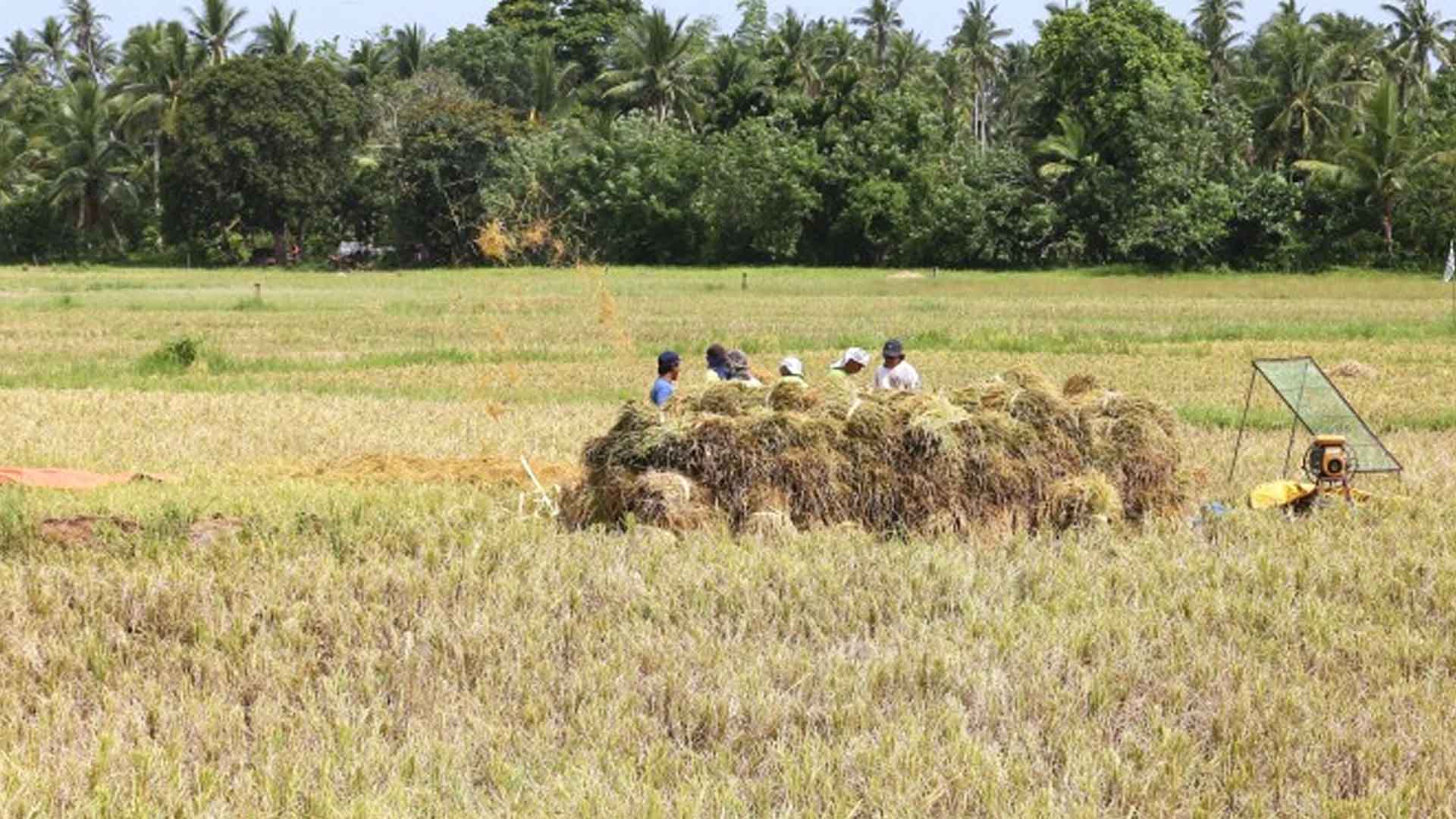






Lawmakers have filed a bill seeking to encourage more young Filipinos to pursue a career in agriculture and take on the challenges facing the vital sector.
Filed by Representatives Paolo Duterte (Davao City 1st District), Eric Yap (Benguet), and Edvic Yap (ACT-CIS Party-list), House of Representatives Bill 7572 seeks to provide subsidies to children of qualified indigent farmers who will enroll in agriculture courses and other related fields of study in state universities and colleges (SUCs).
“We need young Filipinos who are exposed to today’s technologies to consider agriculture as a viable career. The youth’s innovative spirit, their enthusiasm to change the way we think or do things is what we need right now to reinvigorate our agriculture sector. Providing farmers’ children with the educational support they need will encourage them to pursue agriculture and other related courses,” Duterte said in a press statement Wednesday.
He said the youth should be made aware that agriculture courses do not just involve farming, but also cover degrees in agricultural and biosystems engineering, agribusiness management, agricultural biotechnology, agricultural economics, and fisheries technology, among other studies.
The subsidies provided under House Bill 7572 are on top of the free tuition offered under Republic Act (RA) 10931 or the Universal Access to Quality Tertiary Education Act.
Under RA 10931, dependents of qualified indigent farmers who pass the admission requirements in SUCs and other local universities and colleges (LUCs) for agriculture and other related courses will be entitled to free tuition and other school fees, as well as other incentives and subsidies, such as living and transportation allowances.
A qualified indigent farmer is defined under the measure as individuals included in the registry of farmers of the Department of Agriculture (DA), whose sole source of income is cultivating the land they own or lease, or who actually engage in crop production, livestock, and poultry farming.
They said the bill would complement ongoing government efforts to increase agricultural production and assistance to small farmers.
In coordination with the Commission on Higher Education (CHED), the DA is tasked under the bill to establish a scholarship program for tertiary agricultural education.
In pushing for House Bill 7572, the authors cited data from the Philippine Statistics Authority (PSA) showing the continuous employment drop in the agriculture sector, comprising agriculture, forestry, fishing, and the aquaculture industries.
From 24.5 percent (9.7 million) in October 2020 and 24.6 percent (10.77 million in October 2021), the PSA said, the share to total employment of the agriculture sector declined to 22.5 percent (10.6 million) in October 2022.
The PSA also said in terms of skilled agricultural, forestry, and fishery workers, the numbers continued to drop from 14.2 percent (5.7 million) in October 2020 and 12.4 percent (5.4 million) in October 2021, to 11.8 percent (5.6 million) in October last year.
Diminishing farm size and declining incomes have prompted the shift out of agriculture, according to the Philippine Institute of Development Studies.
“Hence, apart from measures that ought to increase agricultural production and farmer assistance, there is a need to encourage the young generation to choose the country’s agricultural sector,” the authors of the bill said. “Apart from encouraging the youth to consider entering the (agriculture sector), the said measure will also uplift and motivate agricultural research that is vital in the sector’s quest for development.” (PNA)


