



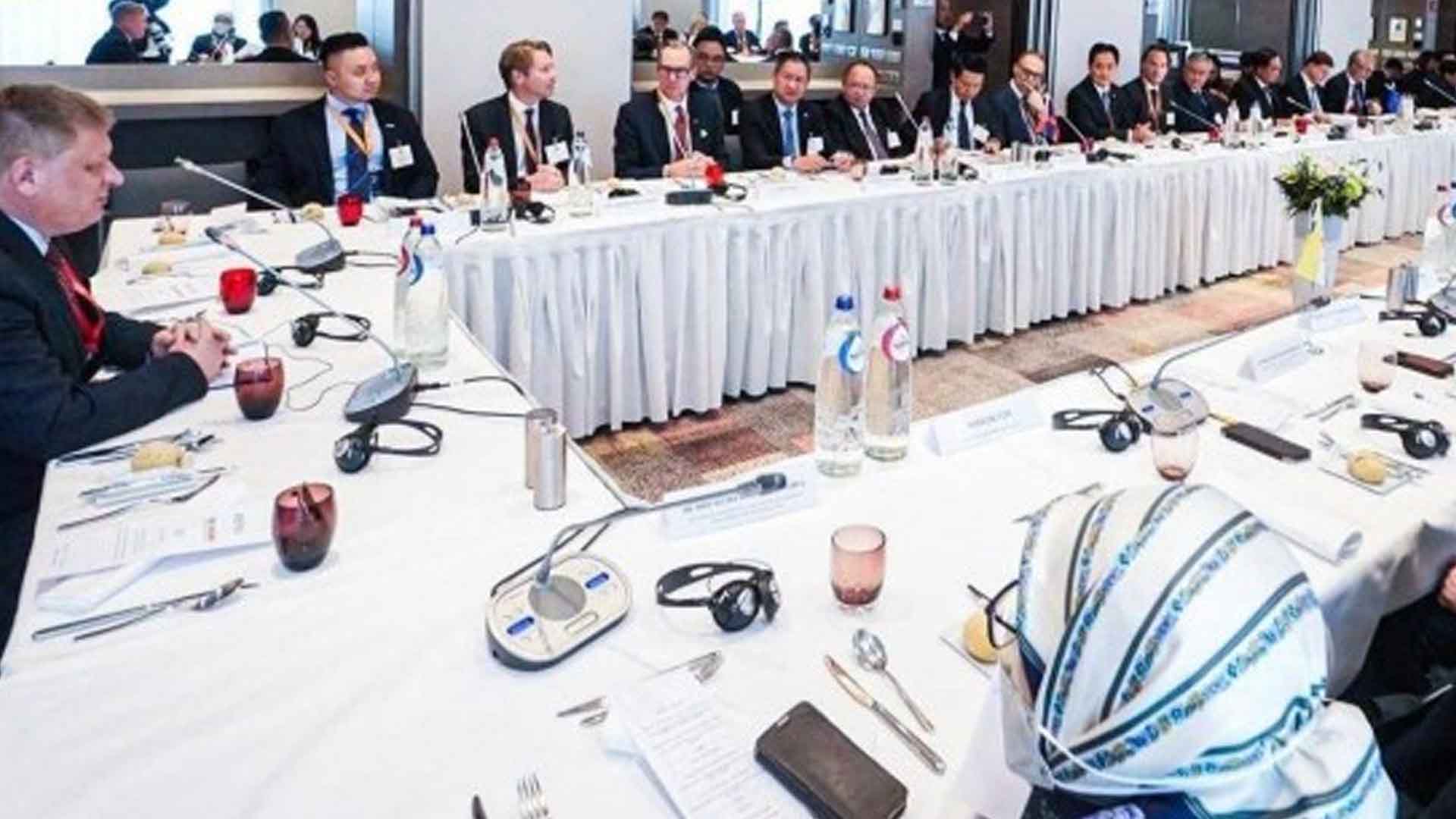






President Ferdinand R. Marcos Jr. on Tuesday (Brussels time) called for “more progress” in the commitment of rich nations to set up a “loss and damage” fund to support poorer countries severely impacted by climate change.
Marcos made this remark during the Association of Southeast Asian Nations – European Union (ASEAN-EU) working luncheon with EU leaders and businessmen in Brussels, Belgium.
In his speech, the President acknowledged the agreement of nearly 200 countries at the 27th session of the Conference of the Parties (COP 27) to the United Nations Framework Convention on Climate Change (UNFCCC) to create a funding mechanism to compensate vulnerable nations for “loss and damage” from climate-related disasters.
Marcos said he viewed with “some optimism” that “the concept of damage and loss has now been accepted by all parties involved.”
However, he said, several questions in terms of funding remain unanswered.
“This still brings us to a very difficult and fundamental question, and when you speak of damage and loss, how do we quantify that damage and loss? What are the rules that we apply? When does it begin?” he said.
“We really would like to see much more progress in terms of that, the financing, with the mitigation and the adjustment of our countries who are at great risk to the effects of climate change.”
Marcos pointed out that climate action is particularly important to the Philippines, which has been “regarded as probably one of the most, if not the most, vulnerable countries in the world to the effects of climate change.”
“Since that seems to be the case and that is what we are facing in the Philippines, we are very much in need of the assistance of Europe, of all the first world countries and to be able to adjust our economy, our communities to the onset of the effects of climate change,” he said.
The COP serves as the decision-making body responsible for monitoring and reviewing the UNFCCC implementation.
Meanwhile, European Council President Charles Michel agreed with Marcos on the need to operationalize the green fund on climate change and the damage and loss policy.
“We couldn’t agree with you more,” Michel told Marcos during their meeting on the sidelines of the ASEAN-EU Commemorative Summit.
He said the EU is ready to work with the Philippines and the ASEAN on climate change, particularly on the transfer of green technology, which involves improving resilience to climate change and reducing greenhouse gas emissions.
Marcos earlier said the Philippines is prioritizing renewable energy options, such as hydropower, geothermal power, solar, and other low-emission energy sources.
The Green Climate Fund was designated as an operating entity of the financial mechanism of the UNFCCC.
It aims to encourage the paradigm shift towards low-emission and climate-resilient development by providing support to developing countries to reduce their greenhouse gas emissions while at the same time adapting to the effects of climate change. (PNA)


