



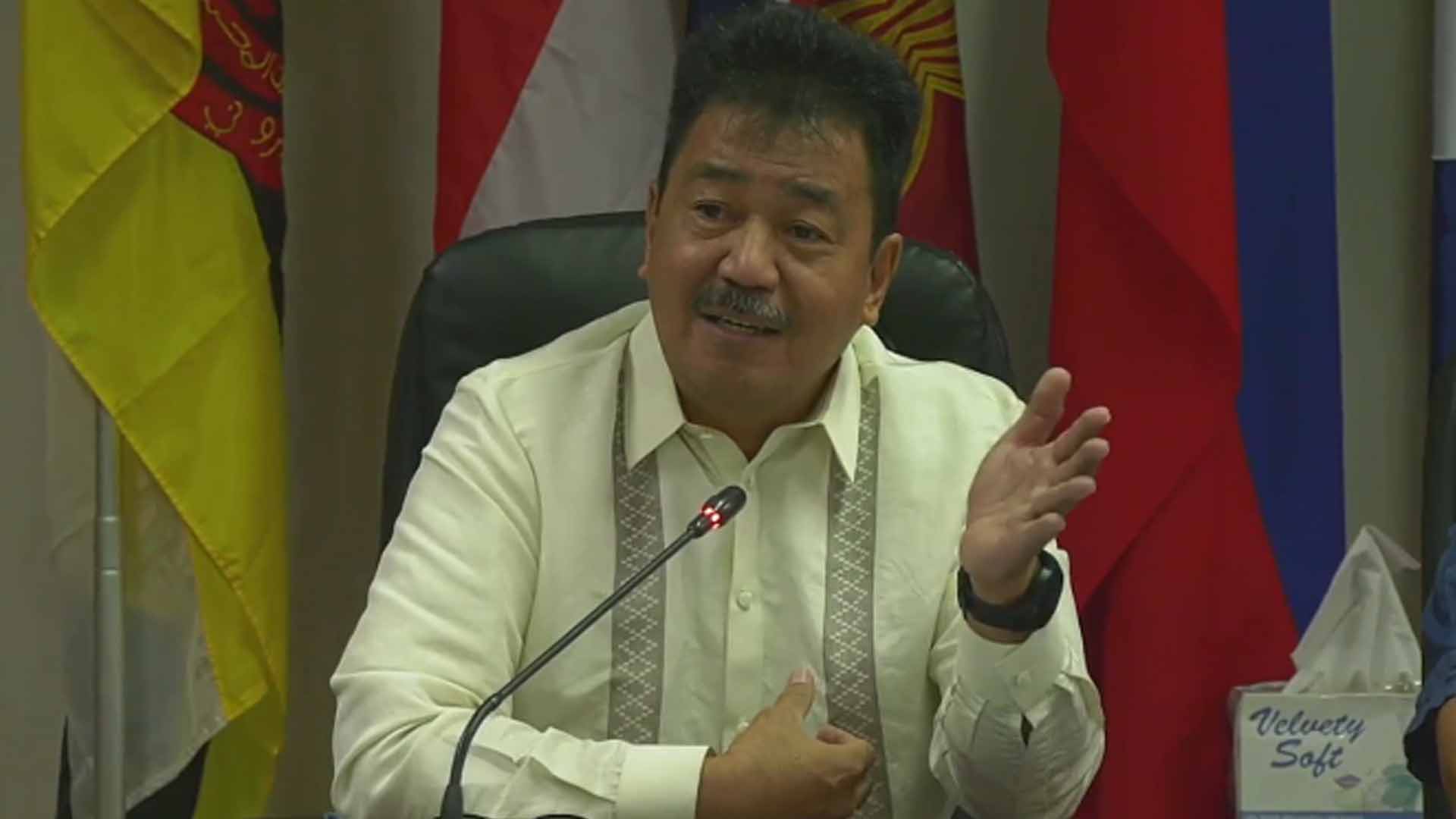






The Reserve Officers’ Training Corps (ROTC) program should include teaching the youth basic life-saving skills, the Commission on Higher Education (CHED) said on Friday.
At a briefing livestreamed via Facebook, CHED Chairperson J. Prospero de Vera III said he was in favor of requiring the youth to undergo the program, but it should be “skills-based.”
“I want an ROTC program that is very heavily skills-based, not the usual marching, putting people under the sun, etc. That’s not skills-building… Why can’t we capacitate every young Filipino who goes to ROTC to be able to learn how to swim? And to save people who don’t know how to swim, basic life-saving skills. You know when somebody falls, you break an arm, etc.,” he said.
De Vera said schools can simply engage in partnerships with different organizations to train students in the program.
“It’s easy to do that, you work with the Philippine Red groups, you work with a lot of civic groups to train them what to do during disasters, how to prepare for disasters, how to evacuate individuals, etc. There are so many things that we can train our young people to do,” he added.
He noted that he himself is a product of the ROTC, which instills discipline among cadets.
“I am evidence of ROTC training, if you may say so. But again, it depends on how Congress formulates it,” he said.
The CHED said it is ready and willing to work with legislators, but a consensus on program direction must be set first.
“There are so many bills that have been filed already, but the directions are going different ways. Some want it in Senior High. Some want to give uniforms to ROTC cadets. There are so many initiatives,” he said.
De Vera even mentioned some of its pros and cons, particularly in identifying the target level for the program.
“It makes more sense to put it in Senior High. The problem is if you put it in Senior High, of course, the cost is higher because you have to train more students, and the infrastructure for ROTC is non-existent in Senior High. That’s the downside. Infrastructure administrative costs have to be put in place. You put it in Higher Ed, you have less students that you will train. But you already have ROTC programs existing in many universities,” he said.
BEST project
The CHED, meanwhile, signed a Memorandum of Understanding with the Information Technology (IT) & Business Process Association of the Philippines (IBPAP) for the project, Boosting Education on Smart Technology (BEST Project): Developing IT Professionals for the 4th Industrial Revolution (4R).
“We’re excited about IT because that is also the priority of this administration. The President has repeatedly said this… So this is our contribution,” De Vera said.
The MOU intends to provide adequate support to the IT education programs in the country, including in the “countryside” higher education institutions.
“This is because the industry is saying that it’s no longer an urban phenomenon anymore that the IT industry is going to the countryside, therefore, we have to enable schools also in the countryside, who have IT programs to link with IT industries, all over the country in various aspects,” he said.
De Vera explained that this project does not intend to make “every student IT-enabled… but make the IT students develop competence needed both here and abroad.”
He also assured that it shall be “immediately” implemented, depending on the Higher Education Institutions and IT industries’ move, since the funds are all set for downloading. (PNA)