



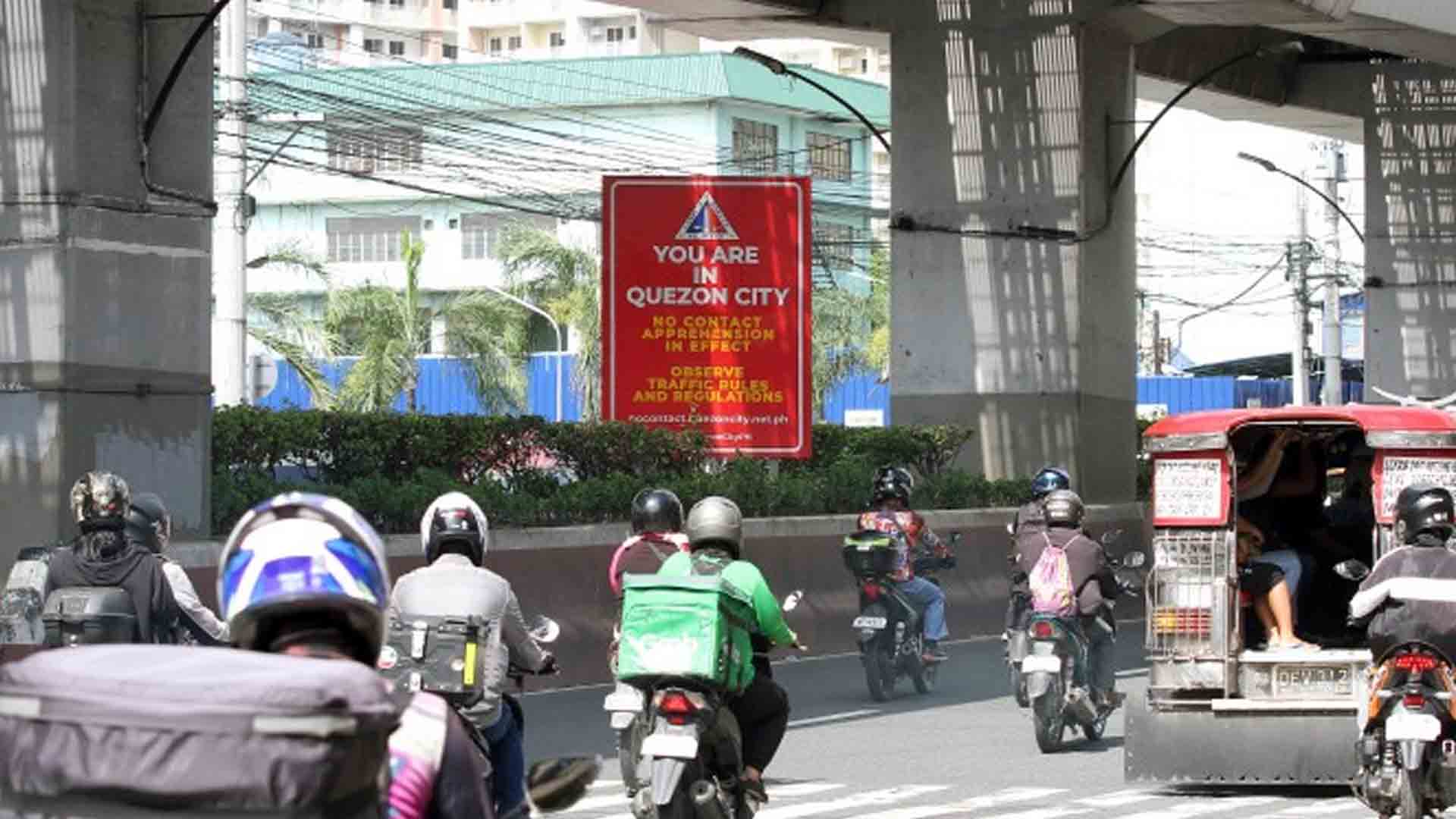






The Metropolitan Manila Development Authority (MMDA) on Thursday supported the continued enforcement of the no-contact apprehension policy (NCAP) by some local government units (LGUs) in the region amid calls to suspend and review the policy due to allegations of “excessive fines.”
In a statement, MMDA acting chairperson Carlo Dimayuga III said “empirical evidence” from the MMDA’s own version of the NCAP showed that the policy continues to be “an effective force multiplier” to its traffic enforcers and has raised public awareness and compliance with existing traffic rules.
“There is no doubt that the same experience is true for the Metro Manila LGUs,” Dimayuga said.
He acknowledged the concerns surrounding the NCAP and said these may be the subject of “future collaborative and constructive discussions with stakeholders” to create a “wholistic, just, and inclusive” NCAP.
“The MMDA endeavors to strike a sustainable balance between public interest on one hand and the traffic and transport management function of government on the other within the National Capital Region (NCR),” he said.
He said LGUs are supposed to have “genuine and meaningful local autonomy to enable them to attain their fullest development of self-reliant communities and make them more effective partners in the attainment of national goals” as stated in Republic Act 1760 or the Local Government Code of 1991.
“Further, the law also provides that ‘any provision on a power of a local government unit shall be liberally interpreted in its favor’ and any fair and reasonable doubt as to the existence of the power ‘shall be interpreted in favor of the local government unit concerned,’” he said.
Metro Manila LGUs, he said, are “valuable and indispensable partners of the MMDA” and their respective mayors are regularly in consultation and coordination with the MMDA through the Metro Manila Council.
On Wednesday, Quezon City Fourth District Rep. Marvin Rillo filed House Resolution 237 which seeks to investigate the NCAP being implemented in the cities of Parañaque, Valenzuela, Quezon, Manila, and Muntinlupa.
He said the investigation seeks to protect motorists against potential abuses in the NCAP such as excessive fines and penalties with the goal of building revenue but at the expense of public interest.
On Tuesday, the Supreme Court asked the five Metro Manila cities and the Land Transportation Office to respond to a suit filed by transport groups seeking a stop to the NCAP. (PNA)


