



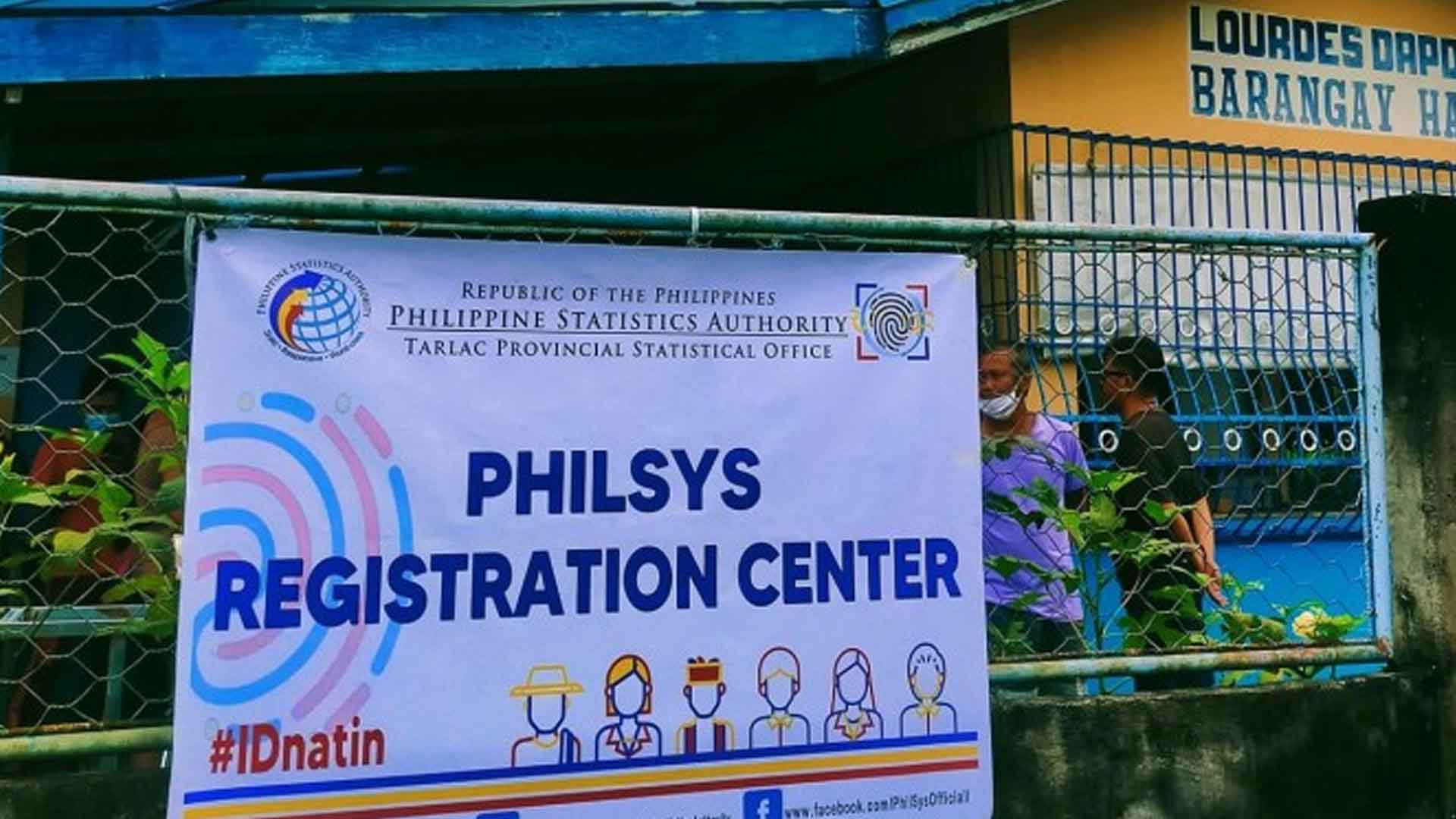






Malacañang has directed all government agencies, offices, instrumentalities, as well as local government units (LGUs) to prepare for the implementation of the Philippine Identification System (PhilSys) and its integration into government processes, databases, systems, and services.
Memorandum Circular No. 95, signed by Executive Secretary Salvador Medialdea on Monday, recognizes the “urgent need” to direct the whole-of-government to undertake preparatory steps to ensure that the PhilSys and its key components are properly integrated in the processes, databases, systems and services of all government agencies, to facilitate interconnectivity, make transacting with the government convenient and cost-efficient for the benefit of the general public, and ensure the effective implementation of RA No. 11055 or the “Philippine Identification System Act.”
“All government agencies, instrumentalities, departments, bureaus, offices, LGUs, GOCCs (government-owned or -controlled corporations), GFIs (government financial institutions), state universities and colleges, as well as other chartered institutions (hereafter ‘Covered Agencies’) are hereby directed to incorporate and integrate in their respective processes, databases, identification systems and services, the PSN [PhilSys Number] and PhillD [Philippine Identification] of registered individuals, as well as the other components and features of the PhilSys. It is understood, however, that the PhilSys integration must not grant Covered Agencies access, in any form, to the PhilSys Registry,” the memorandum read.
The memo said that the Covered Agencies must prioritize PhilSys integration to enable the use of PhilSys-enabled services, involving, among others, online authentication processes and proper controls for the PhillD, including features such as real-time authentication and validation, as established by the PSA, within two years from the launching of the said services in their respective agencies.
Consistent with Section 18 of RA No. 11055, reasonable and appropriate organizational, technical, and physical security measures must be put in place in the planning and implementation of the PhilSys integration, to ensure that PhilSys Registry, as well as other registered information, are protected from unauthorized access, use and disclosure, and against accidental or intentional loss, destruction or damage.
All covered agencies are directed to submit to the PhilSys Policy and Coordination Council (PSPCC), their PhilSys Integration Plans within 60 days from the effectivity of this Circular.
For purposes of monitoring compliance with the herein directives, all covered agencies are required to submit quarterly status reports to the PSPCC until completion of their respective workplans.
The Philippine Statistics Authority (PSA), through its PhilSys Registry Office, is directed to support the covered agencies, as well as the private sector, in the planning, analysis, integration, piloting and scaling of use cases.
The PSA, together with the Department of Information and Communications Technology (DICT), must ensure that all information databases and systems to be developed by government entities must be synchronized to facilitate interoperability of government-initiated identification systems, ensure efficient and more reliable government transactions, and secure access to information and services.
In this regard, the DICT must ensure that future information technology developments of the government must include the PSN as a field and must be fully capable of being integrated with the PhilSys.
President Rodrigo Duterte signed into law in 2018 the Philippine Identification System Act that seeks to harmonize and integrate several government identifications by establishing a single national identification system for all citizens and resident aliens.
The PhilID collates the ID holder’s full name, sex, date, and place of birth, blood type, and address.
It will indicate if a person is a Filipino or a resident alien and will also contain the holder’s front-facing photo, full set of fingerprints, and an iris scan.
The PhilID, which will be given for free, will eventually replace all other government-issued IDs, except the passport, driver’s license, and UMID ID.
Duterte himself received his national ID in March 2021. (PNA)


