



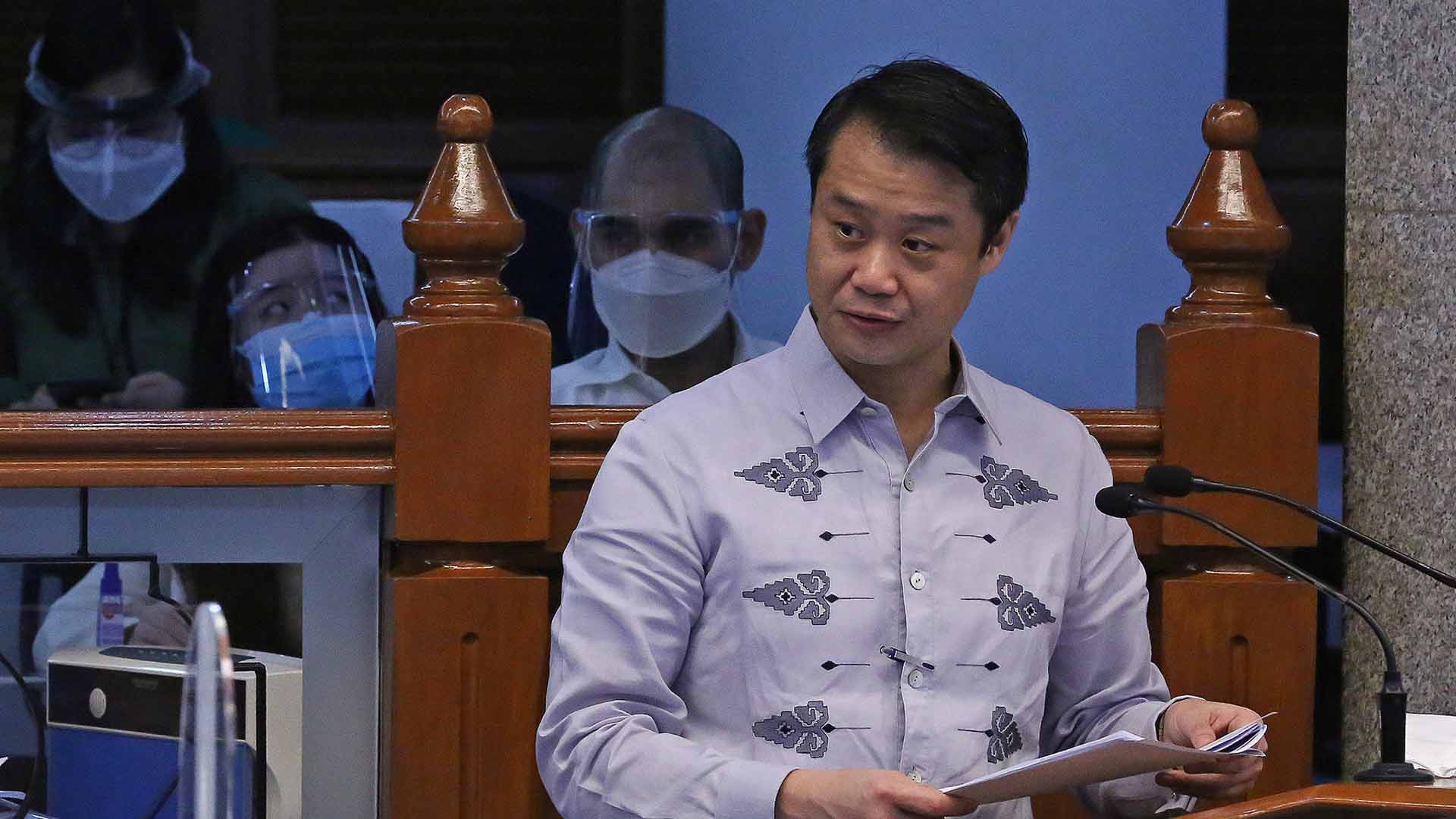






Maximizing the use of satellite technology to widen internet access nationwide will be a boost to the rollout of digital technology in public schools, Senator Win Gatchalian said.
Senate Bill No. 2250 or the “Satellite-Based Technologies for Internet Connectivity Act of 2021” aims to expand access to satellite-based technologies as an alternative connectivity solution to ensure universal access to the internet.
“Habang hindi pa nakakabalik ang mga mag-aaral sa eskwelahan, mas maiging ngayon pa lang ay nilalatag na natin ang mga paghahanda para sa itinataguyod nating digital education sa bansa,” said Gatchalian.
Under the proposed measure, government organizations, public and non-profit private institutions, and volunteer organizations engaged in education, health, finance, agriculture, environmental management, climate change management, disaster preparedness and crisis response will be allowed to own and operate satellite-based technology to aid and augment their activities.
To provide internet services through satellite-based technologies, especially in areas where it is expensive to roll out wired or mobile wireless networks, a satellite is used to get internet signal from the internet service provider (ISP) to the user. The ISP sends a wireless internet signal to a satellite in space, while the satellite dish is connected to the modem of the user, which then connects the user to the internet.
The proposed measure complements the Public Education Network (PEN) which the Department of Education (DepEd) and the Department of Information and Communications Technology (DICT) aim to put up, Gatchalian explained. This initiative aims to fast track the installation of digital connectivity in public schools and DepEd offices.
Under the PEN, the DICT will augment future satellite capacity of the DepEd for students from Last Mile Schools to access digital education. The use of public schools as common tower sites is also part of the two agencies’ agreement.
According to the 2019 National ICT Household Survey, 82.3 percent of households do not have access to the internet. A paper from The Asia Foundation also pointed out that 74 percent of public schools remain unconnected to the internet.
“Sa isinusulong nating pagpapalawig sa paggamit ng satellite-based technologies, bawat paaralan at bawat tahanan ay maaari na nating maabot,” said the Chairman of the Senate Committee on Basic Education, Arts and Culture.


