



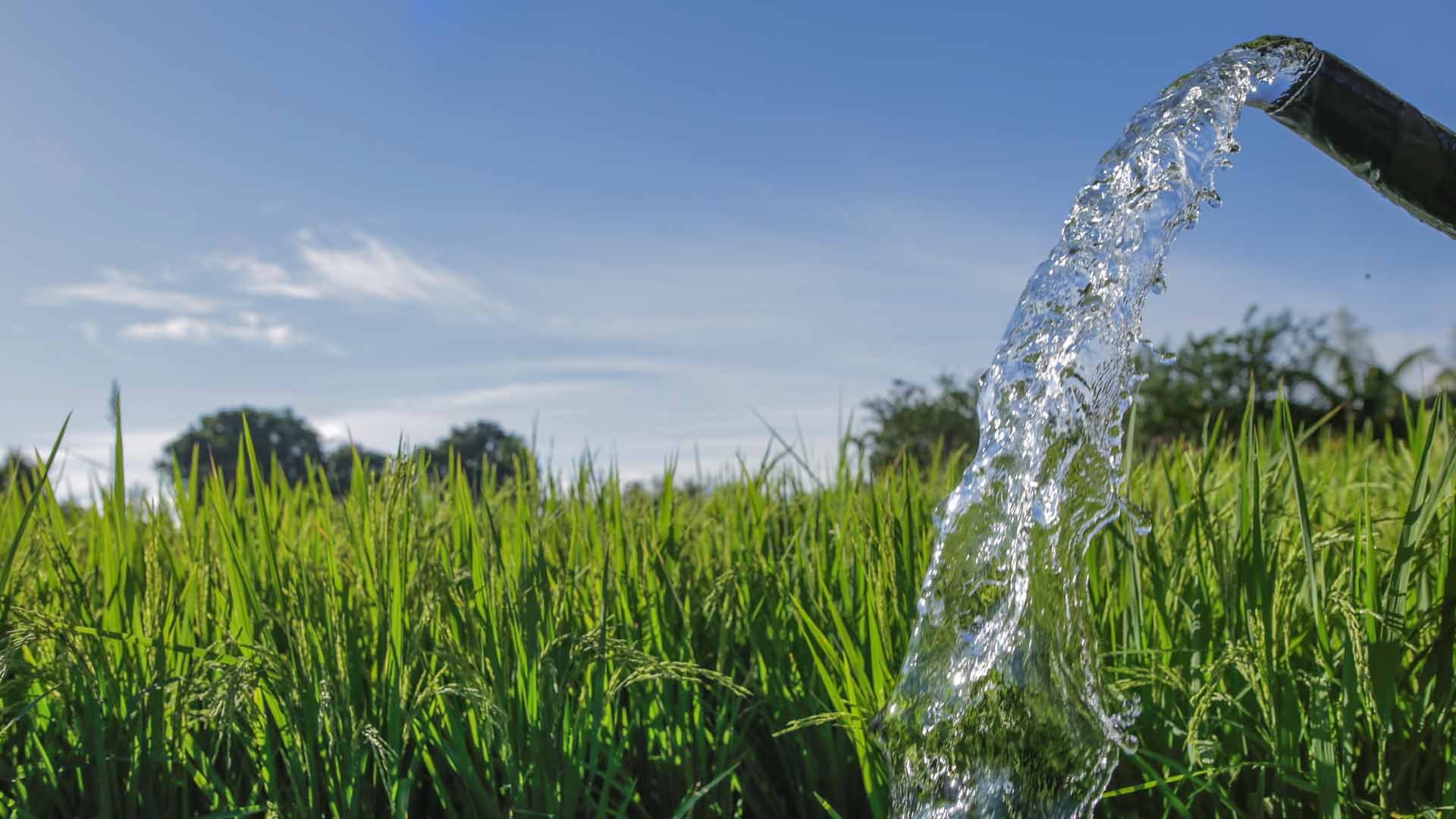






Amidst looming crisis, experts from the Department of Agriculture-Philippine Rice Research Institute (DA-PhilRice) advise farmers to avoid excessive water use.
“Studies show that by 2025, it is estimated that 15-20M ha of irrigated rice fields in the world will experience water shortage,” Kristine S. Pascual, DA-PhilRice’s senior science research specialist, said.
She shared that 1,400L or 7 drums of water can be conserved in the production of 1kg of rice if water supply in the fields are well-managed.
“We need 4,000L or 20 drums of water to produce 1kg of rice. With proper water use, only 2,600L or 13 drums will be needed to produce the same amount of rice,” she said.
To conserve water, farmers are encouraged to use controlled irrigation.
“During crop growth, farmers should practice alternate wetting and drying (AWD) aided by observation well if water is insufficient,” Pascual said.
She said that water scarcity is evident if the rice field has deep soil cracks for more than three days. Meanwhile, water is excessive if the field is submerged in 5cm of water for seven days or more.
She explained that insufficient water during vegetative stage causes leaf-rolling, leaf tip-drying, and stunted growth in rice crops. During panicle initiation to grain-filling stage; leaf rolling and leaf tip drying, many unfilled spikelets, and reduced panicle exertion can be observed.
Excessive water, on the other hand, causes reduced tillering (less than 10 tillers per hill), small leaf area, and dark-colored roots instead of reddish brown or lighter.
The engineer added that farmers should discontinue some of their current practices to conserve water. These unhelpful routines include rice paddies remaining open during rest period until the first irrigation time, lack of definite schedules or guidelines of irrigation, paddy to paddy irrigation and lack of ditches, and continuous flooding of fields throughout the cropping season.
“If the right amount of water is used in rice fields, high yield, high grain quality, increased input efficiency, and minimal damage to the environment will be achieved,” she said.
Browse https://web.facebook.com/rice.matters/videos/3602764216512112 to watch discussion of this topic or contact the PhilRice Text Center (0917-111-7423) for more information.


