



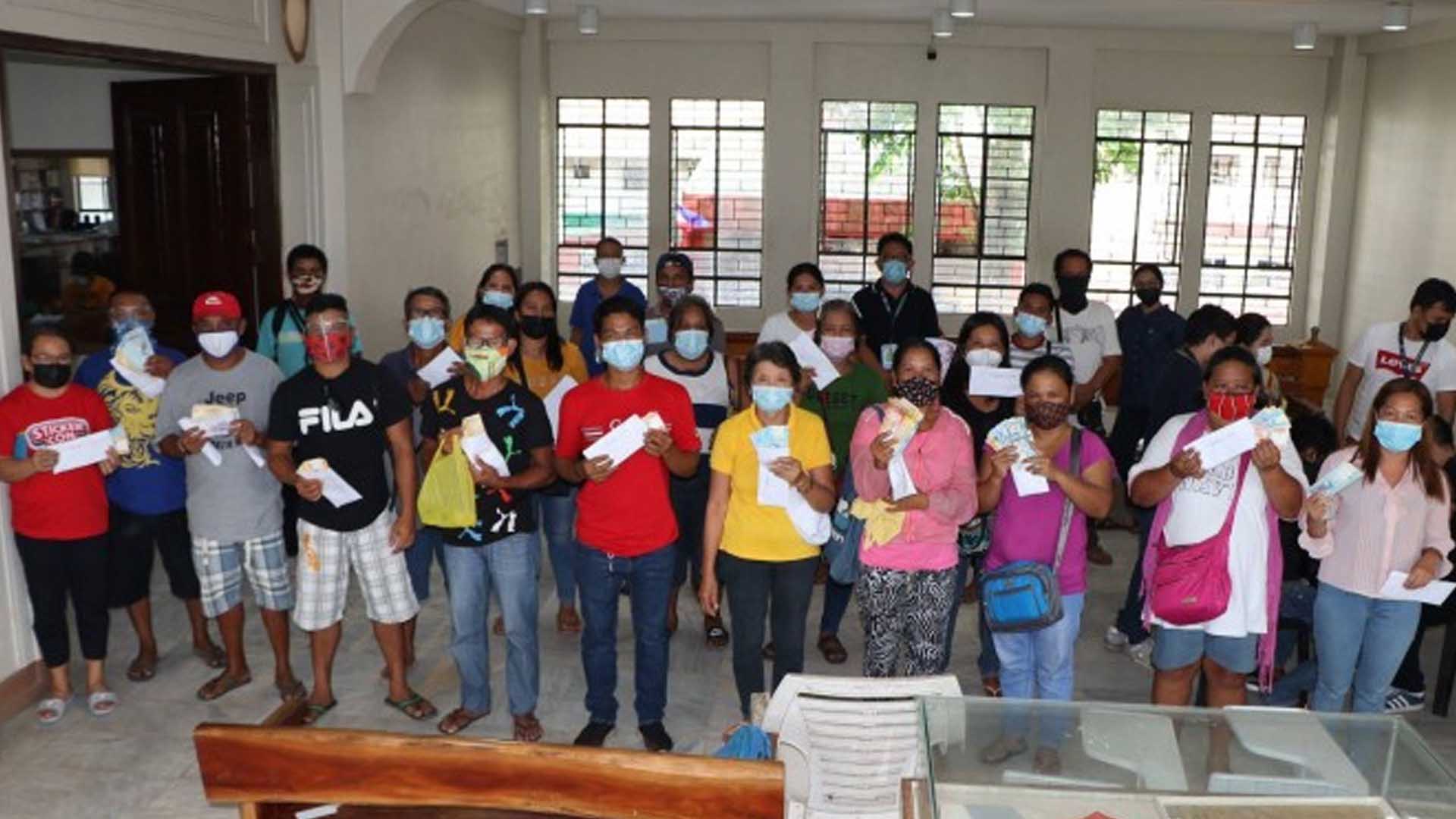






The Community Environment and Natural Resources Office (CENRO) here has tapped 30 poor families in Burauen, Leyte to reforest 186 hectares of land in the next three years.
These families recently received at least PHP337,319 as initial compensation for their effort to carry out the central government’s enhanced National Greening Program (NGP).
The amount represents about 15 percent of the total project cost, said Jen Lamoste, CENRO Palo NGP coordinator in an interview Tuesday.
The project requires more than PHP3 million from seedling production to planting. The Department of Environment and Natural Resources will set aside more funds for maintenance.
“During the first year of their contract, families will undertake activities under comprehensive site development such as the production of seedlings and establishment of 186 hectares NGP plantation in Burauen town,” Lamoste told the Philippine News Agency.
Of the 186 hectares, 70 hectares are intended for indigenous tree species cultivation, 30 hectares for fruit trees, and 86 hectares for bamboo.
The DENR has been adopting the “family approach” as one of the modes in implementing the enhanced NGP where families are assigned to establish forest plantations composed of timber and non-timber species.
“The DENR wants poor families to directly benefit from NGP instead of people’s organization. We have personnel regularly monitoring them to ensure that initial funds released are being used for seedling production and provision of the family’s basic needs,”
Each family can receive up to PHP121,000 in a year for seedling production and planting of indigenous trees. They are entitled to receive an additional up to PHP90,000 for two-year maintenance and protection.
The maximum area for each family is nine hectares, Lamoste said.
Within production zones, beneficiary families can also establish agroforestry plantations composed of timber, non-timber, and high-value crops such as coffee, cacao, rubber, and other fruit trees, provided that the area must be planted with more forestry species than high-value crops. (PNA)


