



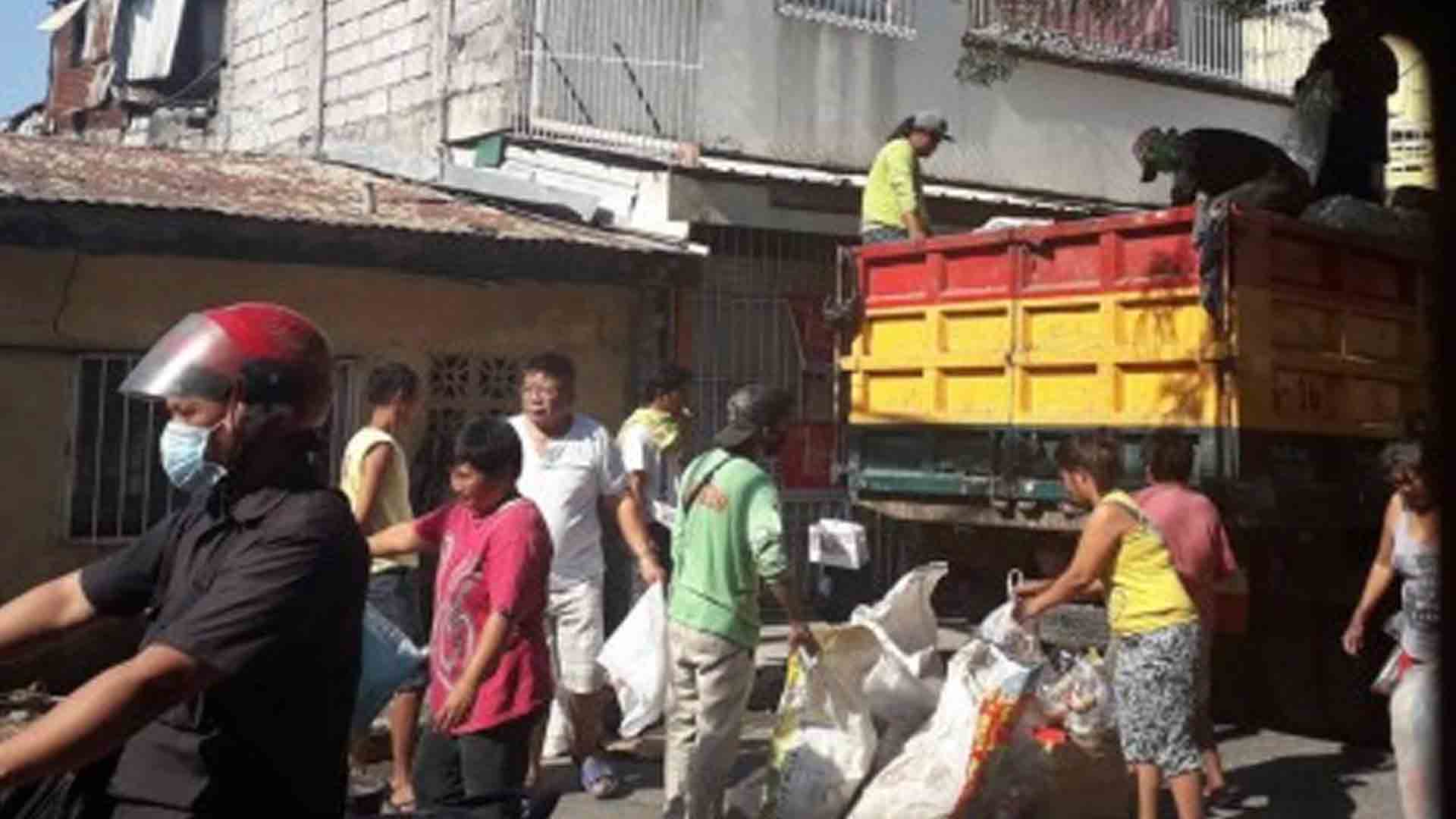






The Department of Environment and Natural Resources (DENR) has found an innovative solution to trash collection problems in estero communities along the Tullahan-Tinajeros River System using its own version of the lowly yet dependable “habal-habal.”
Frequently dubbed as the “poor man’s motorcycle taxi,” habal-habal is a highly improvised two-wheeled single motorcycle usually ridden beyond its passenger capacity.
In a press release on Tuesday, DENR said it has its own version of the utility vehicle that uses an eco-friendly bicycle with automatic foot break and two-by-three feet sidecar, allowing it to carry household waste.
DENR Secretary Roy Cimatu said the habal-habal will be used to collect garbage from estero communities that are not reached by dump trucks and whose uncollected trash eventually ends up in Manila Bay.
Citing a recent DENR study, Cimatu said garbage generated by estero communities with narrow streets or alleys are not regularly collected since these areas are not accessible to dump trucks.
“The accumulated uncollected wastes do not only pose health risks to the communities but also clog canals, causing flooding in these areas. Uncollected garbage also ends up in coastlines and waters of Manila Bay,” Cimatu said.
Cimatu, who chairs the Manila Bay Task Force, said proper garbage collection and regular cleanups in esteros are crucial to the ongoing efforts to rehabilitate the historic bay.
“Tough problems involving the presence of informal settlers directly dumping to the esteros, non-compliance of industries with discharge permitting regulations, and lack of sewage management system are also being addressed under the Manila Bay Rehabilitation Program,” he added.
Cimatu said the DENR will be distributing units of habal-habal to 10 barangays within the Tullahan-Tinajeros River System, which have a relatively high number of informal settler families and with areas that are hard to reach by garbage collection trucks.
These are Barangays 160, 162, and 163 in Caloocan City; Potrero, Catmon, Tinajeros, and Maysilo in Malabon City; Ugong and Marulas in Valenzuela City; and Sta. Lucia in Quezon City.
Tullahan-Tinajeros River Commanders and DENR Undersecretaries Jonas Leones and Analiza Rebuelta-Teh, together with DENR-National Capital Region Executive Director Jacqueline Caancan, will lead the turnover of habal-habal units to the barangay beneficiaries on Sept. 19.
The turnover ceremony forms part of the local celebration of the International Coastal Cleanup Day, with the theme “Safe Oceans Start at Homes.”
During the event, the DENR will also distribute educational materials on climate and environmental protection, including UNICEF-assisted climate change flip charts and children storybook entitled “Ang Paglalakbay nina Niño at Niña,” as well as hygiene kits in support of the campaign against Covid-19.
The Tullahan-Tinajeros River System measures 36.4 kilometers, traversing 44 barangays, covering the cities of Quezon, Caloocan, Valenzuela, Malabon, and Navotas.
Dredging of the 5.25-km portion of the river system has recently started, with help from diversified conglomerate San Miguel Corporation, yielding about 2,500 truckloads of silt and garbage as of late August 2020. (PNA)


