



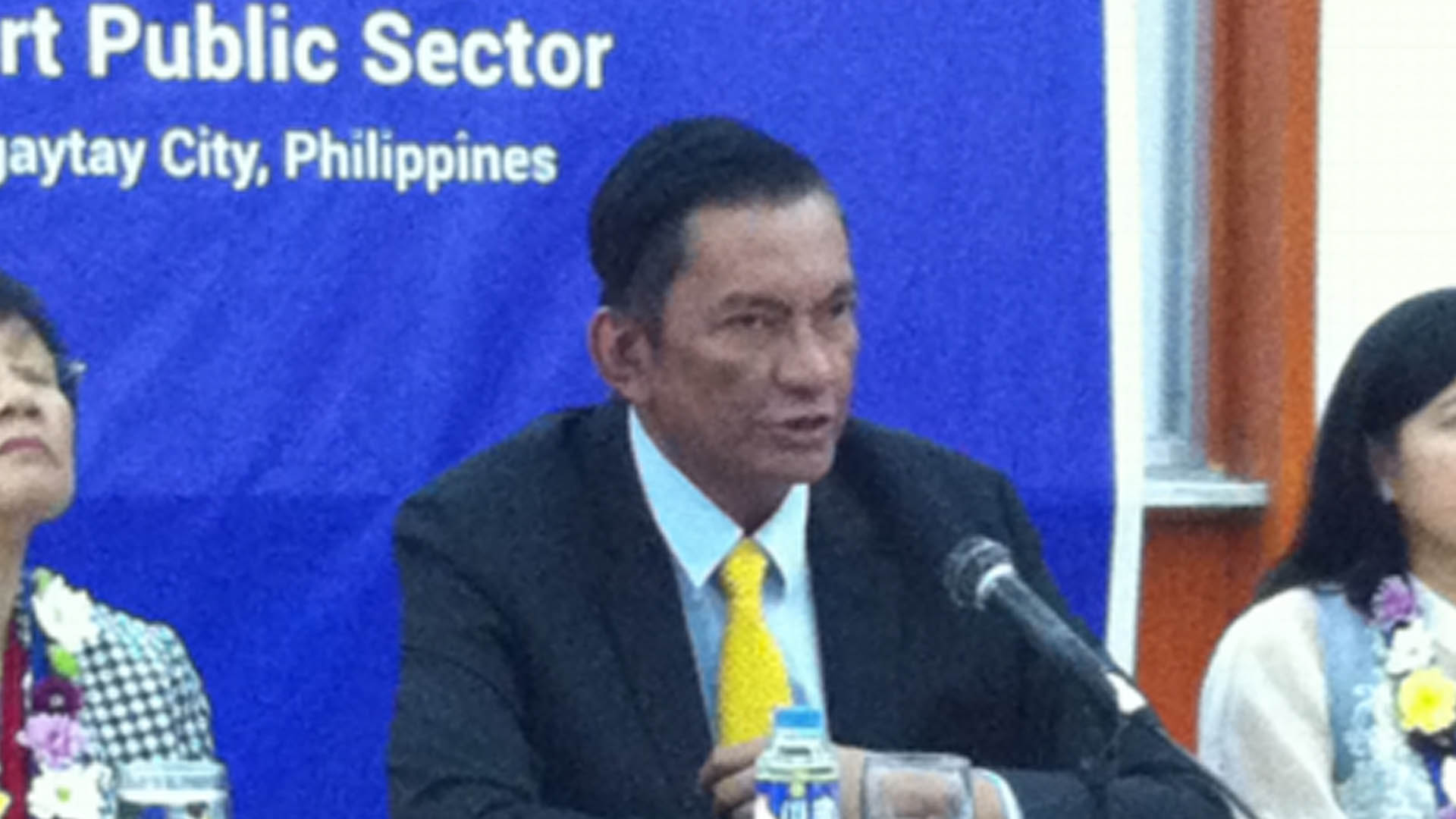







The chairman of the House ways and means committee on Wednesday recommended to allot around PHP27 billion to PHP32 billion to finance the proposed cash transfer for the middle class amid the enhanced community quarantine.
In a four-page paper containing recommendations on the government’s social amelioration program (SAP), Albay Rep. Joey Salceda said social protections must be in place for the middle class to prevent those who have breached poverty and have joined the middle class will not fall back below the poverty line.
He noted that middle class households are either mostly or entirely outside the coverage of the SAP.
“There is a basis for a middle-class cash transfer. A key goal of the Duterte administration’s key economic policies has been to create a robust middle class who will drive economic dynamism and productivity,” he added.
“My office is calibrating a middle-class cash transfer that should not be higher than the lowest amount received by low income and vulnerable households. We reckon this amount to be around PHP27 to PHP32 billion, which we believe to be a reasonable investment in the middle class, and which will almost certainly immediately support aggregate demand in the economy,” Salceda added.
He said that households belonging to that particular socioeconomic bracket, on average, have annual savings of PHP42,000 to PHP89,000.
“As the second quarter has only started, these families likely have access to only a quarter of those annual savings (between PHP10,000 to PHP22,000). If they are not paid or are unable to avail of special work arrangements, they will likely exhaust their savings within the next two months,” he said.
“Some households in these deciles who are currently not identified as eligible beneficiaries will likely have to be considered for inclusion in the second tranche of transfers,” he added.
Around PHP200 billion would be allocated for SAP to help the 18 million poor households affected by the measures imposed to combat coronavirus disease 2019 (Covid-19) pandemic in the country.
Under SAP, those who are eligible to receive emergency subsidy are the underprivileged sector and homeless families, indigent indigenous peoples, and other vulnerable groups; workers in the informal sector or self-employed; rice farmers; senior citizens; a person with a disability; pregnant or lactating woman; solo parent; and distressed overseas Filipino workers.
Local government units (LGUs), are mandated to submit their database of target beneficiaries to the national government and distribute social amelioration cards to the poor families.
Low-income households from Metro Manila, Cordillera Administrative Region, Ilocos Region, Cagayan Valley, Central Luzon, Calabarzon, and Bangsamoro Autonomous Region in Muslim Mindanao already received their emergency subsidies on April 3.
Poor families from Mimaropa, Bicol Region, Western Visayas, Central Visayas, and the Zamboanga Peninsula got their emergency relief on April 4, while beneficiaries from Eastern Visayas, Northern Mindanao, Davao Region, and Soccsksargen, received the aid on April 5. (PNA)