



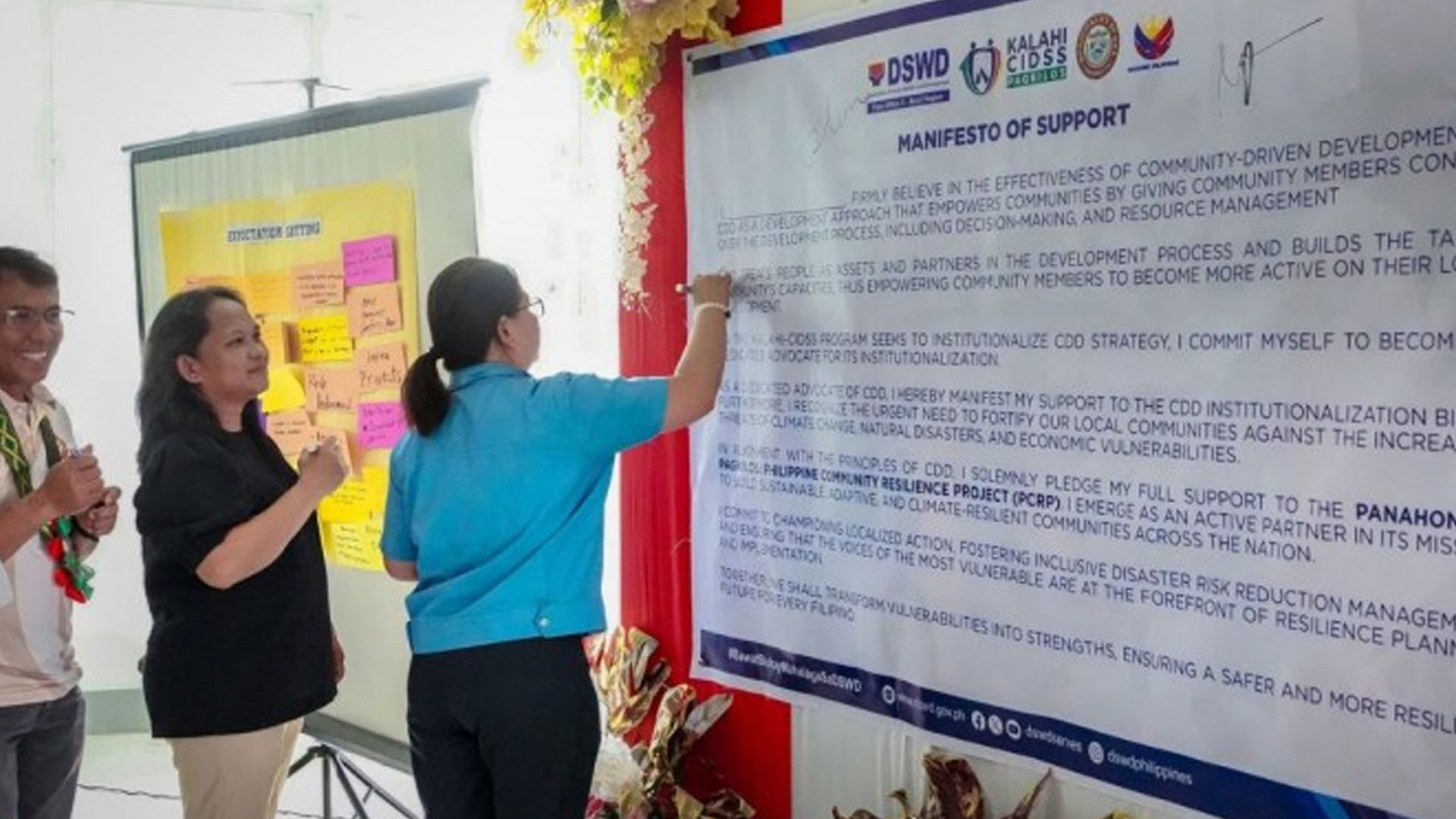






Fifty-three municipalities in the Bicol Region are set to benefit from the Department of Social Welfare and Development’s PHP2.99 billion Philippine Community Resilience Project (PCRP), with implementation officially starting this July through the creation of municipal resilience teams.
The project has an additional PHP598 million in counterpart funding from participating local government units (LGUs).
During a Tuesday interview, Ranelle Anne Sertan, DSWD-5 (Bicol) project development officer and regional stakeholder engagement and partnership-building officer, said that first-to third-class municipalities will receive PHP50 million each, while fourth-to sixth-class municipalities will get PHP70 million each under the program.
The first batch, which will run from 2026 to 2028, will cover two municipalities in Camarines Norte, 27 in Camarines Sur, three in Catanduanes, six in Albay, seven in Sorsogon and eight in Masbate.
Sertan said the number of beneficiary families has yet to be determined, as communities will identify and prioritize projects through participatory planning.
The PCRP, a successor program to the Kapit-Bisig Laban sa Kahirapan-Comprehensive and Integrated Delivery of Social Services (KALAHI-CIDSS), aims to boost community resilience planning and access to resilience investments in vulnerable, disaster-prone areas.
A central aspect of the project is the Participatory Risk and Vulnerability Assessment, in which residents conduct community walkthroughs and focus group discussions to pinpoint hazards, vulnerabilities and resources.
“The communities will conduct consultations in their respective areas to identify the risks and vulnerabilities they face. The data gathered from the communities will serve as the basis for identifying the sub-projects they will propose,” Sertan said.
She said projects may include flood-control structures, evacuation centers, and water supply systems, depending on the priorities identified by the communities.
“There will be prioritization at the municipal local government unit level, where communities and LGUs will vote on which sub-project proposals will be funded under the Philippine Community Resilience Project,” she said.
Sertan emphasized that community participation is essential to ensuring resilience measures respond to local realities. (PNA)


