



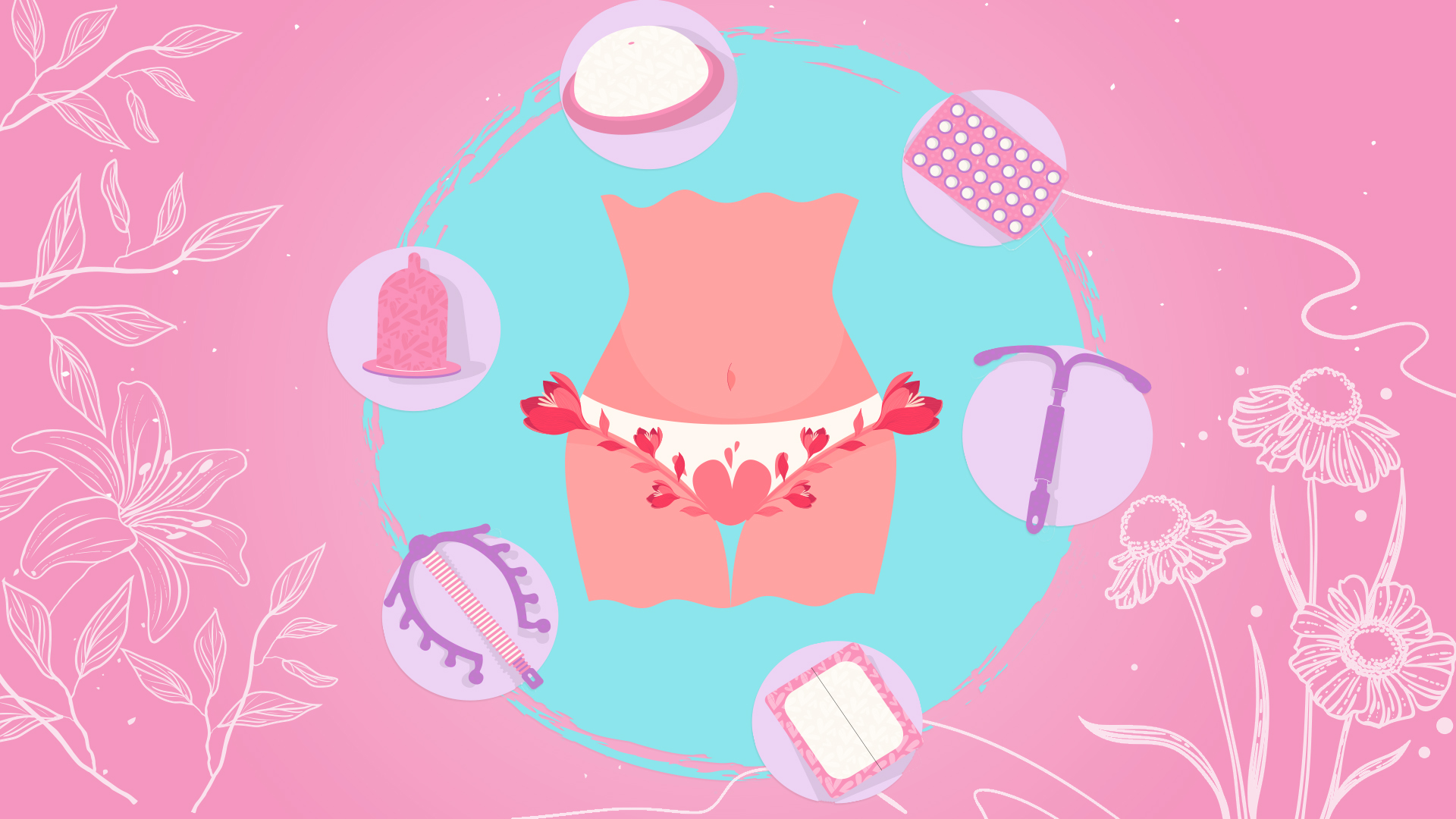







When thinking or hearing about birth control, you might automatically remember “the pill”. In reality, birth control is not limited to the pill. There are several methods that vary in effectivity and how often you need to take or replace it.
Birth control is important in feminine health not only to prevent pregnancies or sexually transmitted diseases (STD) but also control hormones that may be imbalanced.
Here are some methods of birth control that you can know more about:
1. The Pill

Also called “the pill”, this method of birth control can prevent pregnancies but does not protect you against STDs. The pill method is 91% effective and can be tedious to take every day. Some birth control pills may be purchased over the counter.
The pill becomes effective after 7 days of consecutive and on-time intake. So, if you forget to take your pill or forget to grab next month’s set of pills, it will decrease its effectivity.
In a nutshell, the pill contains hormones that stops ovulation. Halting ovulation means that there is no egg for the sperm to fertilize, thus largely decreasing the chance of pregnancy. What’s great about the birth control pill is that its usage is not limited to preventing pregnancy. Doctors can prescribe it to women with hormonal imbalance or those with severe period cramps.
2. Intrauterine Device (IUD)

An Intrauterine device (IUD) is a small t-shaped device that goes inside a woman’s uterus. This method is popular because its efficiency goes up to 99%. Aside from that, it is also reversible and does not require to be taken consistently like the pill. An IUD can last from 3 years up to 12 years, depending on the one you get. There are hormonal IUDs and non-hormonal IUDs, too. Both kinds, however, have the T-shape which changes the way the sperms move to make it more difficult for it to reach the egg.
A hormonal IUD prevents pregnancy by thickening the mucus in your cervix. Doing so blocks the sperm from reaching the egg. Another way hormonal IUDs prevent pregnancies is by releasing hormones that prevent ovulation, similar to birth control.
Meanwhile, non-hormonal IUDs are made out of copper, which is toxic to sperm and eggs, so it is virtually impossible for the sperm to get to the egg if the copper is blocking its path. Non-hormonal IUDs can last up to 12 years but can make periods heavier and more painful during the first few months of usage.
3. Depo Shot

The birth control shot is 94% effective but has to be done on a schedule of around every 3 months. To reach its full effectivity, you have to remember to visit your clinic regularly. Just like the pill and IUDs, the shot releases a hormone called progestin which prevents ovulation and also thickens the cervical mucus.
4. Implant

The birth control implant is a plastic tiny rod that is implanted into your arm. It has a 99% effectivity and can last up to 5 years. Just like the methods mentioned, the implant releases progestin and thickens the cervical mucus. What’s great about the implant is that if you decided to get pregnant, it can be removed and revert your ovulation. It is also long-term and reversible.
5. Birth Control Patch

The birth control patch can be placed on different parts of the body, depending on your doctor. It is 91% effective and has to be changed weekly. The patch also releases progestin and thickens the cervical mucus, which helps in preventing pregnancy.
These are just some methods of birth control that may do the same thing, but vary in effectivity, cost, tediousness, and length of effectivity. Most especially, these methods and the side effects that follow vary for every woman.
Women can choose which birth control method to apply depending on their personal preference, lifestyle, and the doctors recommendation.


