



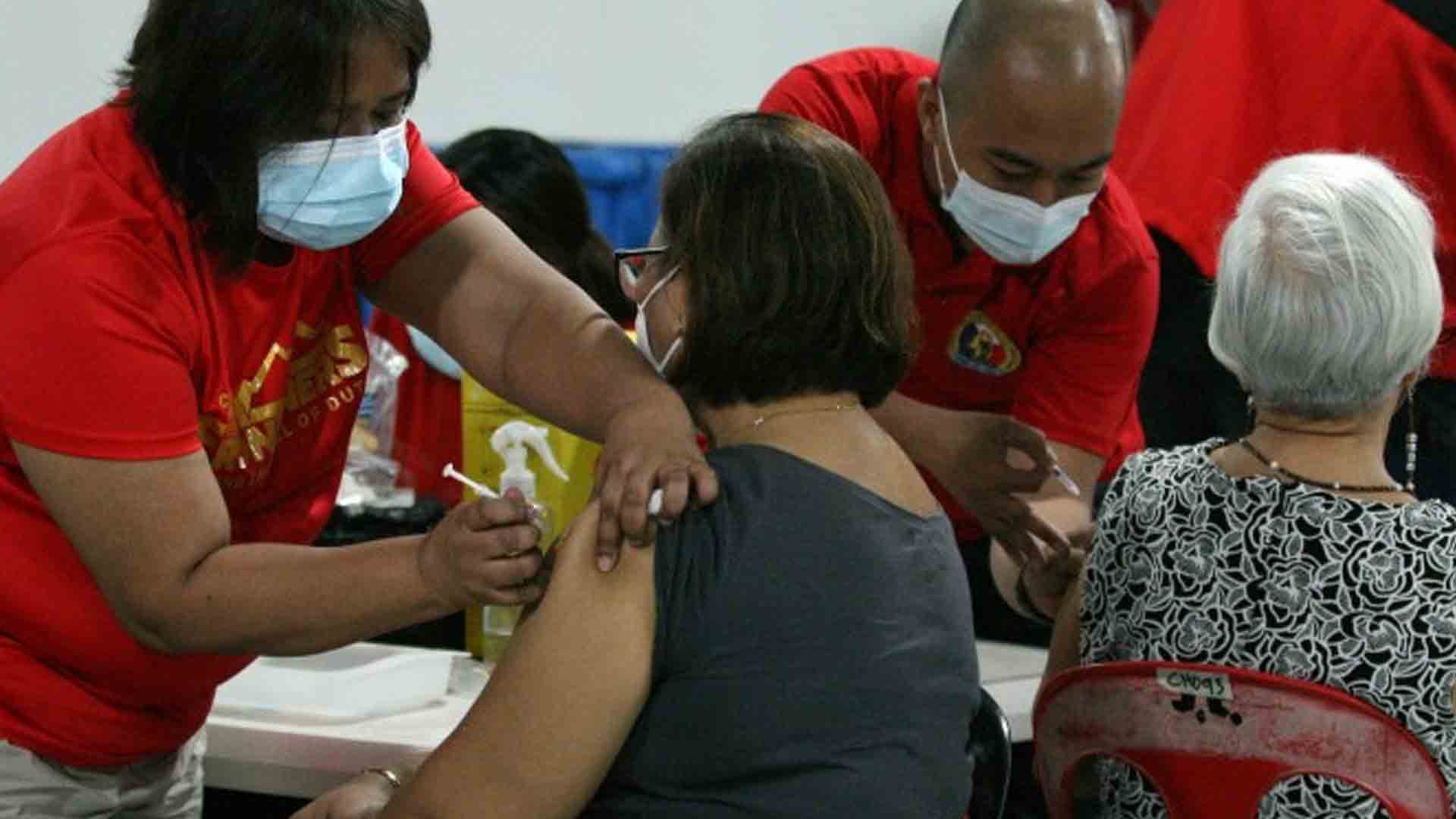






A party-list lawmaker on Monday proposed to the Commission on Higher Education (CHED) to design an Associate in Health Sciences two-year program to be piloted in some state universities and colleges (SUCs) that already have strong health professions programs.
BHW Rep. Angelica Natasha Co said this two-year program would help BHWs attain eventually attain civil service eligibility and job security.
“I also express to CHED my long-term vision for barangay health workers which includes having a new generation of BHWs who are regular government employees,” Co said.
Co said when the two-year program is in place, the Civil Service Commission and Department of Budget and Management can develop the qualification standards (QS), of which the educational qualifications are essential; as well as the plantilla positions and salary grade for BHWs who are graduates of the proposed course.
“This is why I am asking the CHED, University of the Philippines, and the Department of Health to initiate soon the technical work on the details,” she said.
She said CHED should look at offering different types of nursing courses aside from the BS Nursing (BSN) program leading to the Registered Nurse (RN) professional license.
“I make this suggestion because in other countries there are different kinds of nurses, not just RNs,” she said. “The wide gap in wages between nurses in government and nurses in the private sector must also be squarely addressed.”
She also proposed an emergency medical technician (EMT) track in the two-year course so the local government units and barangays can have EMTs in their disaster response departments.
Co welcomed the decision of the CHED to lift the moratorium on nursing programs, as it will address the local and global needs for nurses.
Meanwhile, Makati City Rep. Luis Campos Jr. suggested that the country’s state universities and colleges should lead the offering of new Bachelor of Science in Nursing (BSN) courses following the scrapping of the ban on the opening of new nursing programs.
“We are counting on SUCs that still do not offer the BSN program to be among the first to apply and comply with the requirements to establish new nursing schools,” Campos said. “Our sense is, the lure of free tuition and other fees will encourage many high school graduates to take up nursing once SUCs in the provinces roll out their new BSN programs.”
The Universal Access to Quality Tertiary Education Act, or Republic Act No. 10931, ensures free tuition and other fees for undergraduate programs, including the four-year BSN course, across all SUCs.
Campos said Congress is prepared to support SUCs that will request for additional funding so that they can put up new nursing schools.
The lifting of the decade-long freeze on the opening of new BSN programs augurs well for the country, he said.
“New nursing schools will mean additional teaching and non-academic support jobs,” Campos said. “We also see the country producing a larger number of entry-level nurses in the years ahead, thus putting us in a stronger position to supply and fill both the domestic and global shortages of practitioners.”
The Philippines is currently the largest supplier of migrant nurses in English-speaking countries such as the United States and the United Kingdom, he noted. (PNA)


