



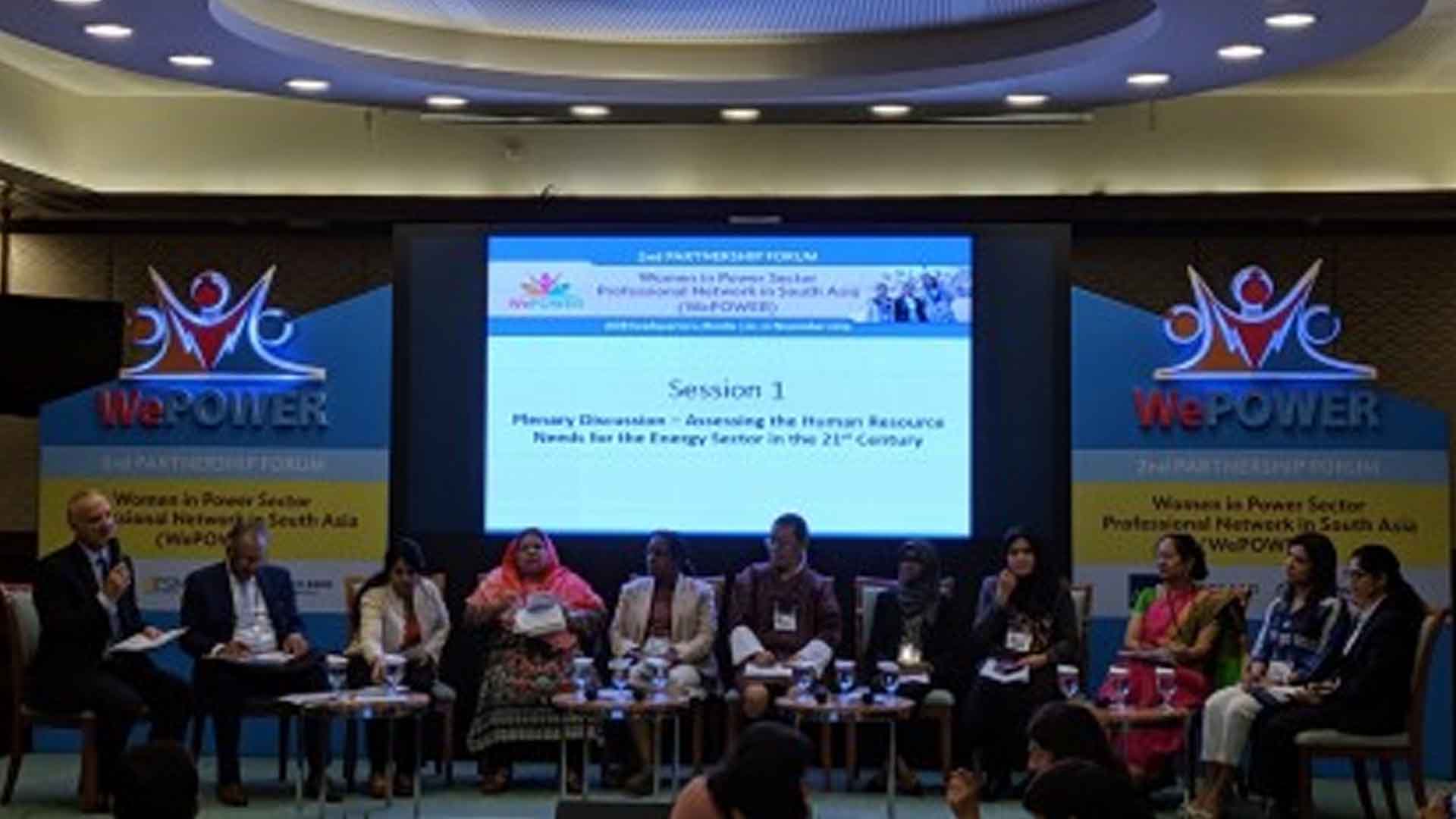






The Asian Development Bank (ADB) and World Bank (WB) hosted a partnership forum supporting workforce participation of women across the South Asia region in energy projects and institutions.
“Energy access and infrastructure development are crucial for economic development of South Asia, yet opportunities for women to contribute to the energy sector are very limited,” ADB vice president for operations 1 South Asia and Central and West Asia Shixin Chen said during the 2nd Women in Power Sector Professional Network in South Asia (WePOWER) partnership forum.
Chen cited the low rates of participation for women in engineering programs and the workforce in utilities, where most of those that are working in the energy sector hold middle-to-lower level non-technical administrative positions.
The ADB encouraged gender equality and social inclusion especially for women on the projects they fund in countries such as Bangladesh, Nepal, Bhutan, and Sri Lanka, where the bank supports the exposure, training, and education of women to work in the sector.
Mara Warwick, WB director for Brunei, Malaysia, Philippines and Thailand, underscored the need for more workers, including women in the energy sector, as demand for electricity is projected to rise in the region given its growing economies.
“Our purpose as part of the WePOWER South Asia Network is to open doors and support change regarding women in Science, Technology, Engineering, and Math (STEM). Our framework addresses important constraints for women to participate in energy jobs through five key pillars: STEM education, recruitment, professional development, retention, and policy and institutional change,” she said.
The forum involved the formation of a steering committee for the network, presentation of accomplishments done together with WePOWER partners, and the planning of activities for the years of 2020 and beyond.
The partnership forum was made possible through a joint effort of the ADB South Asia Regional Department and the WB Energy Sector Management Assistance Program (EMAP).
WePOWER held its first ever regional conference last February 21 this year at Kathmandu, Nepal, where it sought to promote opportunities for women in the energy sector through initiatives led by various regional institutions. (PNA)


