



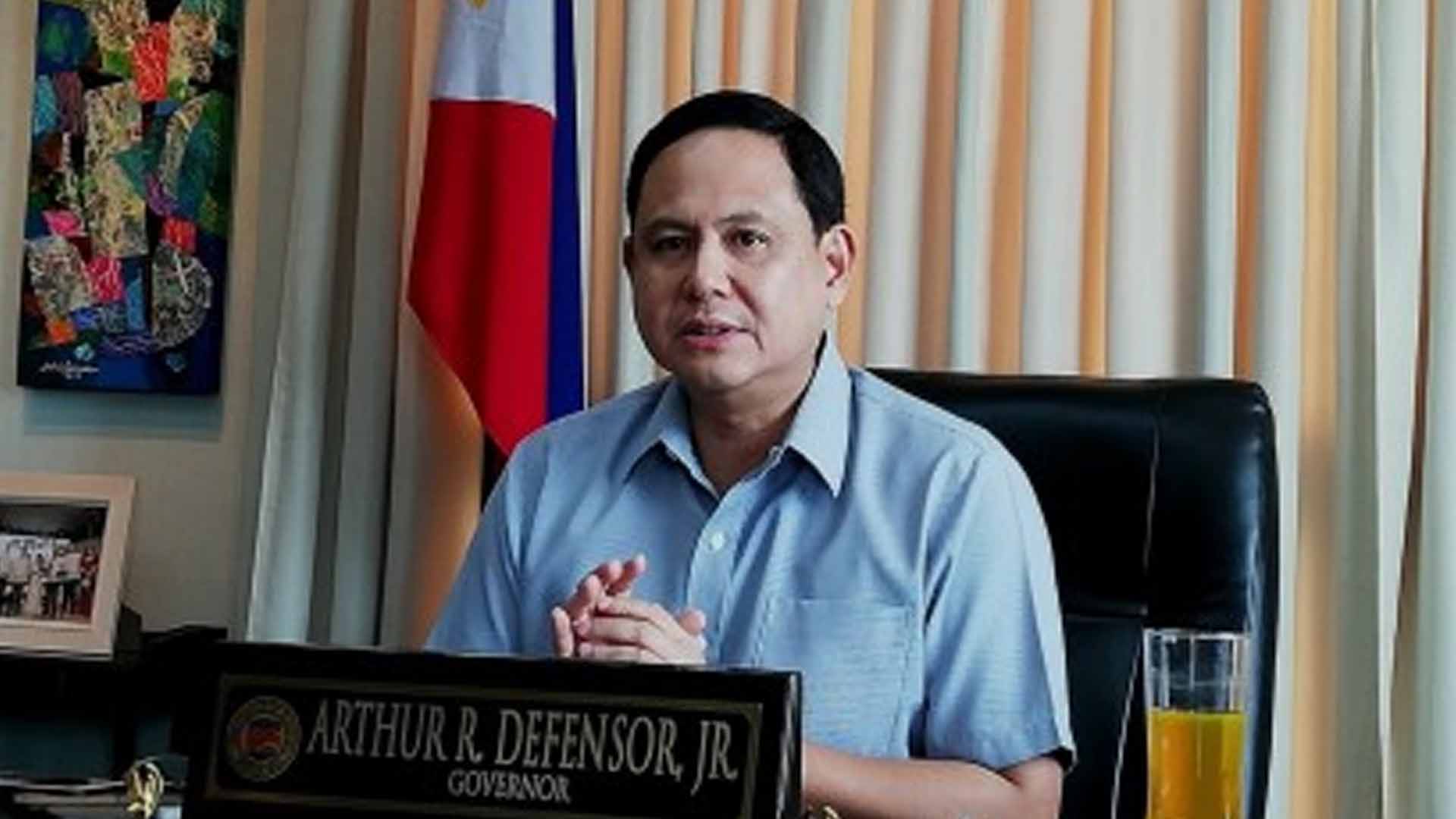






The Iloilo provincial government is exploring a possible partnership with the city government here for a joint solid waste management program and adoption of waste-to-energy technology.
Iloilo Governor Arthur Defensor Jr., recently met with officials of the Department of Environment and Natural Resources (DENR) to ask for guidelines on how to select a “good waste-to-energy” company.
“We approached DENR to ask help for the guidelines, (to) teach us how to select a good waste-to-energy company because there were companies who approach us but we have no guidelines,” he said.
A waste-to-energy corporation from Netherlands requires 400 tons of garbage per day, “but we are only at 240 (tons),” he said.
Defensor said he wants to talk with Iloilo City Mayor Jerry Treñas to explore a joint program to make a waste-to-energy company work for the city and the province.
“If you combine the garbage from the city and the province, it will be more,” he said.
Meanwhile, Defensor said the province has a program, in which for every congressional district, one town will be identified to host a high-level sanitary landfill.
He said the challenge for high-level sanitary landfill is social acceptability as some towns refuse to have the landfill, which will accommodate garbage from other towns.
The province is operating on low-level sanitary landfill which can last from seven to 10 years, he said.
“We are helping our municipalities establish low levels sanitary landfills,” he said.
Local government units also have their own efforts in their respective solid waste management programs.
“The local government has the obligation and responsibility under the Local Government Code,” he said.
For its own program, the municipality of Dumangas and Miag-ao, for instance, barter trash with rice.
“It’s good, because, in our experience in the solid waste management, we need to incentivize,” he said. (PNA)


