



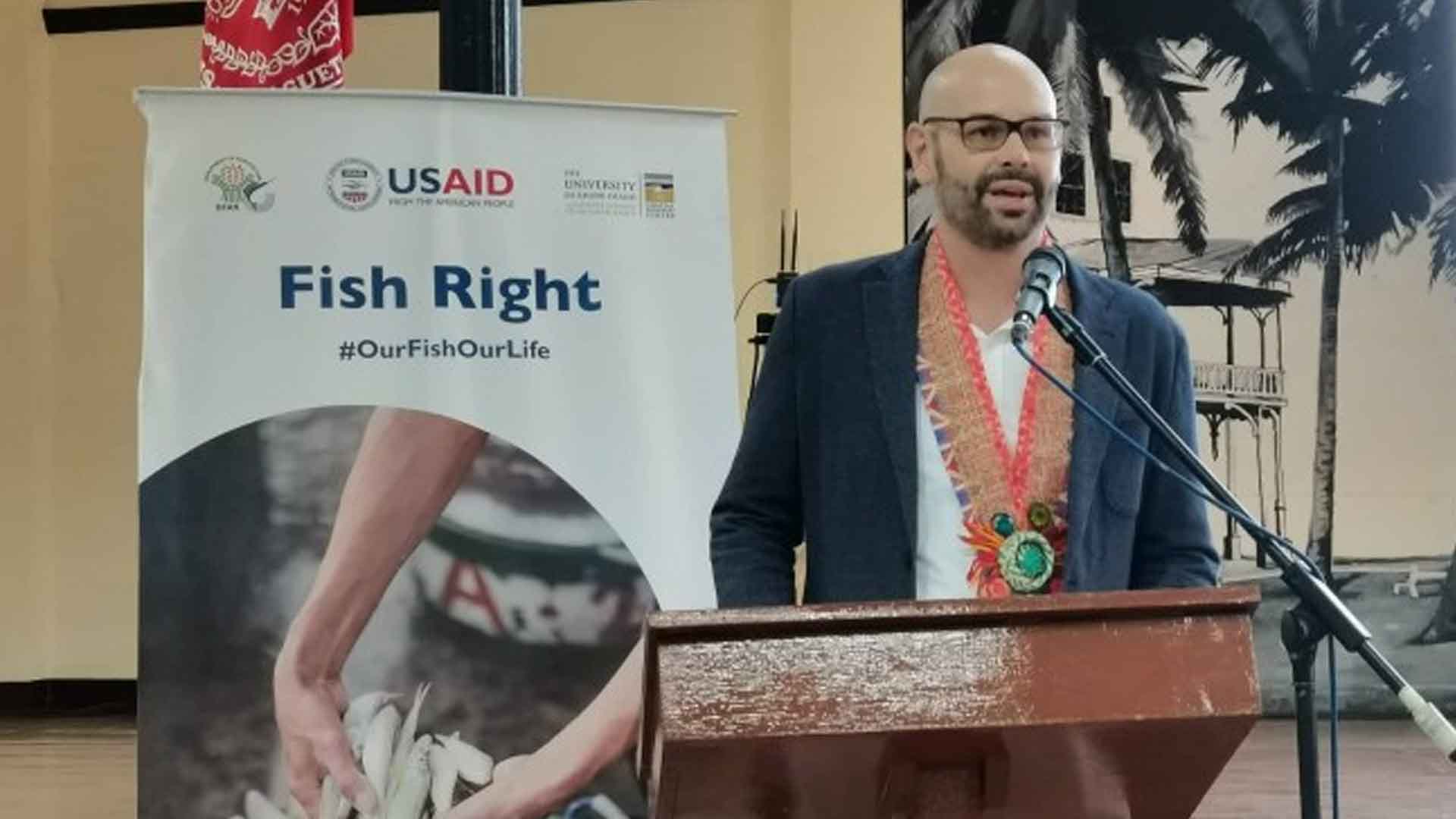






An official of the United States Agency for International Development (USAID) on Thursday lauded the successful implementation of the Fish Right Program in southern Negros aimed at improving marine biodiversity and the fisheries sector.
Ryder Rogers, Environment Officer of USAID-Philippines noted the successful collaboration among the implementors and stakeholders/partners in his message at the South Negros Fish Right Program Sustainability Handover Event and Exhibit/Fair at Silliman University here said.
“It is great to know that Silliman University’s competitive advantage in coastal studies has been leveraged by USAID’s Fish Right Program to advance our sustainable and resilient fisheries in marine biodiversity conservation,” Rogers said.
He said the United States considers the Philippines as among its “most enduring and important allies” and that it includes the area in coastal management and conservation.
“This is not only because of your key position as the global center of biodiversity but also because of the many occasions where the Philippines has shown the leadership role in fostering conservation and sustainability,” Rogers said.
The USAID official noted that Silliman University pioneered the community-based approach to marine protected areas which is now a model for marine conservation in many countries around the world.
The Fish Right Program is a partnership between the Philippine government, through the Bureau of Fisheries and Aquatic Resources (BFAR) and the USAID.
It was launched in 2018 in three ecological areas in the country, also known as marine key biodiversity areas – Southern Negros, Calamianes Islands in Palawan, and the Visayas Seas.
Eleven coastal municipalities and cities are covered by the program. These include Dumaguete City, Bacong, Dauin, Zamboanguita, Siaton, Sta. Catalina, Bayawan City, and Basay in Negros Oriental province and Hinobaan, Sipalay, and Cauayan in Negros Occidental.
Aside from these local government units, other partners include government agencies, non-government organizations, and fisherfolk associations.
Throughout the program implementation, many women’s groups in the beneficiary areas have become empowered, and now earning their income.
Also, the program endeavors to regulate illegal, unreported, and undocumented fishing activities by regulating juvenile catch, an endeavor that Rogers described as a “huge attainment in sustainable fisheries”. (PNA)


