



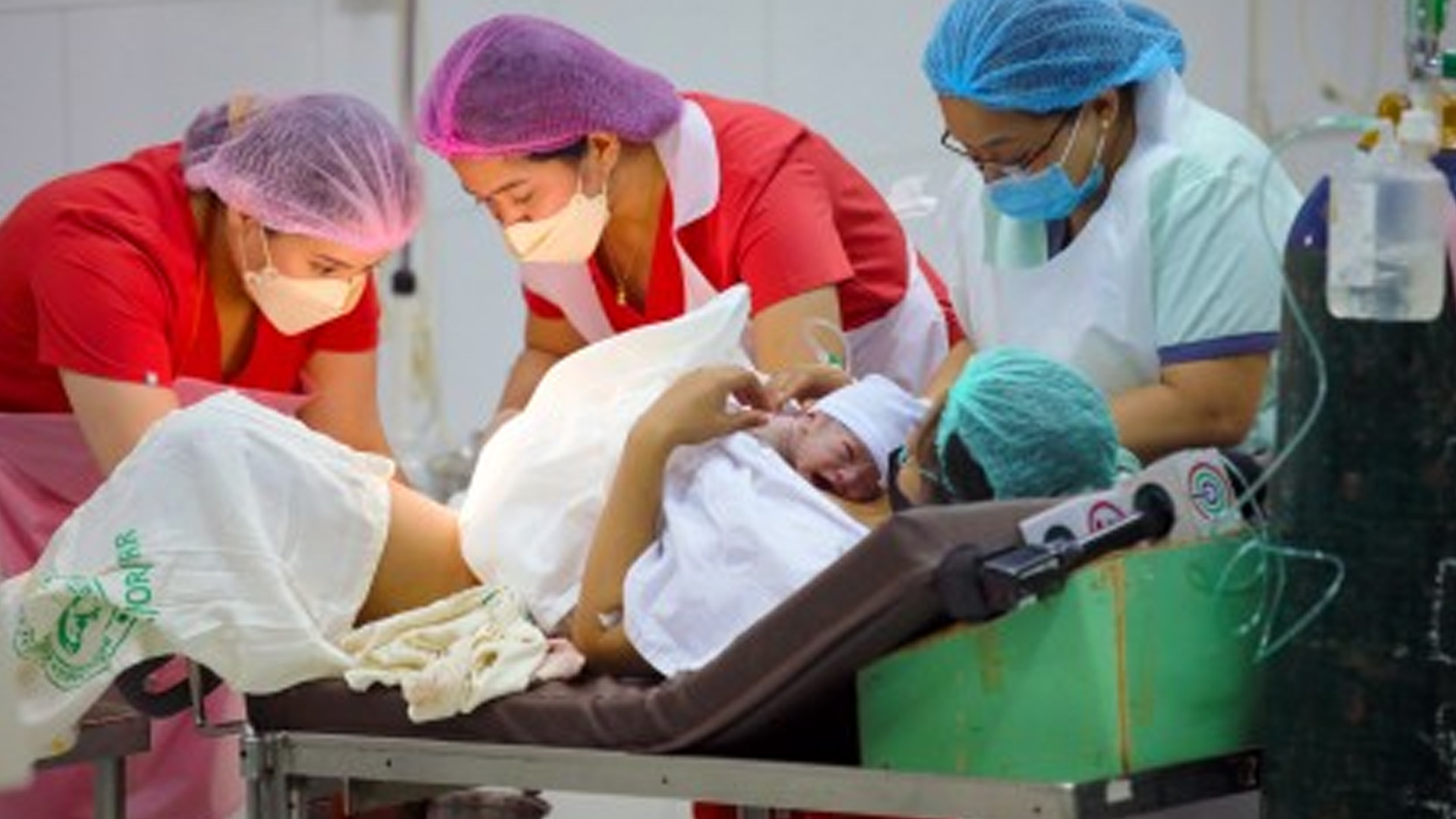






Leading health agencies and international partners have officially united to elevate the status and training of Filipino midwives, positioning them as a cornerstone of the country’s push for Universal Health Care (UHC).
In a news release on Tuesday, the United Nations Population Fund (UNFPA) said it has adopted a new, expanded Midwifery Competency Framework together with the Department of Health (DOH), the Commission on Higher Education (CHED), and the Professional Regulation Commission (PRC).
Midwives, especially in local communities, serve as the absolute frontline for maternal and newborn health.
However, the current system faces severe strain, resulting in a gap in care access, including quality sexual and reproductive healthcare, in many underserved communities.
According to the UNFPA State of Asia’s Midwifery Report 2024, the Philippines has fewer than seven midwives for every 10,000 people.
Initiated in 2025, this new framework directly confronts these long-standing shortages, out-of-date competency standards, and ambiguities surrounding a midwife’s professional scope of practice.
It shifts the role of the Filipino midwife into modern practice, broadening their defined responsibilities to include critical areas like family planning, gender-based violence support, and digital health-enabled services.
Professional Regulatory Board for Midwifery Chairperson Melchor dela Cruz noted the initiative helps solidify the “meaning of being a midwife” in the country.
“This framework provides a clear path for career progression, which strengthens the vital role of midwives in the health system and ensures that they are equipped with the skills necessary for modern practice,” he said.
“Ultimately, this means future-proofing the profession while guaranteeing the highest standards of care for Filipinos.”
Other officials emphasized that the framework creates a legitimate professional trajectory to retain talent apart from expanding day-to-day duties.
“Midwives save lives—wherever they are, whether in classrooms, in clinics, in communities, or in times of crisis,” UNFPA Country Representative Neus Bernabeu said.
“They are critical to every mother and child in kickstarting a healthy beginning and for every adolescent who needs care and guidance.”
The adoption of the new framework was solidified via a signed Commemorative Resolution that included the Association of Philippine Schools of Midwifery, the Integrated Midwives Association of the Philippines, Inc., and the World Health Organization Philippines, among others. (PNA)