



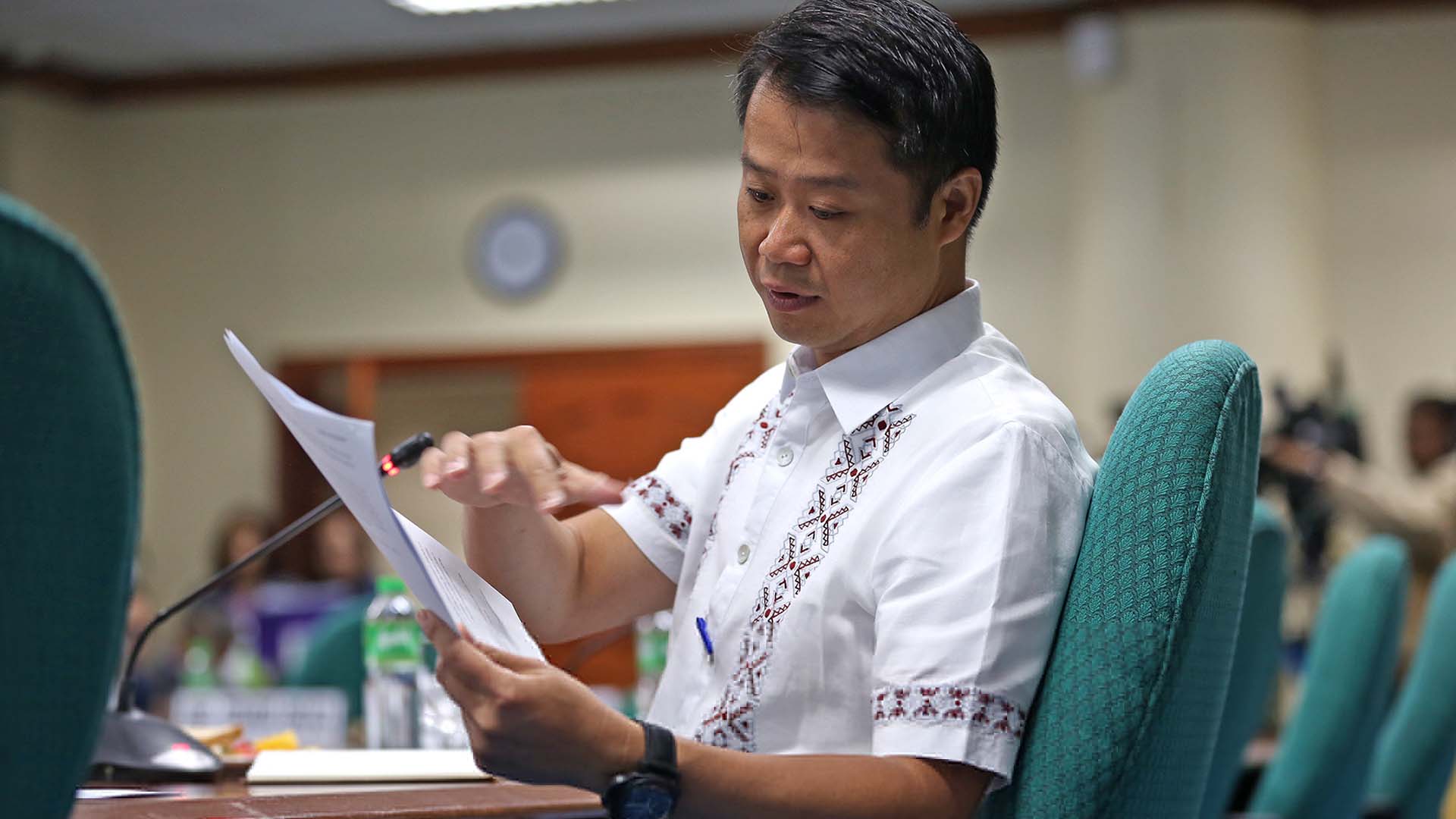






Only less than half of parents or guardians think that their children in basic education are learning, says a Pulse Asia survey on educational problems encountered during the COVID-19 pandemic. For Senator Win Gatchalian, this adds urgency for the government in addressing the quality of distance learning and prioritizing education in the country’s recovery efforts.
The Pulse Asia Survey conducted from February 22 to March 3 had 1,200 adult respondents nationwide, 63% of which have children in basic education. Only 46% of these parents or guardians said that their children are learning, while 25% or one in four said their children are not learning. Three out of ten or (30%) cannot say if their children are learning or not.

Among the educational problems encountered during the pandemic, difficulty in answering modules is the most common (53%) for adults with children in basic education. This problem is more common among respondents in Mindanao (74%). The survey also points to educational inequalities across socioeconomic groups as respondents from Class E (71%) have greater difficulty in answering modules compared to their peers from Class D (52%) and Class ABC (35%).

For Gatchalian, the results show the poor quality of distance learning. He also pointed out that the educational attainment of parents and guardians is also a factor on distance learning woes. Under the 2015 Family Income and Expenditure Survey (FIES) released in 2017, up to 54% of Filipino household heads have not completed high school.
While the Pulse Asia survey revealed that 34% of parents or guardians have less or no time to guide their children, Gatchalian pointed out that the remaining 66% who may have time to help could still be struggling because Filipino household heads have low educational attainment.
“Bagama’t pinagsisikapan nating ituloy ang edukasyon sa gitna ng pandemya, makikita nating marami pa rin sa mga mag-aaral ang hindi natututo sa ilalim ng distance learning at pati ang kanilang mga magulang ay nahihirapan din. Kung hindi natin tututukan ang pag-angat sa kalidad ng edukasyon sa kalagitnaan at sa pagtatapos ng pandemya, lalong mapag-iiwanan ang ating mga kabataan,” said the Chairman of the Senate Committee on Basic Education, Arts and Culture.
While the country is rolling out the COVID-19 vaccination program, Gatchalian emphasized the importance of preparing for the safe reopening of schools and the resumption of face-to-face classes, which will help address the effects of prolonged school closures in the country, including learning losses.


