









The Department of Health in Bicol (DOH-5) on Wednesday encouraged the public, especially children who are most vulnerable, to get vaccinated against common vaccine-preventable diseases.
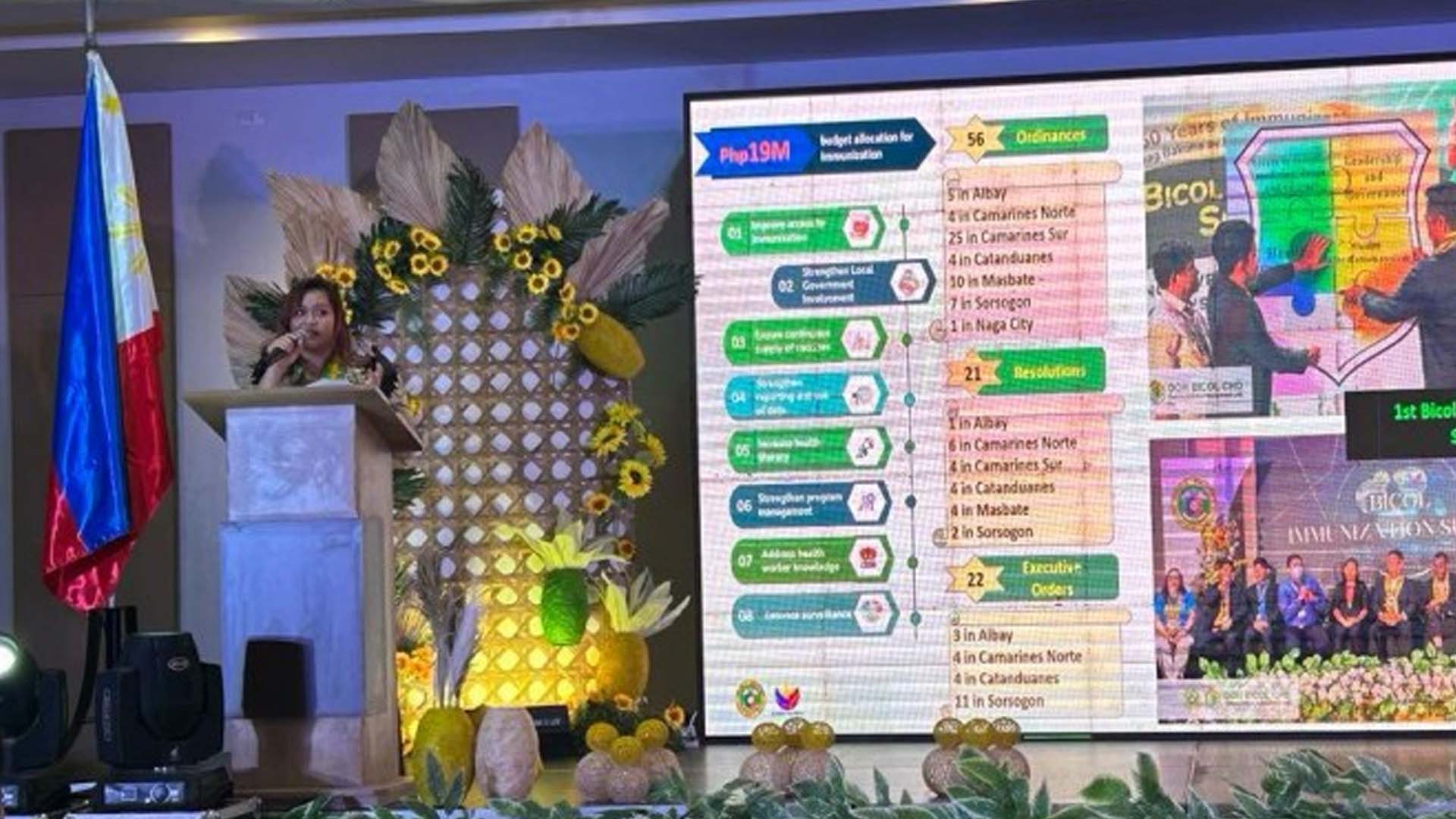
During the second Bicol Immunization Summit here, Dr. Desiree Bricenio, DOH-5 Regional Immunization Program Manager, said the gathering was held to enhance public engagement in the government’s vaccination efforts, and emphasize the safety and effectiveness of vaccines.
“We have invited stakeholders, including representatives from the Department of the Interior and Local Government (DILG), to guide local government units (LGUs) during the implementation phase. Additionally, other stakeholders have been invited to help raise awareness about the vaccination situation in the Bicol region,” Bricenio said.
Among the vaccine-preventable diseases tackled were tuberculosis, pneumonia, diphtheria, pertussis, tetanus, measles, and cervical cancer.
For a child to be considered fully immunized (FIC), they must receive one dose of the Bacillus Calmette-Guerin (BCG) vaccine, three doses of the Pentavalent Vaccine (which includes Diphtheria, Pertussis, and Tetanus – DPT), Haemophilus influenzae Type B, and Hepatitis B, three doses of the oral polio vaccine (OPV), and two doses of the MMR vaccine for measles, mumps, and rubella by the time they reach one year old.
Bricenio said ongoing interventions are aimed at increasing the immunization rate in the region.
“Thanks to our intensified catch-up and related immunization efforts in March, we were able to curb or stop the transmission of the measles virus. This demonstrates that vaccination plays a crucial role in halting the spread of such viruses. However, we need to focus on grassroots efforts, as many areas still require improvement. That’s why we plan to conduct supervisory visits to support local immunization sessions and provide coaching and mentoring,” she added.
In 2024, the region’s six provinces recorded the following Fully Immunized Children (FIC) coverage: Catanduanes with 66.62 percent; Albay with 57.07 percent; Sorsogon with 54.97 percent; Naga City with 49.08 percent; Masbate with 49 percent; Camarines Sur with 39.48 percent; and Camarines Norte with 37.69 percent.
“Due to the decrease in coverage, we have had cases of measles, and rubella. But because of what we are doing, intensified catch up, and related immunization in March, we have somehow been able to curb or stop the transmission of the measles virus. So, we will really see to it that vaccination will really help stop the spread of the measles virus,” she assured the public.
Bricenio acknowledged that vaccine hesitancy, particularly in remote areas, poses significant challenges.
“One factor beyond our control was the supply of vaccines. Unfortunately, that was something we couldn’t influence. We simply had to wait for the supply to arrive,” Bricenio said.
She reported an increase in the number of local ordinances and resolutions supporting the implementation of the National Immunization Program.
“Various municipalities in the region have committed funds, and since these commitments are formalized in writing, they are now institutionalized. This means that the National Immunization Program has allocated funds for operations, and in the event of a vaccine shortage, resources are available for use,” she said.
Bricenio encouraged parents having doubts or concerns to send a message through the DOH’s social media platforms for accurate health information. (PNA)


