



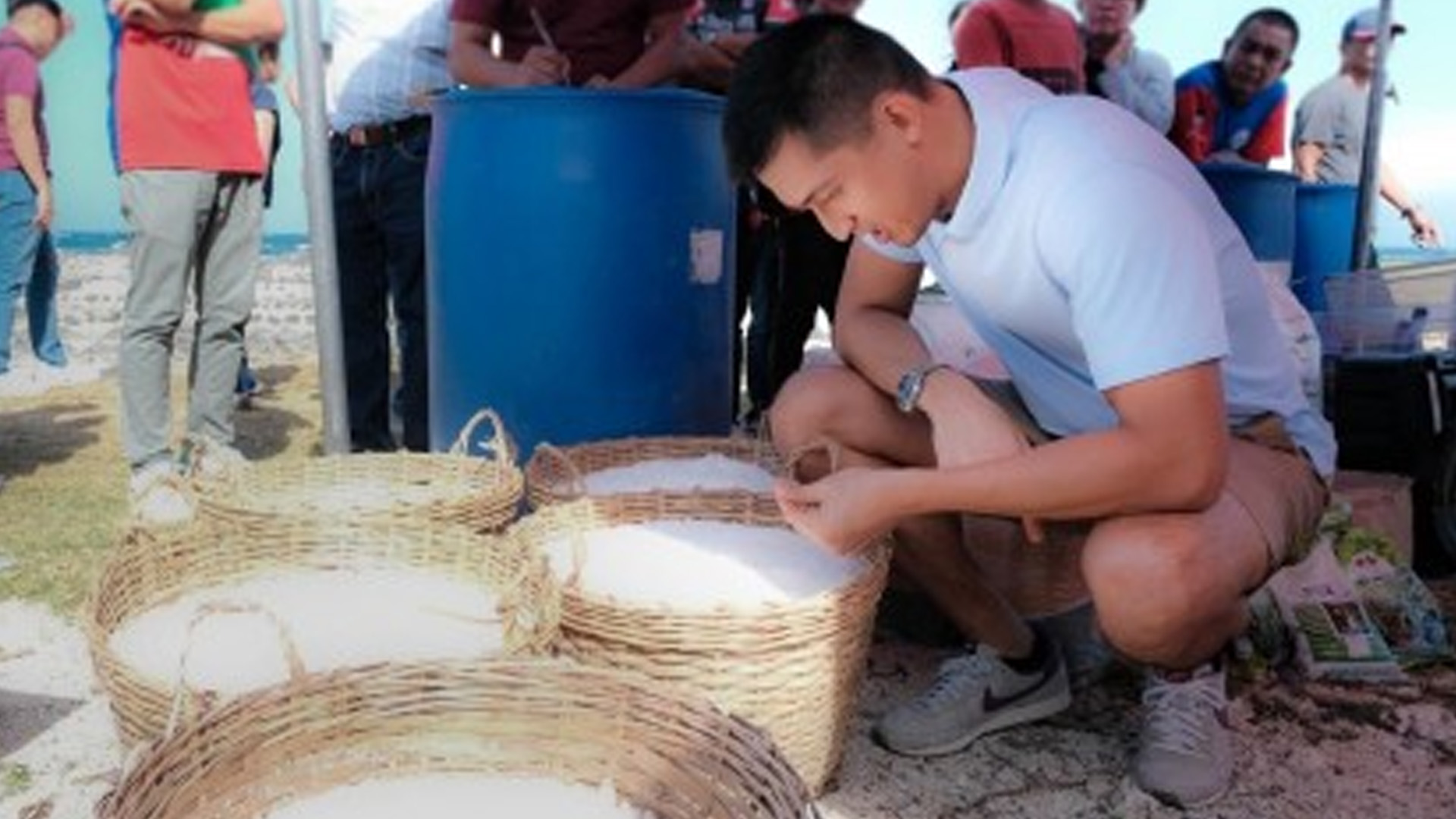






A dying salt farming tradition is making a comeback in the coastal village of Saoit in Burgos, Ilocos Norte with a renewed effort to bring solar energy to the salt flats.
In the olden times, salt farmers here worked under the scorching heat of the sun to produce salt from briny tidal water. However, most of them barely earned enough to support their families.
Larry Baniaga, president of the Burgos Salt Makers Association, said there is a rising demand for solar salt in the food processing industry as well as for chemical and water treatment industries, and they are optimistic that using the technology could change their lives for the better.
He told the Philippine News Agency in a phone interview on Wednesday that they are thankful for the collaborative effort of various government agencies such as the Department of Science and Technology, Bureau of Fisheries and Aquatic Resources, Don Mariano Marcos Memorial State University and the local government units of Burgos and Ilocos Norte for helping them to rise above poverty while ensuring a more sustainable and environment-friendly alternative method of salt production.
Following their recent training on solar sea salt production using high-density polyethylene, Baniaga said their salt production has become more competitive in the market.
“It is cleaner and of better quality than before,” said Baniaga as he noted that the solar drying method is more economical and eco-friendly than the traditional cooking method where they have to gather wood from the mountains to cook salt.
In Barangays Saoit and Pagali alone, Baniaga said they can produce an average of 15 tons of salt weekly. The current price of salt is pegged at PHP35 per kilo or PHP1,500 per sack at 50 kilograms. The peak of salt production is from March to June.
“Our salt production, though it is seasonal, is a big help for us as an alternative source of income,” said Baniaga as most of the villagers depend on farming and fishing.
To enhance the production and supply of salt in the salt-producing towns of Ilocos Norte, the Ilocos Norte government and its partner agencies inked a memorandum of understanding on March 3, 2023 for the “One ASIN” (Accelerating Salt Innovation in Region 1) project at the Regional Freshwater Aquaculture Technology Demonstration Center (RFATDeC) in Paoay, Ilocos Norte.
The project aims to boost the livelihood of salt makers, particularly in the towns of Currimao, Badoc, Pasuquin, Vintar, Pinili, and Burgos who received almost PHP2 million worth of assistance to improve their products. (PNA)


