



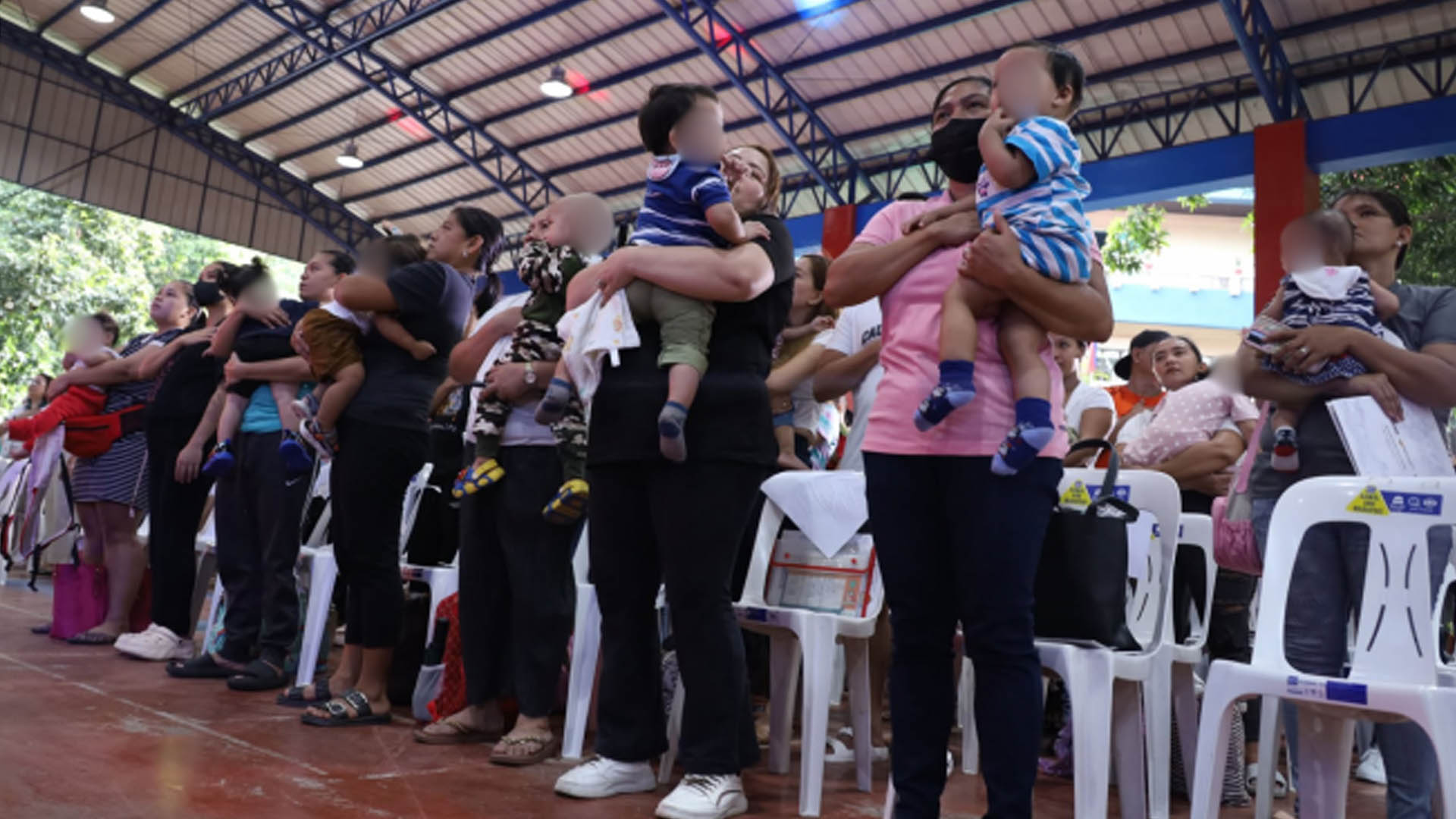






Senators Bam Aquino and Francis Pangilinan on Tuesday underscored the urgent need to strengthen early-childhood nutrition and expand locally sourced feeding programs to address stunting among infants and young children.
During a joint Senate hearing of the Committees on Basic Education, Agriculture, Public Works, Ways and Means, and Finance, the lawmakers stressed that nutrition interventions must begin from pregnancy to age five, far earlier than existing school-based feeding programs.
Aquino said amendments to Republic Act 11037, or the Masustansyang Pagkain Para sa Batang Pilipino Act, must directly confront the country’s alarming stunting rate.
Citing findings of the Second Congressional Commission on Education (EDCOM 2), he noted that 26.7 percent of Filipino children under five are stunted.
“Pag stunted po ang isang bata, mahina ang kanilang katawan at kakayanang matuto (When a child is stunted, both the body and the ability to learn are weakened),” Aquino said, explaining that malnutrition affects memory, language development, attention, problem-solving skills and long-term learning outcomes.
He said government interventions remain heavily concentrated in schools — where feeding days have increased from 120 to 200 — but emphasized that children deprived of nutrition before age five already enter school at a disadvantage.
Meanwhile, Aquino pushed for stronger integration of the Department of Social Welfare and Development (DSWD) in early-childhood nutrition planning, noting that daycare-based feeding is relatively new and needs stable funding and close coordination with DepEd and the Department of Agriculture (DA).
He said upcoming amendments to the EDCOM 2 law would formalize the DSWD’s role, recognizing that responsibility does not rest with DepEd alone, but also with DSWD.
Aquino added that the goal is to ensure Filipino children grow up “nourished, healthy, and ready to learn,” while reminding agencies to prioritize children’s programs over questionable expenditures.
“Hindi lang pagkakataon ang ninanakaw sa ating kabataan, pati ang kanilang kinabukasan (It’s not only opportunities being stolen from our youth, but their future),” he said.
Pangilinan said the proposed “Libreng Pagkain” measure must guarantee nutritious, fresh, and locally sourced food for all learners.
He stressed that up to 50 percent of feeding program requirements in schools and daycare centers should be sourced directly from farmers and fisherfolk — aligned with the Sagip Saka Act, which exempts government purchases of local produce from public bidding.
“What we envision is a nutrition program built on fresh, locally grown food,” Pangilinan said, explaining that this approach strengthens farmer income, ensures food quality, and stabilizes supply chains.
Pangilinan, however, warned that the weakest link in the supply chain remains the lack of farmer capacity.
“You may have about PHP14 billion worth of food purchases, but if farmers and fisherfolk are not capacitated, the supply will be inconsistent,” he said.
Strengthening farmer cooperatives and extension services, he added, is essential to sustaining feeding programs nationwide.
“With DepEd, DSWD, and DA working together, we can deliver healthy, nutritious food to our children while uplifting local farmers,” Pangilinan said.
The committees will continue hearings to finalize amendments strengthening early-childhood nutrition and ensuring sustainable, locally sourced feeding programs for millions of Filipino children. (PNA)


