



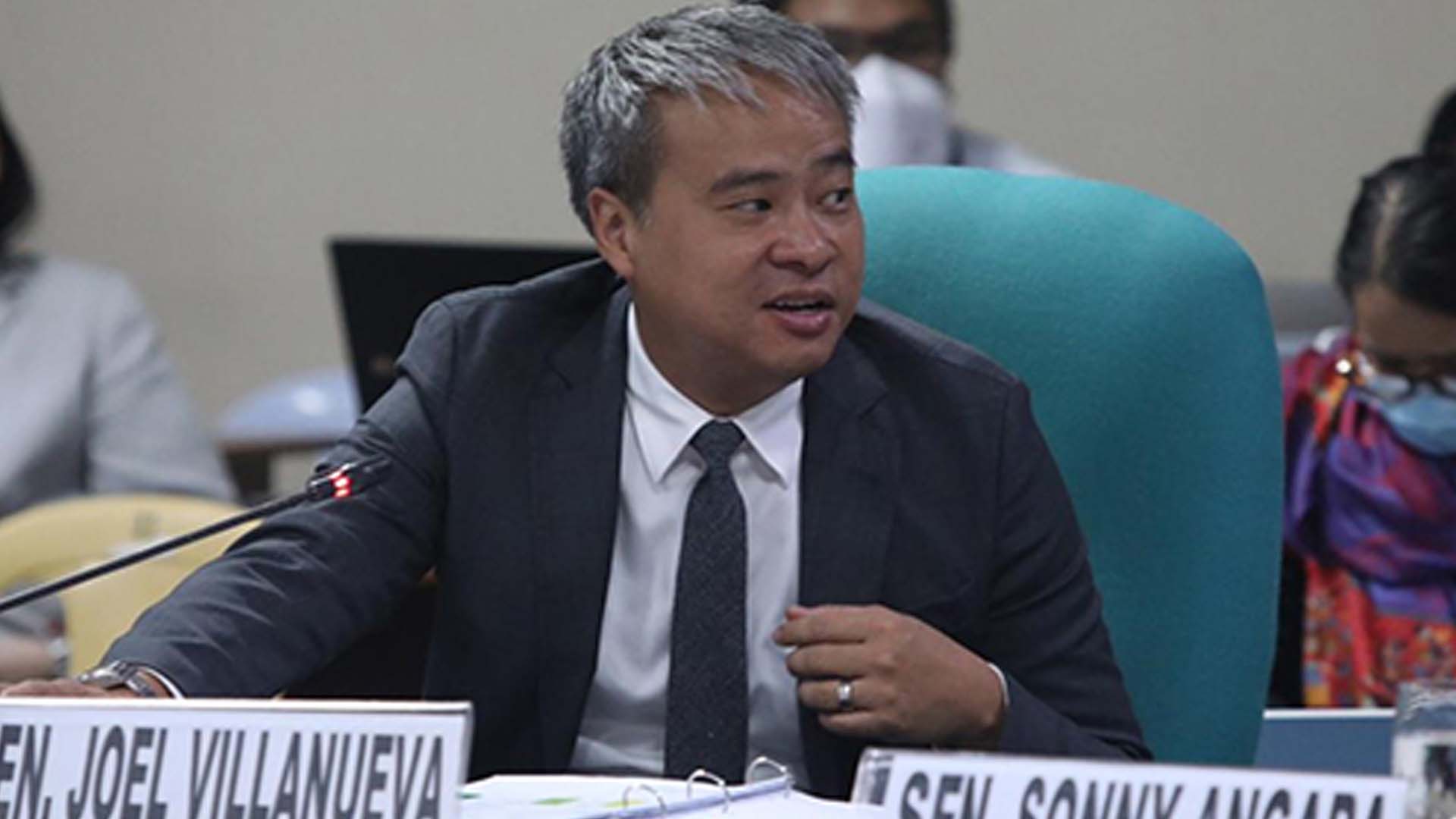






Senator Joel Villanueva on Monday hailed the launch of the Trabaho Para sa Bayan (TPB) Plan 2025–2034 as a critical step toward establishing a long-term, nationwide framework for employment generation, while calling for stronger local alignment and flexibility in the face of rapid technological change.
Speaking during the launch event, Villanueva, the chairperson of the Senate Committee on Labor, described the plan as a “Herculean” product of inter-agency collaboration involving the Departments of Economy, Trade, and Labor, and a landmark shift toward sustained and inclusive job creation.
“This comprehensive, long-term normative framework for employment generation is the result of your hard work and a testament to the power of collaboration,” the senator said, thanking the TPB Inter-Agency Council and noting its origins in pandemic-era recovery efforts.
Originally envisioned as a successor to the National Employment Recovery Strategy (NERS), which lapsed in 2022, the TPB Plan institutionalizes job creation during crises — be it a pandemic, typhoon, or economic downturn — and sets baseline success indicators across short, medium and long-term horizons.
The plan, signed into law as Republic Act No. 11962, was adopted as part of the Legislative-Executive Development Advisory Council (LEDAC) priority agenda upon the senator’s recommendation at the start of the 19th Congress.
“More than just aspirational, this plan has mechanisms to align national agencies and LGUs toward decent work as a central pillar of our socio-economic strategy — even beyond this administration,” Villanueva said.
The TPB Plan also supports the implementation of local Workforce Development Plans under the SIBOL (Strengthening Initiatives for Balanced Growth and Opportunities at the Localities) framework and aims to improve coordination with regional Key Employment Generators across 13 priority sectors, including construction, Information Technology Business Process Outsourcing, semiconductors, agriculture and tourism.
With current unemployment at 3.8 percent and underemployment at 10.1 percent as of February, Villanueva said the TPB Plan must drive measurable improvements.
“To truly succeed, we must localize the Plan and integrate employment strategies into the Department of Trade and Industry’s Competitiveness Index to reward economic dynamism, innovation, and resilience,” the senator said.
He acknowledged the need to adapt to global labor trends such as artificial intelligence and automation, citing South Korea’s proposed “robot tax” as a policy model.
The robot tax law reduces tax breaks that were previously awarded to investments into robotics.
The senator recommended setting baseline targets for regional employment growth over one-, three-, and ten-year periods to track progress and identify gaps. (PNA)


