



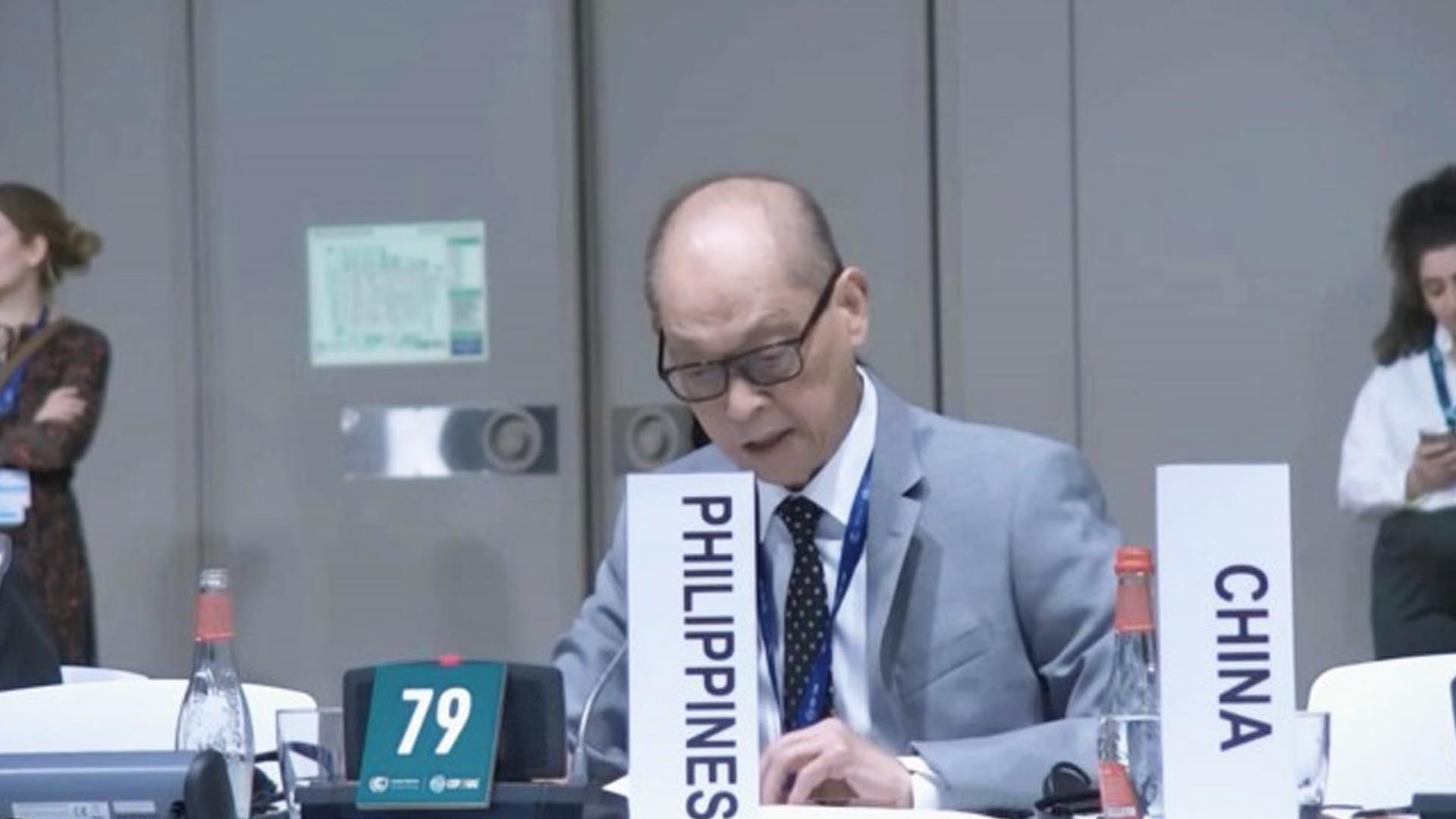







Department of Finance (DOF) Secretary Benjamin Diokno cited the need to immediately set up the New Collective Quantified Goal (NCQG) on climate finance to strengthen countries’ climate action.
Diokno made the statement during the 2023 High-level Ministerial Dialogue (HLMD) on the New Collective Quantified Goal on Climate Finance as part of the 2023 United Nations Climate Change Conference (COP28) on Dec. 3, 2023 in Dubai.
In a statement on Monday, the DOF said the COP 21 earlier decided that before 2025, the Conference of the Parties serving as the meeting of the Parties to the Paris Agreement (CMA) shall set an NCQG starting at a minimum of USD100 billion per year, taking into account the needs and priorities of developing countries.
“The New Collective Quantified Goal on climate finance should be established without further delays,” Diokno said.
Diokno cited the need to ensure that the NCQG will sustain and enhance both the quality and quantity of climate finance.
He also recommended setting up a five-year timeframe to ensure coherence in the overall climate action under the United Nations Framework Convention on Climate Change.
Diokno said the quality of climate finance must be anchored on the principles of transparency, accessibility, predictability and efficiency to address implementation gaps in the provision of climate finance
He said transparency in climate finance can be enhanced by making goals science- and evidence-based; establishing the operational definition of climate finance; and stating the timeframes and commitments from climate finance providers.
Quantity, on the other hand, must be scaled up by exhausting all possible financial resources.
Diokno said climate finance must be demand-driven and priority-based to ensure that it is aligned with a country’s development pathways.
“The clarity of this new goal will define the predictability of our climate actions. Finally, we must collectively commit to deliver real progress in setting up the NCQG in 2024,” he said. (PNA)


