

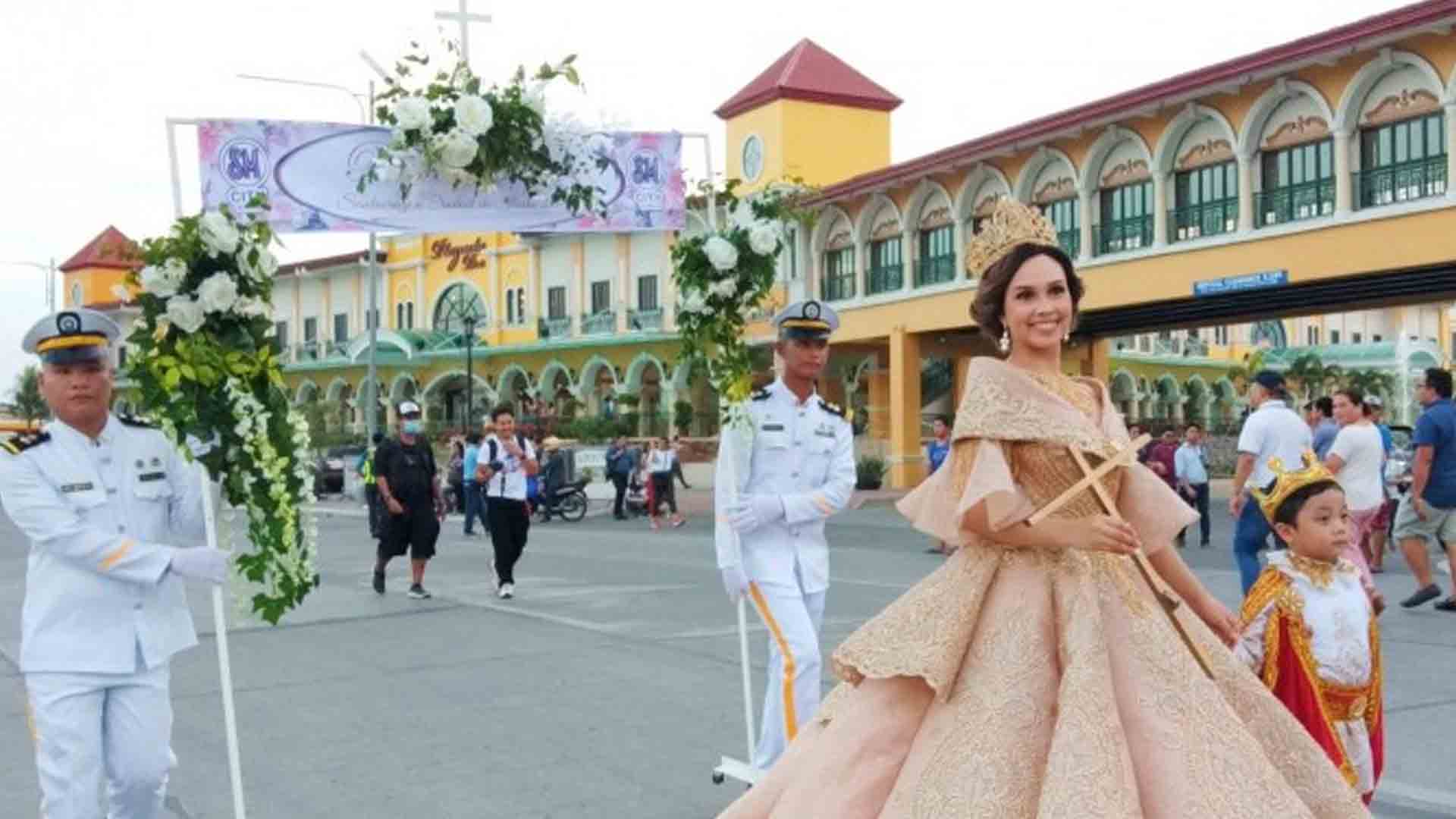







Flores de Mayo has been one of the most anticipated festivals in the Philippines, culminated with a night of grandeur called the Santacruzan every end of May to commemorate Queen Helena’s search for the Holy Cross.
Over time, the occasion has evolved into a moving exhibit of Philippine artistry and craftsmanship, with the town belles parading in long gowns representing the many titles of the Blessed Mother and significant Biblical characters.
While the pandemic halted festival activities across the country, the event carried on, albeit virtually — Masses were celebrated online and in some instances (with only the sagalas present), processions in a controlled setting were held.
The first Santacruzan in the Philippines was held in Malolos, Bulacan. But the original procession goes way back to 326 AD when St. Helena, the queen mother of Emperor Constantine, traveled to the Holy Land in search of the True Cross and the “Holy Sepulcher” or the location of Christ’s crucifixion.
From this pilgrimage, St. Helena found three crosses. It was said that the Holy Cross was determined when her sick servant who touched the wood was miraculously healed.
Alongside the Santacruzan, the Filipino faithful also dedicate the entire month of May to Virgin Mary.
In an online Santacruzan organized by the Diocesan Shrine of the Holy Face of Jesus of Manoppello on Monday night, Rev. Fr. Richard Lagos explained the meaning behind these events — the Filipino Catholics’ undying faith in God.
“Napakahalaga ng krus sa ating mga Kristiyano kaya nga Santacruzan sapagkat ang krus ay simbolo ng pananampalataya nating mga Kristiyano. Hindi ito simbolo ng kaparusahan, ng kayabangan, o ng kamatayan, hindi ito simbolo ng kalupitan ng mga tao. Para sa ating mga Katoliko, ang krus ay simbolo ng dakilang pag-ibig ng Diyos (The Holy Cross is important to Christians because this symbolizes our faith. This is not a symbol of punishment, arrogance, nor death. It is not a symbol of cruelty. For us Catholics, it is the symbol of Christ’s love),” he said.
“Si Maria at ang krus ay hindi mapaghihiwalay dahil tinanggap ni Maria sa kanyang sinapupunan ang anak ng Diyos, si Hesus. Ito ay ekspresyon ng ating pananampalatayang Kristiyano — pananampalataya na tayo ay minamahal ng Diyos (Mother Mary and the cross cannot be separated because Mary accepted and conceived the son of God, Jesus Christ. This is the expression of our Christian faith — a faith in God that he loves us),” he added.
Traditionally, a Santacruzan features numerous characters from the Bible with the old Methuselah leading the procession.
According to the book of Religious Beliefs and Practices in the Philippines by Teodora Battad, et al., some sagalas or the women joining the parade personify other Biblical characters like Reyna Shaba, Reyna Esther, Maria Magdalena, Reyna Fe, Reyna Esperanza, Reyna Caridad and the Samaritan whom Christ spoke to near the well.
Others characterize the various titles of Mary: Reyna de las Virgines, Rosa Mistica, Reyna Paz, Reyna de las Propetas, Reyna del Cielo, Reyna de las Estrellas, Reyna de las Rosas, Reyna Luna and Reyna de las Flores.
Eventually, some figures were added such as Banderada, wearing the Philippine flag, Reyna Mora, Reyna Justicia, Abogada and Reyna Sentenciada.
At the end of the procession, Reyna Elena holds a cross alongside her son Constantino, followed by the image of the Virgin Mary. (PNA)


