



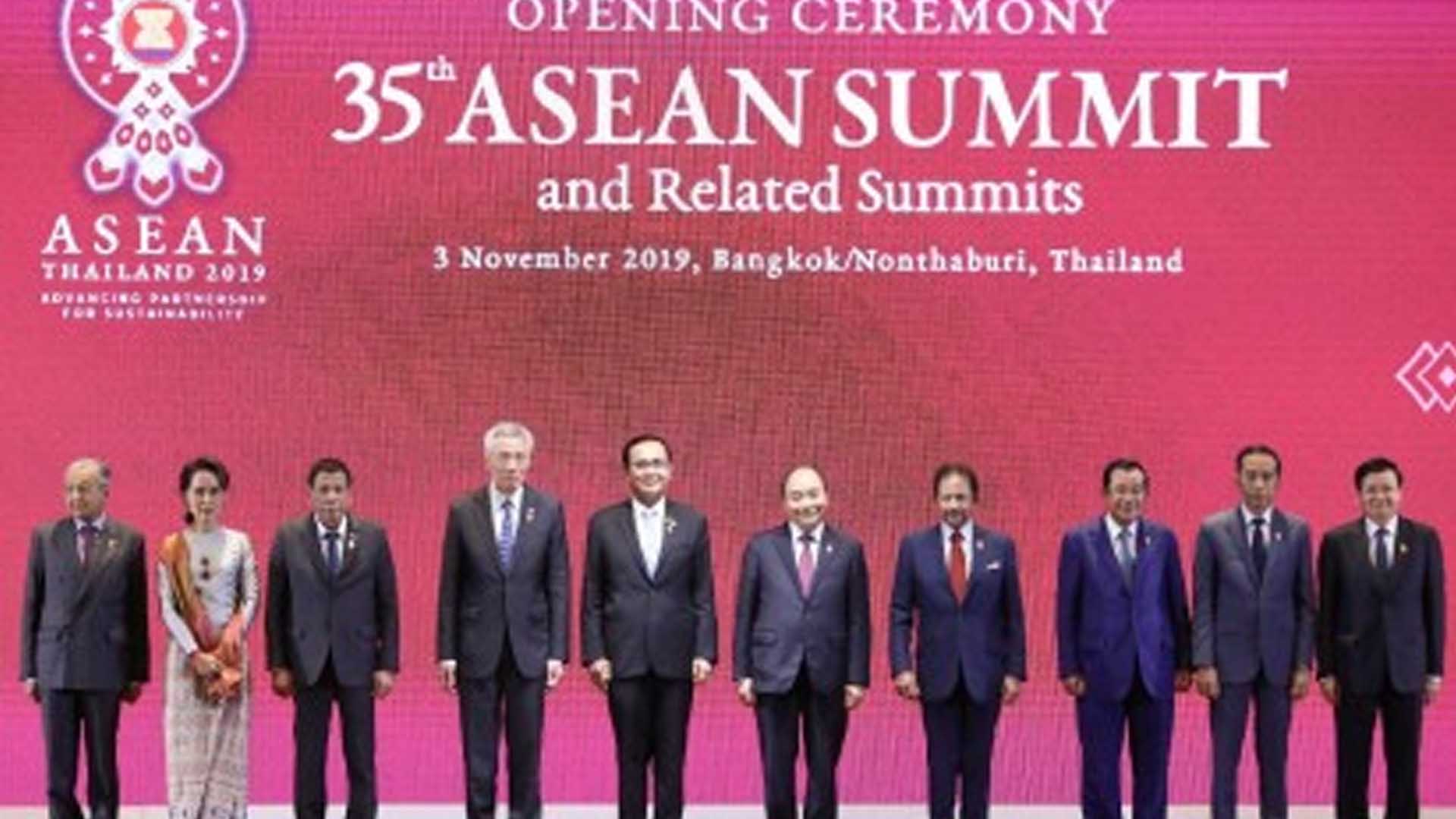






President Rodrigo R. Duterte raised the need for a peaceful resolution of the South China Sea issue and the immediate conclusion of a binding Code of Conduct (COC) for the benefit of the Association of Southeast Asian Nations (ASEAN).
He stressed these points during the Plenary of the 35th ASEAN Summit here Saturday night, citing that the sea row continues to create uncertainty and instability in the region.
“As Asean-China Country Coordinator, the Philippines will do its utmost part to conclude negotiations on a Code of Conduct as soon as possible,” Duterte said.
“Notwithstanding the lack of enthusiasm by some external partners, I believe that we in ASEAN are one in the view that an effective and substantive COC will be good for the region,” he said.
The President explained that for a peaceful resolution of the issues to happen, Asean should have an environment that is conducive to negotiations and fair compromises.
“ASEAN must, therefore, remain united. We must lead the way in building trust and confidence among all stakeholders. And we must use all the influence that we have, individually and collectively, to persuade parties to exercise self-restraint and avoid actions that may further complicate the situation,” he said.

Presidential Spokesperson and Chief Presidential Legal Counsel Salvador S. Panelo, in a statement, said the President pointed out that he considers the South China Sea issue as one that has strategic importance to the regional block, thus, the need to be peacefully resolved in line with international law such as the United Nations Convention on the Law of the Sea (UNCLOS).
He said the President vowed to work closely with its ASEAN counterparts for the immediate materialization of the COC, noting also that it is a priority for the 10-country economic bloc to keep the freedom of navigation and overflight on the South China Sea.
Aside from territorial issues, the President also discussed the challenges that ASEAN faces and these include transnational crimes, advances in technology, protectionism and trade-related tension among Asean partners, environmental sustainability and geopolitical transformation.
China’s rise among the world’s biggest economies was also cited, Panelo said, noting that this has resulted to the change in the regional landscape.
With this, the Filipino leader called on his counterparts not to take sides vis-à-vis the world’s largest economy, the US, as what have been done by past Philippine leaders, which he dubbed as a “strategic mistake.”
“The Palace foresees the President to continue elaborating the position of our country in relation to important matters to Asean and discussing matters that are beneficial not just to the Filipino people but to the citizens of our neighbor countries in ASEAN for the remainder of this trip,” Panelo added.
The three-day 35th Asean Summit and Related Summits being held here and in Bangkok will last until November 4.
ASEAN member-countries include Brunei, Cambodia, Indonesia, Laos, Malaysia, Myanmar, the Philippines, Singapore, Thailand, and Vietnam. (PNA)