



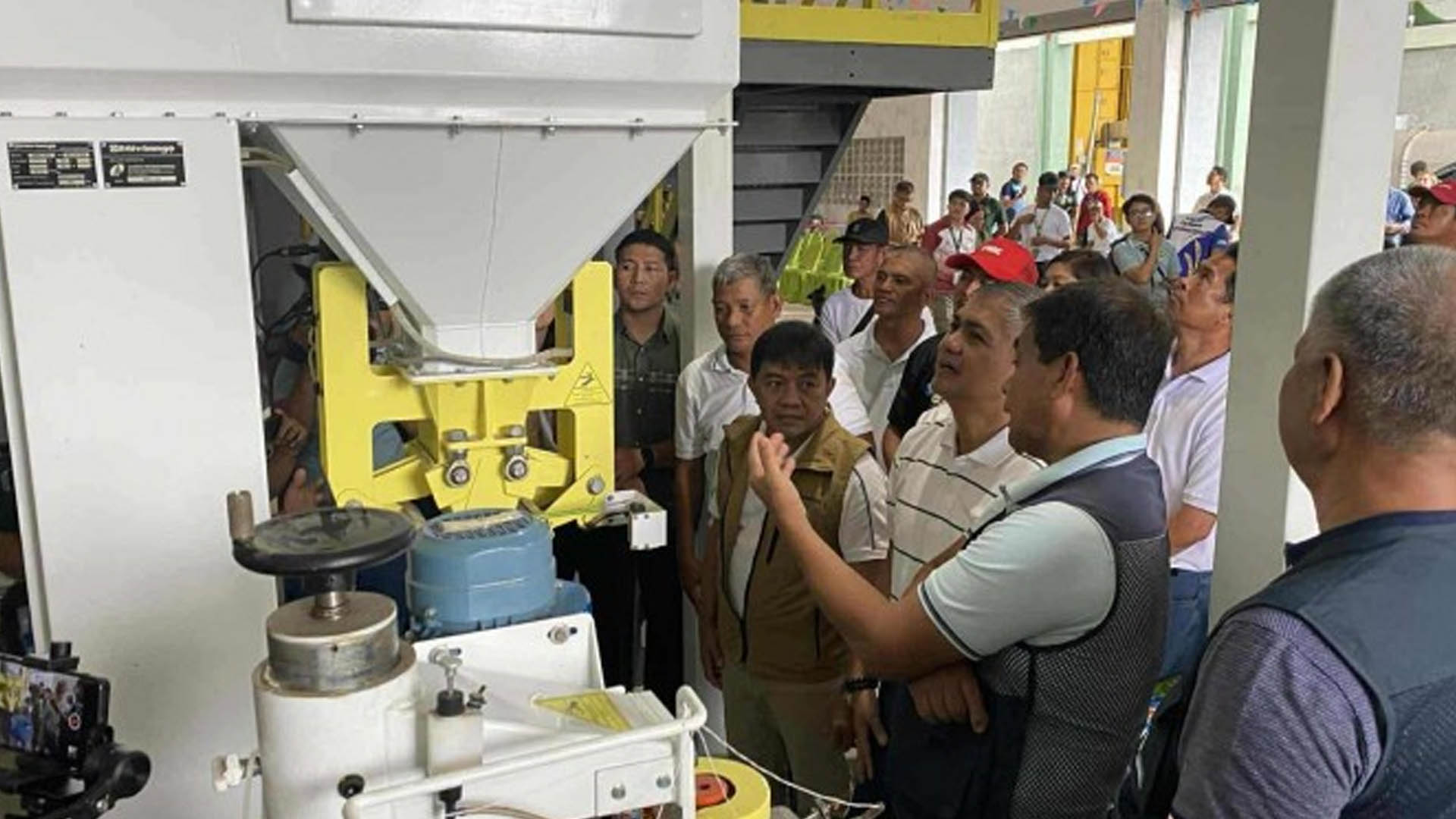






President Ferdinand R. Marcos Jr. on Tuesday said around 147 rice processing centers would be constructed nationwide within 2025.
“Itong taong ito, makakapagtayo tayo ng 147 na rice processing centers (This year, we can establish 147 rice processing centers),” Marcos said during the inauguration of a union water impounding dam in Claveria, Cagayan.
Three rice processing centers will be built in Cagayan province alone.
He said the facility would fast-track the production of rice, making the process from harvest to market much quicker and more efficient.
“Kapag natayo na natin ‘yung mga rice processing center, itong rice processing center, ang laman nito, merong drying, milling saka polishing (Once these rice processing centers are set up, each center will have drying, milling, and polishing facilities),” Marcos said.
“Paglabas sa processing center, sako-sako na. Paglabas doon sa processing center ay nakasako na so kaya niyong dalhin sa market kung anong gusto niyong gawin sa inani ninyo (When the rice comes out of the processing center, it’s already in sacks. Since it’s already in sacks, you can easily bring it to the market or do whatever you want with your harvest).”
Marcos also pledged to provide additional support to farmers in the form of trucks, improved rice varieties, and fertilizer subsidies, aimed to boost agricultural productivity and ease the burden on farming communities.
He said the trucks would be turned over to local cooperatives to help with the transport of harvested palay, while the distribution of rice seed varieties suited to dry and wet seasons is intended to help increase yields.
Another rice warehouse will be constructed in Claveria town to address logistical challenges and support local agricultural operations.
“Ang ninanais natin ay hindi na tayo mag-import o kung mag-import tayo, kakaunti na lang. Kasi sa kasalukuyan, malaki pa ang ini-import natin dahil kulang pa ang produksyon dito sa atin sa Pilipinas kaya napipilitan tayong mag-import (What we want is to stop importing rice, or if we do import, it will only be in small amounts. Right now, we are still importing a lot because our local production is not yet enough, so we are forced to import),” he said.
“Kapag naayos natin ang sistema ng agrikultura at sapat na ang ating rice supply, makikita natin, mas magiging maayos, kontrolado na natin, hindi na natin inaalala kung ano ang presyo sa international. Basta kung ano ang presyo na gusto natin, ‘yun ang ilalagay natin dahil kontrolado na natin dahil dito sa Pilipinas galing (Once we fix our agricultural system and our rice supply becomes sufficient, we will see improvements. We will have control. We won’t need to worry about international prices anymore. Whatever price we set is what will be followed, because the supply will come from within the Philippines).” (PNA)


