



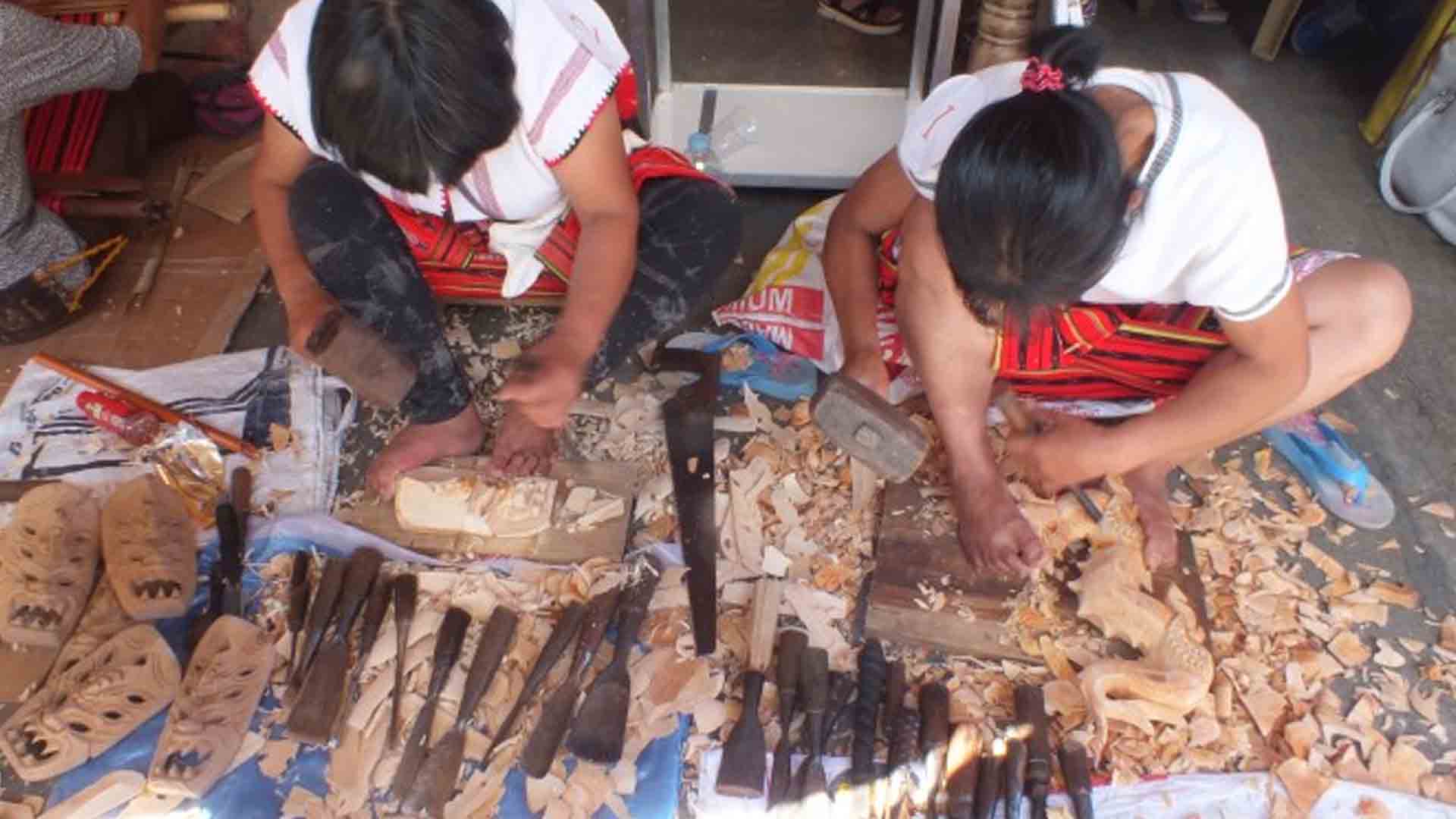






The wood carving heritage of the Ifugao people is seen to stay alive as locals preserve the indigenous forest preservation system dubbed as “muyong”.
“Memorandum Circular 2-96 gave the people of Ifugao the right to manage their forest, exempting them from the nationwide logging ban because of the indigenous muyong practice that is an important factor in the wood carving industry of the province,” said Ralph Pablo, director of the Department of Environment and Natural Resources (DENR) in the Cordillera Administrative Region (CAR), in a conference at the Benguet State University on Monday.
Under this practice, residents preserve the “muyong” or community-owned forests for their wood needs, especially for building a house, getting firewood and making carvings.
It is usually located near or above the rice terraces to make sure that there will be a continuous water supply for the rice plants.
Each of the community members follows an unwritten rule of obligating themselves to assure the preservation and protection of the “muyong” not just for themselves, but for their children.
In an article published in 1982, Ifugao native Ramon Dacawi said the size of a muyong varies from about a few hundred square meters to about five hectares.
Pablo said the circular is a privilege given specifically to the Ifugao people to utilize resources within the muyong with sustainable practices.
“The Ifugaos and other Cordillera tribes see land as linked to the culture, livelihood, daily lives, and their existence. They value land and the practices connected to it that allows the sustainability of their livelihood, not to mention the attraction that we all enjoy when we visit Ifugao,” Pablo said.
“Ifugao people are known for their innate wood carving talent which was passed on from generations, and will continue to live with the people’s preservation of the indigenous muyong system,” he added.
Defining IP existence
Pablo said that aside from the “muyong” of Ifugao, the people of Apayao and Abra have the “lapat,” the “batangan” of Mountain Province and the “kijowan” of the people of Benguet are similar indigenous knowledge systems that relate to forest preservation.
He said indigenous peoples (IPs) have long before recognized the importance of nature, even when laws were not yet issued.
“They regard nature with the utmost respect and they are willing to defend it because they know nature sustains their existence, heritage, pride, and culture,” Pablo said.
He added that the traditions of the Cordillera people on forest and natural resources protection that continues to be practiced are limiting the effects of climate change.
Meanwhile, lawyer Josh Nalliw of Mayoyao, Ifugao, who served as the Indigenous Peoples Mandatory Representative (IPMR) of their town said they call their indigenous forest protection system “pinuchu”.
“’Muyong’ system is practiced by the Tuwali tribe but for us Ayangan tribe, the equivalent is “pinuchu,” she added.
Nalliw, however, said “pinuchu” has a different system.
“Hindi kasi community-owned yung pinuchu. It is owned by clans na siyang pinagkukuhanan ng needs ng clan when it comes to wood products (Pinuchu is not community-owned but by the clans where they get their needed wood products),” she said.
According to a study by Moises Butic and Robert Ngidlo published on the website of the Food and Agriculture Organization, the “muyong” plays an important role within the tribal economy.
“’Muyong’ owners follow an efficient system of timber utilization referred to as whole-tree harvesting. In most cases, trees are harvested for multiple uses as may be defined by each ‘muyong’ owner,” it added.
In Baguio City, Ramon Dacawi, an Ifugao native who was then chief of the City Public Information Office adopted the “muyong” as a forest preservation program under the Baguio City Eco-Walk program in the early 1990s.
In the system, pupils of the different elementary and high schools adopt an area at the Busol watershed, the city’s primary watershed where they plant pine trees and regularly visit for maintenance. (PNA)