










Warehouse workers can attest to the physical nature of the job. From heavy lifting and repetitive motions, to long hours and a high-stress environment — warehousing can be both physically and mentally demanding work.
Automation can be seen as one simple and effective solution in combatting the physical nature of warehousing, with advancements in technology allowing different forms of automation to be at the disposal of managers.
Despite this, more than 80% of warehouses today have no form of automation whatsoever. With the majority of global warehouses still heavily dependent on manual picking, sorting, and storing, more electricity and is spent on up keeping the facility along with its storage and retrieval process.
This is one reason why supply chains are a huge contributor to global carbon emissions, when paired together with the transportation of goods. Not only is manual warehousing costly for the company, but it also hinders employee development, allows human errors, and most importantly contributes negatively to the environment.
Apart from upscaling workers and giving them a better quality of life, automating a warehouse significantly reduces the business’ need for electricity, thereby being friendly to the environment.
This has led to warehouses in the apparel and grocery industries to be some of the first warehouse automation adopters, as they both enhance their business and improve on their emission rates and environmental footprint.
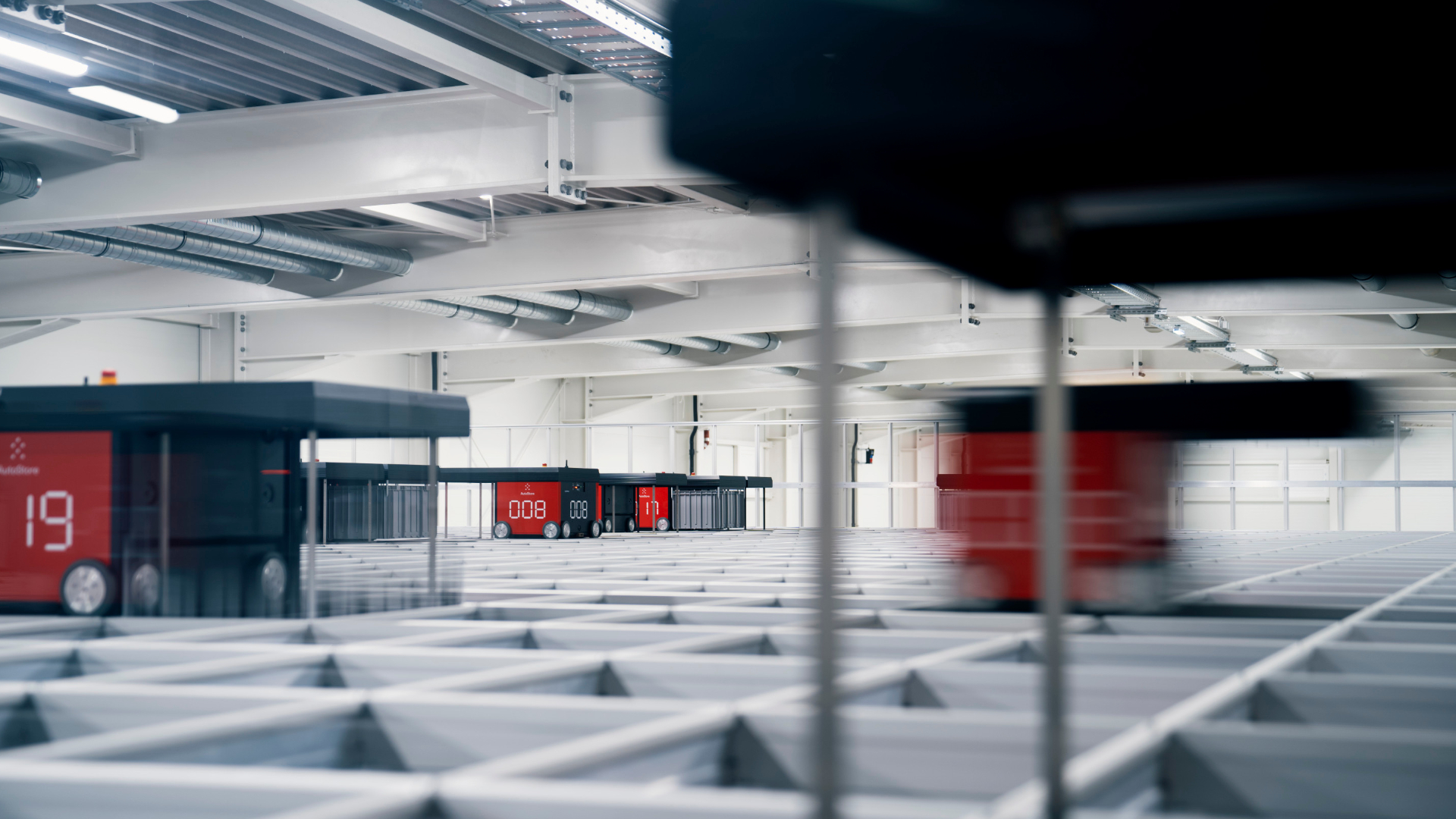
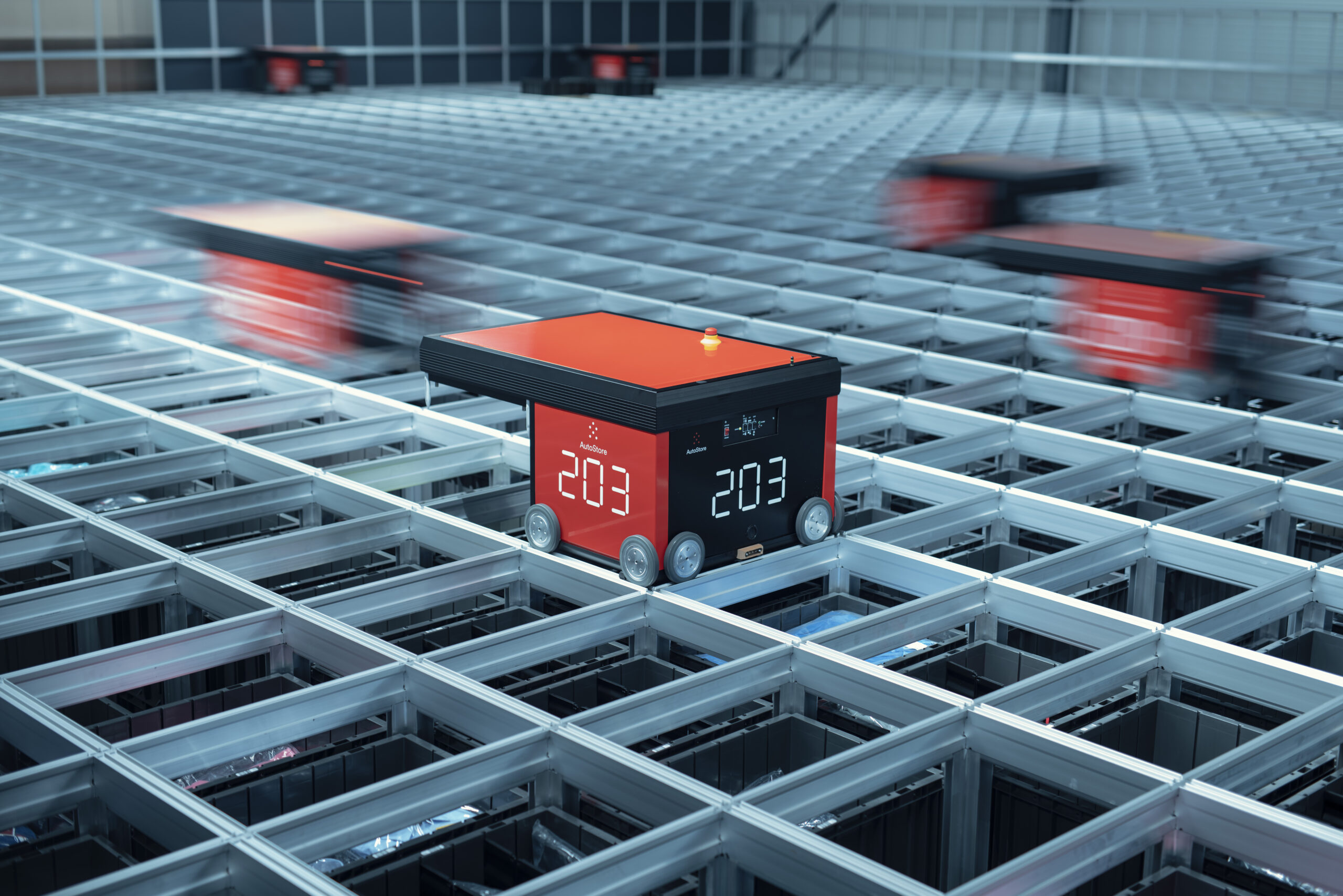
For example, an AutoStore storage system with ten robots uses approximately the same amount of energy as a vacuum cleaner operating for the same amount of time. These robots not only recharge themselves at the right time to avoid excessive charging, but also has regenerative energy functions to recharge their batteries whenever they lower a bin or reduce speed.

All in all, they only consume 100 Watts of energy. They work as part of AutoStore’s Automated Storage and Retrieval System (ASRS) solution, derived from stacking storage bins one on top of the other in a super-tight configuration.
This system makes use of the robots which travel along the storage’s grid system located at the top of its structure to retrieve content and deliver them to workers manning the system’s workstation. Instead of replacing workers, this form of automation promotes collaboration between man and machine – all in a sustainable and scalable package.
Automation goes beyond providing livelihoods for employees. It has a wider societal purpose by allowing companies to use this as part of their sustainability and environmental goals strategies.
As various governments across the world become stricter with polices involving carbon emissions, automation can be used as a win-win for both improving businesses as well as meeting the expectations set by the government.
In the case of the Singapore government, they aim to achieve net zero by 2050, and are accelerating the low-carbon transition for industry, economy and society through the four key thrusts of catalysing business transformation, investing in low-carbon technologies, pursuing effective international cooperation and adopting low-carbon practices.
The adoption of automation can aid with these goals, as well as improve the output of warehouses.
In an example of a warehouse which adopted automation, Hayabusa‘s Japanese warehouse installed welcomed a total of 23,000 bins and 76 Robots from AutoStore, which translated to a 165% sales increase and double the warehouse’s original capacity.
Additionally, the increased working space allowed for social distancing during the COVID-19 pandemic, as well as decreased its energy output and carbon emissions.
Ultimately, businesses all have the responsibility to deliver the best service, and the best for the environment.
Automation offers huge increases in the efficiency of processing stock and sending it out, along with the ability to deliver efficient service to customers. This will help warehouses’ bottom line, but more importantly — our environment.


