







Before the books, the shows, and the platform that would eventually carry his name, there was a boy standing quietly in a kitchen, watching.
Not learning in the formal sense. Not being taught step by step. Just observing, absorbing, and trying to understand.
For Myke Sarthou, long before he became known as Chef Tatung, the kitchen in his grandparents’ home in Cebu was less a place of instruction and more a space of discovery.
“I was a very imaginative child,” he recalls. “I was always curious about how things worked and why people did the things they did.”
That curiosity found its natural home in the kitchen. It was the one place where questions did not feel out of place. Ingredients could be touched. Movements could be followed. Outcomes could be seen in real time. Around him, the women in his family worked with a kind of quiet confidence, moving through tasks with rhythm and ease. There was no need for explanation. Knowledge passed from one generation to another through repetition, through presence, through doing.
“That kitchen was always alive,” he says.
For the young Sarthou, it was more than just a place where food was prepared. It was where meaning began to take shape, even if he did not yet have the words for it. He describes himself as a boy who asked many questions, not just about cooking, but about the world around him. Looking back, he understands that what he was searching for then went beyond curiosity.
“I think that boy was searching for meaning long before he knew that was what he was doing.”
His path into cooking did not follow the usual route. There was no formal culinary school shaping his technique, no early immersion in fine dining kitchens. Instead, his understanding of food came from lived experience. At home, meals reflected both Filipino traditions and European influences, offering him an early sense of how food could carry culture in different forms.
But what stayed with him was not just what was served on the table.
It was what happened around it.
The kitchen, especially during gatherings, became a shared space. Househands, family members, and guests all moved within it, contributing in small ways. Cooking was not isolated work. It was collective. Stories were exchanged as dishes came together. Laughter filled the room as tasks overlapped.
“It was a place of shared effort,” he says.
Those moments shaped his understanding of what cooking truly meant. It was never just about technique or presentation. It was about connection. About people coming together to create something that mattered, even if only for that moment.
Years later, when Simpol began, it carried that same spirit.
At first, it was simple. Sarthou was not trying to build a platform. He was simply sharing how he cooked for the people he cared about. There was no grand strategy behind it, no intention to turn it into something larger. But the response revealed something deeper.
People were not just following recipes. They were connecting to the way those recipes were being shared.
“I realized that people were responding to more than the recipes,” he says. “They were responding to the spirit behind it.”
That realization shifted how he saw Simpol. What began as a personal cooking show started to take on a different role. It became less about one person and more about a way of thinking. Cooking, in this space, was calm, honest, and accessible. It was not meant to intimidate or impress. It was meant to welcome.
To allow that idea to grow, Chef Tatung had to let go of something as well. The need for everything to revolve around him.
“I had to slowly let go of the notion that everything had to revolve around me,” he says.
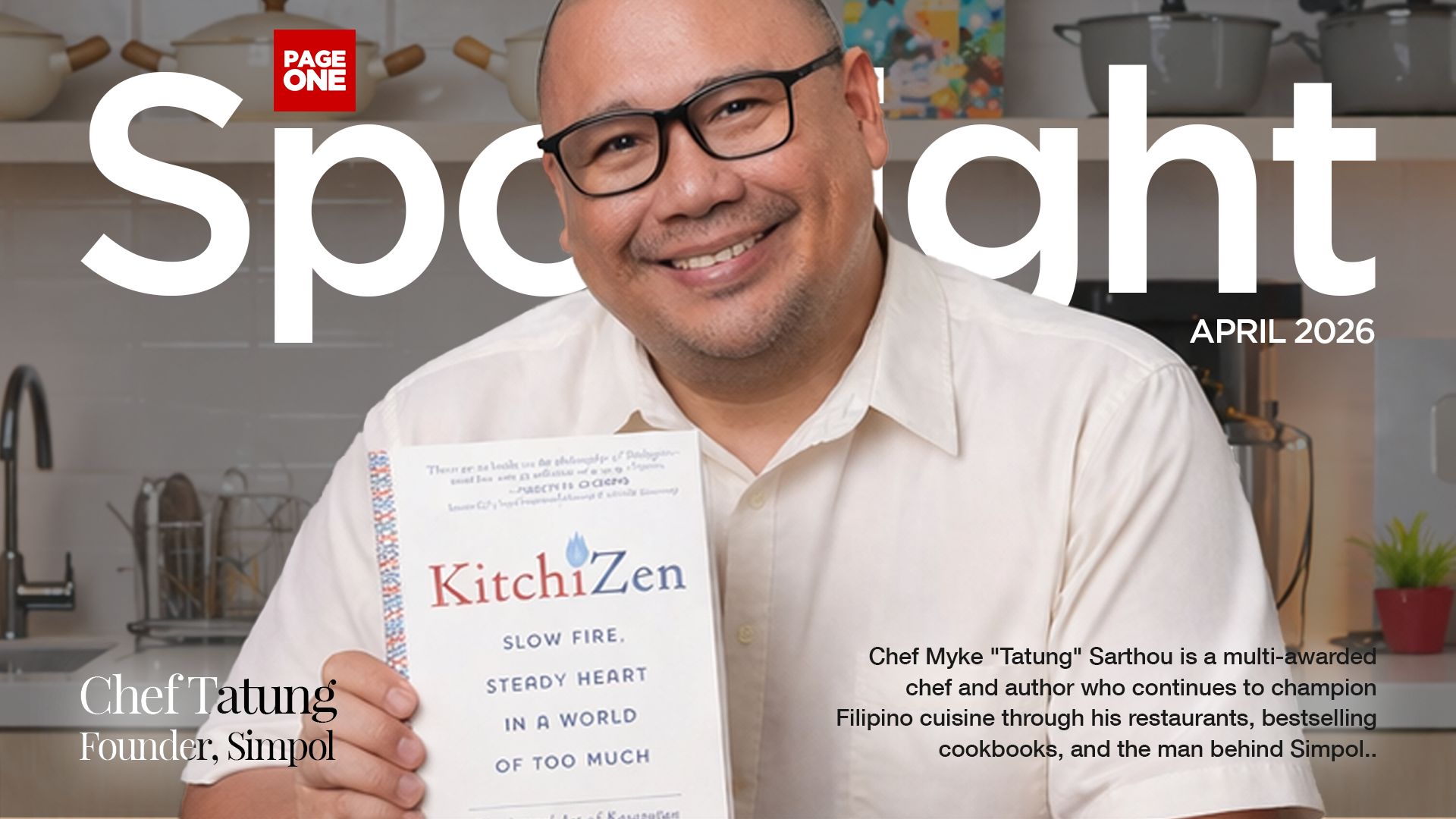
The evolution of Simpol into a broader platform reflects that shift. It is no longer just about demonstrating how to cook, but about exploring what cooking can teach. In his work, including KitchiZen: The Simpol Art of Kasapatan, the lessons extend beyond the kitchen. They move into ideas of patience, restraint, and understanding what it means for something to be enough.
Carrying the name “Chef Tatung” today comes with expectations. It represents a set of values people have come to recognize: simplicity, warmth, and a deep connection to Filipino culture. From the outside, that weight is easy to assume.
“Yes and no,” Chef Tatung says when asked if it feels heavy.
He acknowledges the expectations, but he does not allow them to redefine who he is. Behind the name remains the same person who never set out to perform or to seek recognition.
“I’m not a performer,” he says. “What I love is the work itself.”
That work has always returned to the same place. The kitchen. The act of sharing food. The stories that come with it.
At the core of Simpol is a belief Chef Tatung has never allowed to shift.
“For me, Simpol has never just been a brand. It has always been a philosophy.”
That philosophy is rooted in honesty. Food should not intimidate. Culture should not exclude. The kitchen should remain a space where anyone feels they belong. Filipino cooking, as he sees it, has always carried values of generosity and resourcefulness. You cook with what you have. You share what you can. You make people feel cared for.
Those ideas extend into a larger understanding of life. Concepts like loob, kapwa, and kasapatan reflect a way of seeing the world where enough can already be enough. In cooking, as in living, more is not always better.
“In the kitchen you learn that more heat doesn’t always make a dish better,” he says. “Sometimes the real skill is knowing when to stop.”
It is a quiet philosophy, one that does not demand attention but stays with you once understood.
Long before the platform, the books, or the public identity, there was simply a boy in a kitchen, watching and wondering. Everything that followed did not come from a desire to build something big.
It came from something much smaller, and far more personal.
The simple act of wanting to feed the people he loved.


