



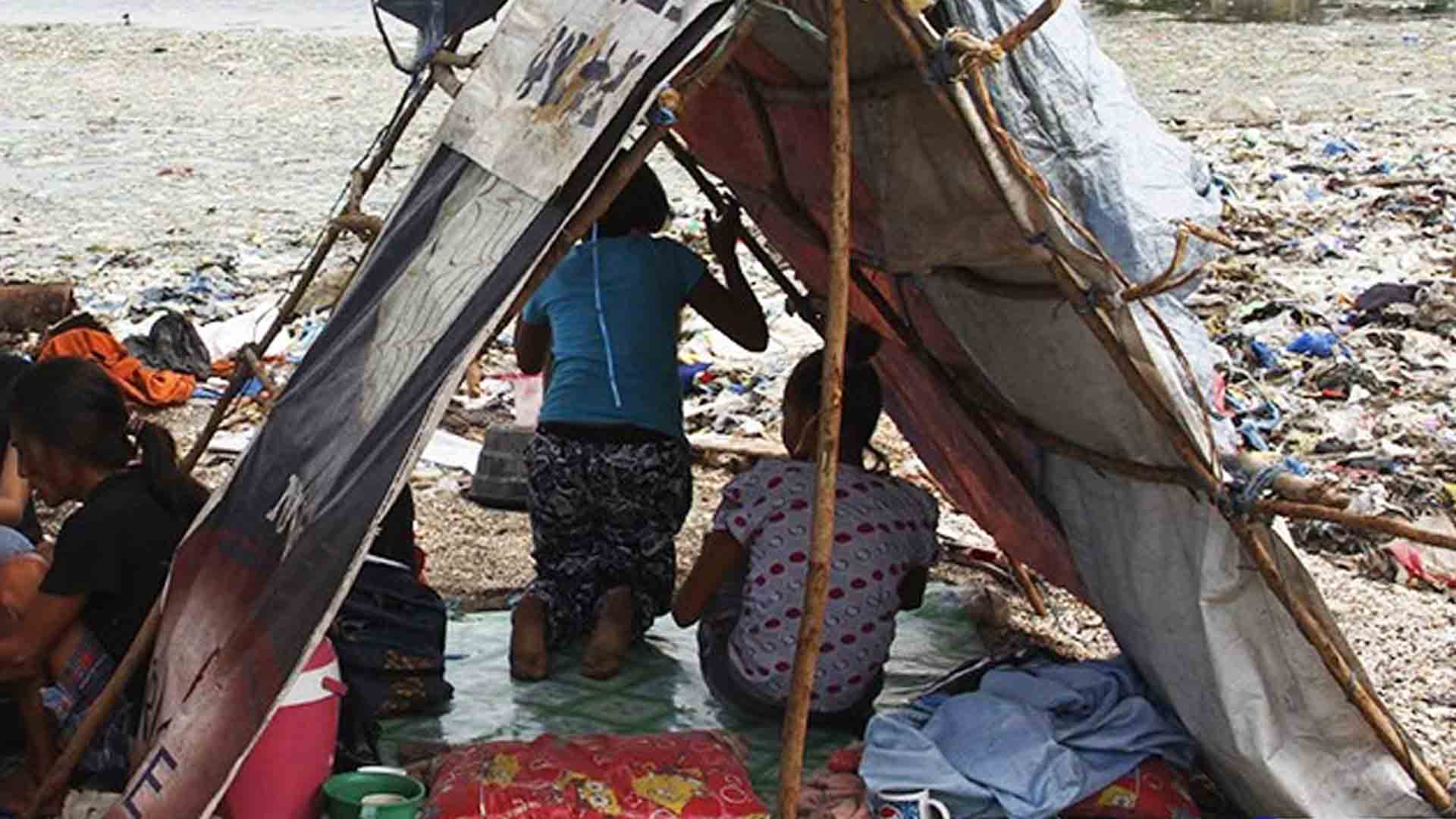






The Duterte administration, through the Zero Hunger Task Force, reiterated on Wednesday its vow to eradicate hunger as it identified six key result areas (KRAs) the government would focus on to achieve food security in the Philippines.
The KRAs include reviewing and rationalizing existing policies; ensuring available and affordable food; securing nutrition adequacy; securing food accessibility; ensuring resiliency in case of emergency; and ensuring awareness and people participation.
In a virtual presser, Cabinet Secretary Karlo Nograles, chair of the Inter-Agency Task Force (IATF) on Zero Hunger, said the task force would be divided into six technical working groups to deliver on each KRAs.
“With pressing issues of involuntary hunger, food security, malnutrition, child wasting, child stunting, mortality and the like persisting even more amidst this Covid-19 crisis, there is a pressing need to take a whole-of-government approach and with all stakeholders involved,” he said.
Nograles said the 15 member agencies of the task force are currently preparing the National Food Policy based on the six KRAs. At the same time, it is looking at “areas of convergence” where the private sector, including development partners and international organizations, could enter to join the zero hunger campaign.
“Programs, activities, and projects related to hunger are being threshed out further to connect and link them and make our solutions cohesive and sustainable so we can systematically end hunger in our lifetime,” he said.
Among these programs is the Enhanced Partnership Against Hunger and Poverty (EPAHP), which seeks to create an “empowering environment” by connecting farmers’ associations to institutional buyers.
Through this initiative, banks and credit facilities are also given the assurance that they can lend to these organizations with very minimal risks because these groups are now linked to the government as their primary customers, Nograles said.
He noted that all regions, except Region 6 whose launch is set next week, have an EPAHP program running.
“We’ve linked up agrarian reform beneficiary organizations to institutional feeding programs like the Bureau of Jail Management and Penology and the Department of Health… To put it bluntly, all regions now have an EPAHP program running and then we’re gonna do a second round to get more farmers involved, more government agencies involved,” he said.
The task force has also initiated talks on ways to implement similar programs with the Department of Education and the Department of Social Welfare and Development, he added.
‘No stopping’
The Zero Hunger Task Force was created through Executive Order No. 101 to coordinate responsive and effective government efforts to ensure food security in the country.
Its creation is also anchored on the United Nations Agenda for Sustainable Development, which indicates the objective of ending hunger and promoting sustainable agriculture by 2030.
Nograles, meanwhile, shared that even the UN has anticipated that “not many countries if at all any country” would be able to hit the 2030 zero hunger goal due to the ongoing Covid-19 pandemic.
“That being said, that will not stop us. At least, for the Philippines’ standpoint, our government will not stop from trying, that’s the reason why we’re creating that roadmap still on the target of 2030 as the ultimate goal,” he said.
Nograles said one of the task force’s main objectives is the launch of the National Food Policy.
“We don’t have the luxury of time, we only have until 2022 under this current administration that’s why it’s very clear to us that one of our major deliverables is that National Food Policy. At the very least, if we create that, that would be the road map for the next administration so that they don’t have to start from scratch,” he said. (PNA)


