



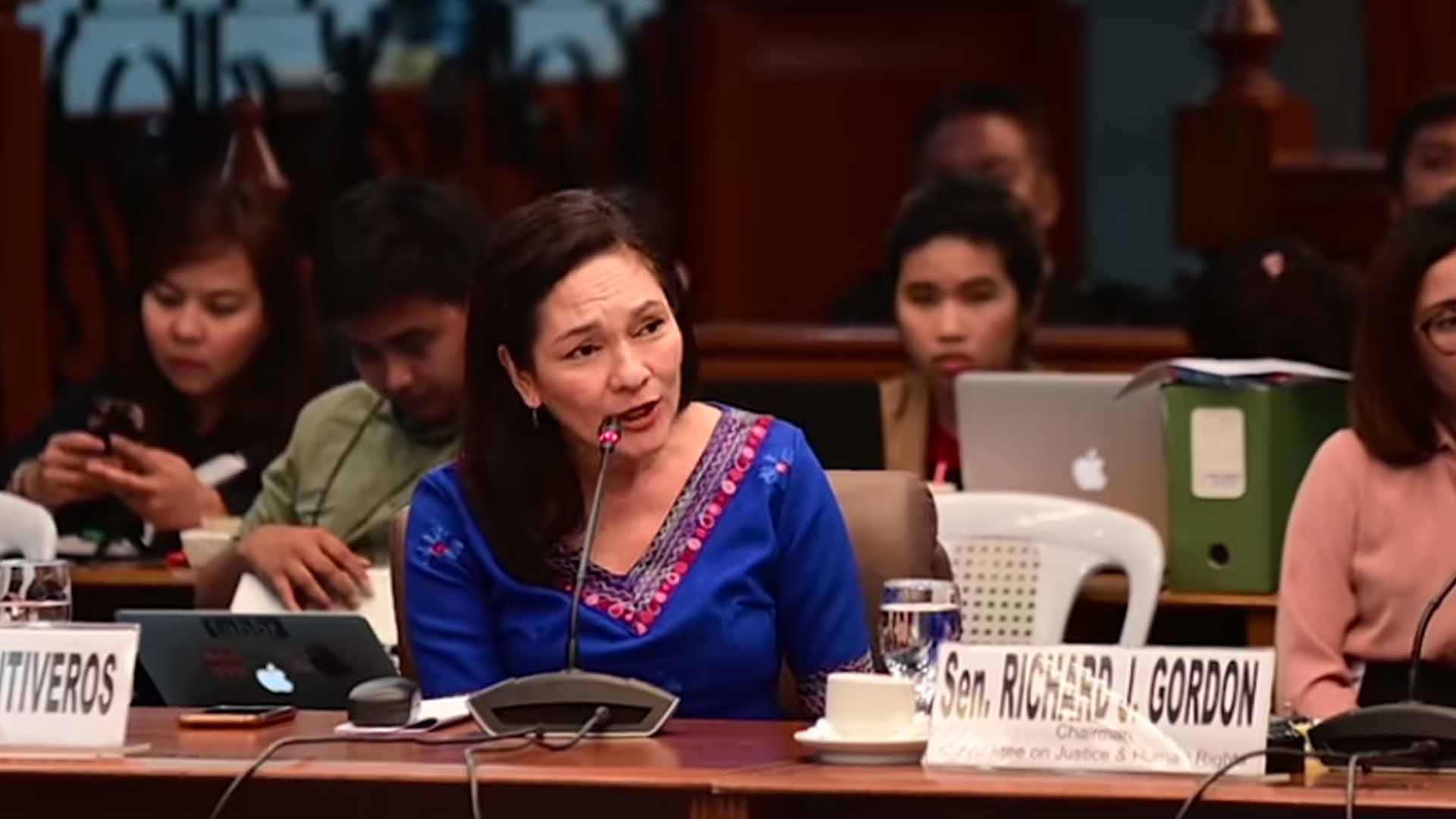






With the country’s housing agencies “overstretched and overworked,” government should partner with local government units (LGUs) and private developers to connect more poor families with socialized housing programs, Akbayan Senator Risa Hontiveros said.
At the budget hearing of the 2020 budget of government housing agencies, Hontiveros called on government to start a “review, expansion and promotion of partnerships towards housing initiatives.” Hontiveros chairs the Senate Committee on Finance – Subcommittee “H,” which tackles the national budget for the housing sector next year.
“Government should not limit its options when it comes to providing poor and homeless families with decent and affordable housing. We should link up and identify possible partnerships with institutions both public and private which are willing and able to help our people,” she said.
Among those mentioned by Hontiveros as possible partners are local government units, private developers, and even the academe. She also noted that both the National Housing Authority (NHA) and the PAG-IBIG or Home Development Mutual Fund are in fact already engaged in public-private-partnerships (PPP).
“Let’s see which partnerships work and are effective in allowing us to hit more of our housing targets. Successful ones should be scaled up and replicated in the long-term,” she said.
Partner institutions, Hontiveros said, are also particularly needed in the implementation of the proposed targeted consumer subsidies such as direct cash, vouchers or lower loan terms for poor families. In its 2018 report, the National Economic Development Authority said that such consumer subsidies may be a more cost-effective delivery mechanism to poor families than producer subsidies (such as VAT exemption).
Hontiveros said such reforms will ensure that government will not miss its own goals in the housing sector, even if housing agencies like the NHA are currently “overburdened” due to their many commitments.
Apart from building houses for indigents and poor families, the NHA is also tasked to build housing projects for uniformed personnel, as well as people who were relocated away from tourist sites and infrastructure projects. The agency also handles post-disaster work for people whose homes were affected by the conflicts in Marawi and Zamboanga and by typhoon Yolanda.


