



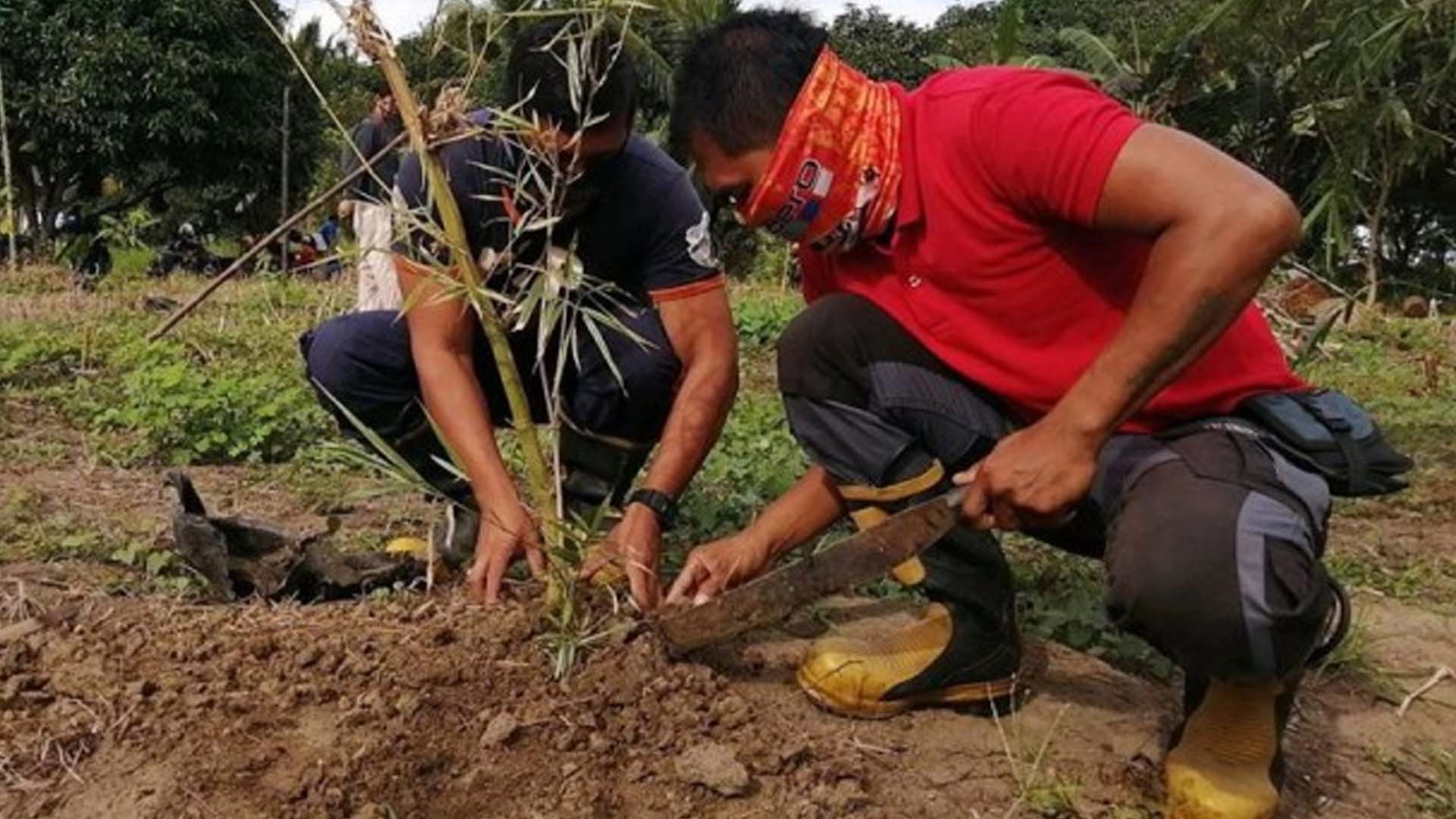







The enactment of a legal framework to guide the local bamboo sector is long overdue, and stakeholders are hoping that President Ferdinand R. Marcos, Jr. will highlight this fact in his second State of the Nation Address (SONA).
In an interview on Tuesday, Rene “Butch” Madarang, executive director of the Philippine Bamboo Industry Development Council (PBIDC), said a favorable mention during the SONA on July 24 may serve to hasten the Senate’s passage of the proposed Philippine Bamboo Industry Development Act.
The appeal came barely a month after the House of Representatives passed its version of the proposed law (House Bill 7941).
“Any statement (during the SONA) will do. What is important is that he (PBBM) can call public attention to the importance of bamboo in poverty alleviation and climate change mitigation,” Madarang told the Philippine News Agency (PNA).
He said the PBIDC is also in the process of reaching out to key senators in hopes of convincing them to fast-track the bamboo industry bill’s approval.
For his part, PBDIC vice chair and former House deputy speaker Deogracias Victor Savellano also appealed for the immediate approval at the Senate’s equivalent to HB 7941, which he said, “augurs well for the bamboo industry that has been waiting to be developed for years now.”
“The Marcos Administration can be known for a bamboo-led industrial development given immediate ratification of this bamboo law. We just have five years now, but surely we can manage the resource that we already have in abundance,” Savellano said in a statement.
The PBDIC said under the approved House version, private plantations registered with the Community Environment and Natural Resources Office (CENRO) of the Department of Environment and Natural Resources (DENR) are exempted from securing a cutting permit for the harvesting of bamboo.
They are also exempted from securing a transport permit for the bamboo materials as well as from the payment of forest charges and other fees for taxes that LGUs may impose, the council noted, citing incentives to be enjoyed by bamboo industry investors.
The PBIDC, an agency attached to the Department of Trade and Industry, is tasked with convening producers of raw materials, processors, marketing and promotion companies, and national and local government and agencies to discuss strategies to revitalize the bamboo industry
Meanwhile, a 2020 study by the DENR placed the global market for non-timber forest products, including bamboo, at USD17 billion.
More recently, former banker and nickel miner Isidro Alcantara Jr., now a bamboo and agri-tourism advocate, estimated that the Philippines can generate up to USD3 billion annually if it manages to plant 10 percent of China’s bamboo area. (PNA)


