



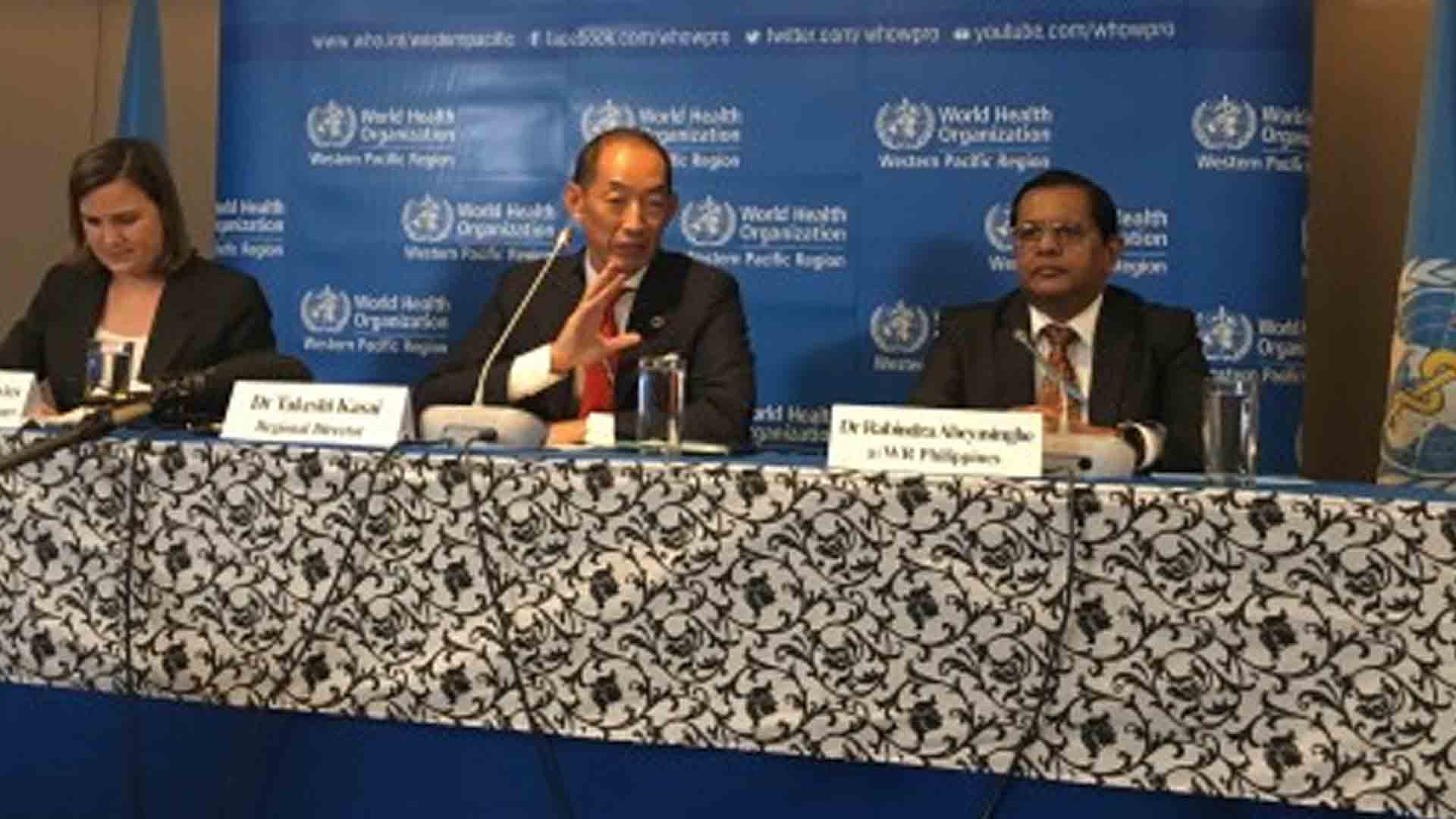






Health ministers and senior officials representing member-countries of the World Health Organization (WHO) Western Pacific Region have agreed to prioritize the organization’s work in the next five years in line with its goal to make the region the healthiest and safest place in the world.
During the 70th session of the WHO Regional Committee for the Western Pacific, the committee endorsed “For the Future: Towards the Healthiest and Safest Region”, a policy paper developed by regional director Dr. Takeshi Kasai and his team which provides a strategic response to current and future health challenges in the region.
“The document is a shared vision for WHO’s work with the member states and partners in the region for the coming five years – a vision which builds on a proud history of health achievements and strong tradition of solidarity; and a story about the future, which we have written together,” Kasai said.
The priorities contained in the paper include health security; antimicrobial resistance; non-communicable diseases and aging; climate change, and reaching the unreached – people and communities still affected by infectious disease, and high rates of maternal and infant mortality.
During a press conference on Monday Kasai said the harmful impact of food marketing is another concern that must be prioritized in the region.
“Children today have much easier access to sugary drinks or processed foods which are much cheaper and more accessible compared to healthier alternatives. In some parts of the region, more than 90 percent of food and drinks marketed to children are high in saturated fats, trans fats, sugar and salt and the marketing of feeding formula is widespread and this undermines breastfeeding,” he added.
Citing that the region is extremely dynamic and rapidly changing, Kasai said the WHO must stay ahead of the curve by adapting to change.
“While countries have many challenges in common, each is unique. We are committed to continuing to provide support to every country for their specific priorities…it’s clear that we need to focus on the most pressing health challenges of the future. We will work with countries to ‘future-proof’ their health systems,” he added. (PNA)


