



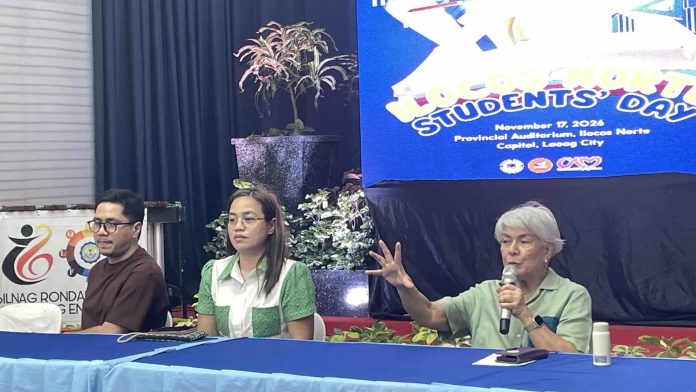






Schools across Ilocos Norte are strengthening their science-based disaster preparedness following the turnover of weather monitoring systems provided by the provincial government on Tuesday.
Governor Cecilia Araneta-Marcos told student leaders during a Students’ Day forum at the Capitol auditorium that the purchase of 23 units of all-weather monitoring systems – funded under the Ilocos Norte government’s Special Education Fund for PHP25 million – aims to equip schools with access to localized weather information to help school administrators, teachers, and students better understand changing weather conditions and prepare for potential hazards.
The monitoring systems are expected to support early warning and decision-making, particularly during typhoons, heavy rainfall, flooding, and other weather-related emergencies that could disrupt classes and threaten school communities.
“This is part of our proactive measures to come out with better and accurate decision to suspend classes or not during bad weather,” Araneta-Marcos told the students.
Beyond improving disaster readiness, the equipment also provides opportunities to integrate practical weather observation into science education, allowing students to appreciate the role of technology and scientific data in understanding environmental conditions.
“Through this, I hope that I will no longer get bashing (on) social media from students with regards to suspension of classes,” she said.
The provincial government’s initiative aligns with the directive of President Ferdinand R. Marcos Jr. to ensure that decisions such as class suspensions are guided by scientific data, localized risk assessments, and established safety standards.
It also highlights the importance of investing in school-based disaster risk reduction and management while promoting science literacy among young learners.
Access to localized weather data can help schools prepare for potential class suspensions, flooding, and other hazards that may disrupt learning activities. (PNA)