



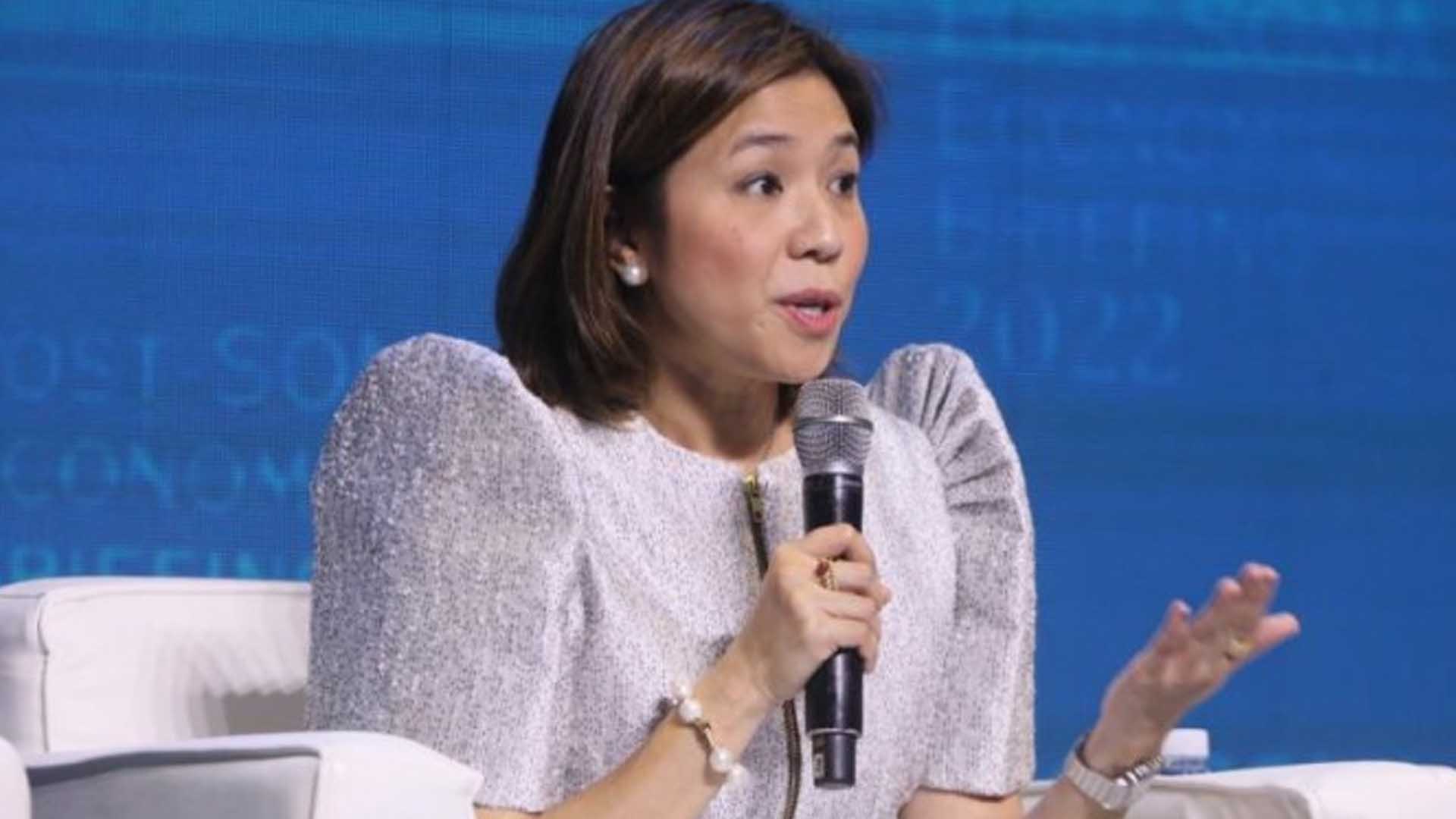






The Marcos administration would continue implementing its economic strategies to further tame inflation, Budget Secretary Amenah Pangandaman said Tuesday.
Pangandaman issued the statement after the Philippine Statistics Authority (PSA) reported that the country’s inflation rate further slowed down to 6.1 percent in May from 6.6 percent in April 2023.
Pangandaman welcomed the PSA report and was bullish on the slower pace of increase in the prices of goods and services in the coming months.
“This is a positive development. The economic team expects that our country’s inflation rate shall continue to decline. Our kababayan (countrymen) can be assured that we will remain steadfast in implementing strategies to keep the inflation rate well within target,” she said.
“This goes to show that the economic strategies of the administration of President Bongbong Marcos is on the right track. Our whole-of-government approach is working,” Pangandaman added.
Inflation slowed for a fourth consecutive month in May.
The latest figure is also the lowest year-on-year inflation rate since July 2022, bringing the year-to-date average inflation to 7.5 percent.
According to the PSA report, the downward trend of the headline inflation was primarily caused by transport at -0.5 percent from 2.6 percent annual increase in the previous month, while food and non-alcoholic beverages also reflected a lower inflation rate of 7.4 percent from 7.9 percent in April 2023.
The third main source of the May 2023 inflation deceleration were restaurants and accommodation services, which registered slower inflation at 8.3 percent from 8.6 percent in April 2023.
Removing bottlenecks
In a Palace press briefing on Tuesday, Trade Secretary Alfredo Pascual said the latest inflation data was discussed during a sectoral meeting with President Ferdinand R. Marcos Jr. at Malacañan Palace in Manila.
He said the government would work on addressing the bottlenecks to further ease inflation.
“Actually, ang solution nga diyan (the solution there is to) remove the bottlenecks, kasi (because) there are two types of inflation we are watching, ‘yung (the) food inflation at saka (and) non-food,” Pascual said.
“Doon sa food inflation one source of increases in prices is because of bottlenecks in the supply chain… So, ang solusyon doon (the solution there) is to make sure that the logistics are available to be able to deliver the harvest where the demand is,” he added.
On May 26, President Marcos signed Executive Order No. 28, creating the Inter-Agency Committee on Inflation and Market Outlook (IAC-IMO) to improve the coordination and action of government agencies in managing inflation and mitigating the effects of rising commodity prices on the Filipino people.
The IAC-IMO is tasked to monitor the main drivers of rising prices of basic goods, particularly of food and energy, and their proximate sources and causes.
It is also directed to assess the supply-demand situation for essential food commodities during the cropping period to allow periodic updating as new information becomes available.
The IAC-IMO is also mandated to assess the possible impact of natural and man-made shocks on the supply of key food commodities, as well as to monitor the data necessary to assess food prices and the supply and demand situation. (PNA)


