



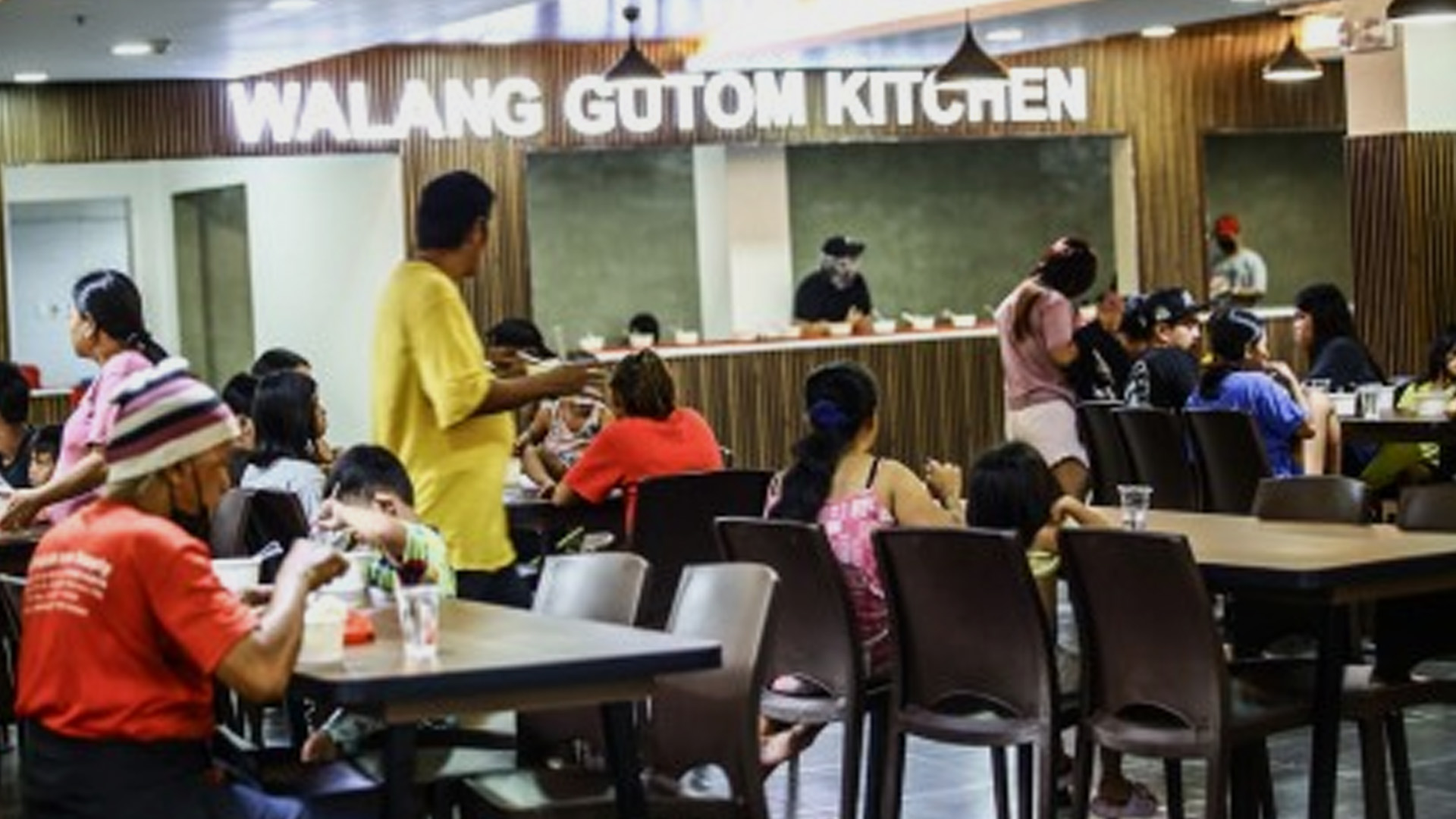






The Department of Social Welfare and Development (DSWD) is looking to expand its “Walang Gutom” Kitchen program which provides feeding and food credits to poverty-stricken Filipinos.
The move comes after a Social Weather Stations (SWS) survey showed 52 percent of the respondents consider their families poor, slightly higher from 50 percent in January and 51 percent in February. Hunger incidence also rose, according to a prior survey.
In a press briefing in Malacañang on Monday, DSWD Assistant Secretary and Spokesperson Irene Dumlao acknowledged the complex nature of hunger and poverty, and the agency is strengthening its efforts through a multi-pronged, inter-agency approach.
She said the DSWD is eyeing the expansion of the “Walang Gutom” Kitchen project beyond Metro Manila, targeting the Visayas, Mindanao, and northern parts of the metropolis.
“Iyan po ay dahil pinag-aralan natin with our partners particularly from the private sector, na dito rin po iyong mataas iyong bilang ng mga individual—families and individuals in street situations (That’s because we studied with our partners particularly from the private sector — that in that areas — the number of families and individuals in street situations—is also high),” Dumlao said.
She also cited the spate of typhoons that ravaged parts of the country last year, inflation, and income gaps as persistent challenges in the fight against poverty and hunger.
To help cushion the impact of these shocks, the DSWD continues to implement safety net programs such as the Assistance to Individuals in Crisis Situations (AICS), Ayuda para sa Kapos ang Kita Program (AKAP), and its flagship Pantawid Pamilyang Pilipino Program (4Ps).
The agency has also partnered with the Department of Labor and Employment for the Trabaho Para sa 4Ps program, which Dumlao said has already provided jobs to more than 3,000 beneficiaries.
Amid concerns about the effectiveness of existing poverty alleviation programs, Dumlao said evaluation studies are being conducted, including a review of the cash aid amount under “Walang Gutom”.
“Mayroon pong kinomisyon na pag-aaral para makita kung ano na ang naging epekto ng programa after several years… Kasama diyan kung sapat pa ba ang halagang tinatanggap ng mga benepisyaryo (There is a commissioned study to assess the impact of the program after several years… That includes whether the amount the beneficiaries are receiving is still sufficient),” she said. (PNA)


