



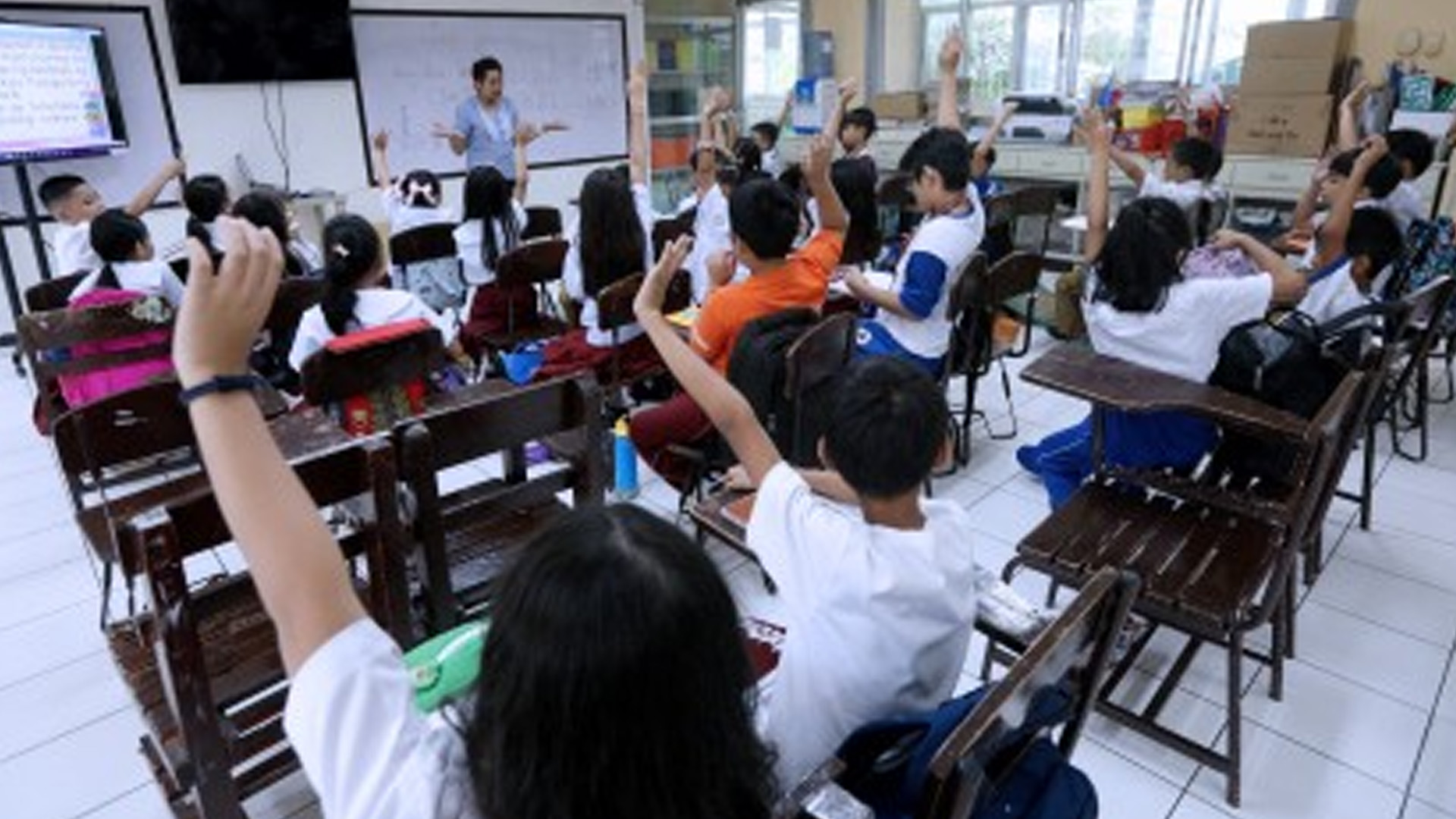






The Department of Social Welfare and Development (DSWD) has partnered with more schools in Eastern Visayas for the expanded Tara, Basa! (Let’s Read) tutoring program meant to aid struggling learners and assist college students in exchange for their tutorial services.
In this city, the DSWD signed an agreement with Leyte Normal University (LNU) and Eastern Visayas State University (EVSU), DSWD regional information officer Jonalyndie Chua said.
“Through this program, education students from EVSU and LNU will serve as tutors for the young learners. In return, DSWD will provide them with modified cash or educational assistance, helping them with expenses like transportation, boarding, and other school-related costs,” Chua told the Philippine News Agency on Friday.
The agency is still looking for school partners in Ormoc City.
From serving 1,981 struggling learners in 2024, the program targets to serve 5,040 non-readers elementary learners in Samar and the cities of Tacloban and Ormoc, according to the DSWD.
The number of tutors will increase to 1,510 this year from just 375 in 2024. Some 5,040 parents will participate in the program, up from 1,977 who took part last year.
Chua said the program not only benefits struggling young readers but also includes educating their parents. The idea is to create a holistic learning environment where parents, who may also have difficulty reading, can support their children in their studies.
“How can a child complete their assignments if their parents also struggle with reading? That’s why we aim to educate both the students and their parents, making the impact of the program even greater,” she said.
Under the program, qualified college students from low-income families will be deployed as tutors and youth development workers (YDWs) to conduct reading tutorials for struggling or non-reader pupils and carry out sessions for the parents of learners.
In return, they will receive a daily pay equivalent to the prevailing minimum wage (PHP435) in the region for 20 days within the first half of 2025.
Parents attending the sessions, with topics including effective parenting, dynamics of Filipino families, challenges in parenting and children’s rights, will receive a daily allowance of PHP235.
The measure is a reformatted educational assistance program for college students from low-income families, according to Chua.
The DSWD regional program management office has been conducting series of coordination meetings with the Department of Education and partner state universities and colleges to ensure that all social preparation activities will be done according to agreed timelines.
These include the selection and crossmatching of beneficiaries, orientation to would-be tutors and YDWs, capability-building activities, and community assemblies. (PNA)


