



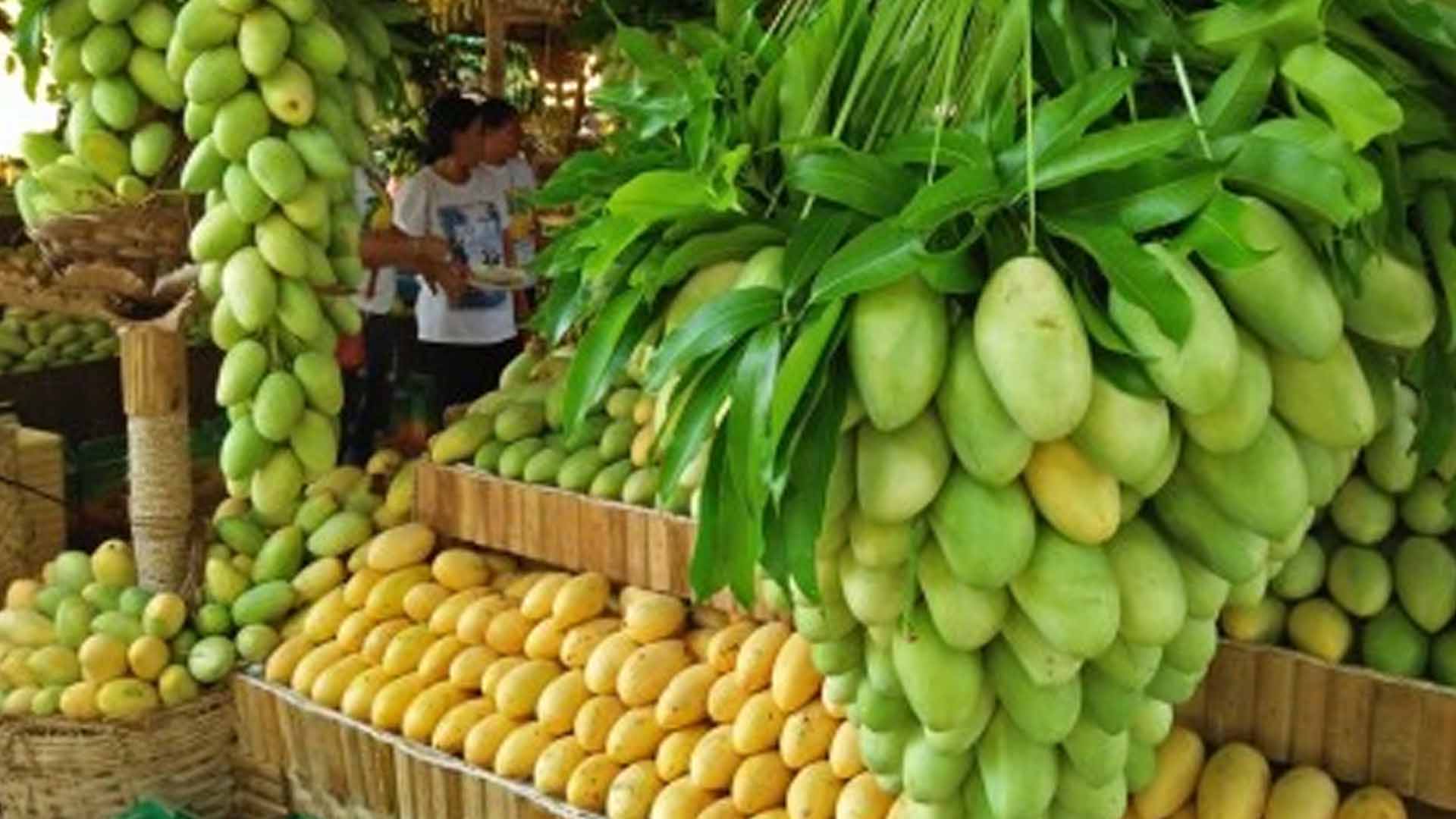






Guimaras expects an increase in the production of mangoes, its main products, due to the prolonged dry months.
Provincial Office for Agricultural Services (POAS) head Alvin Nava said mango production could reach 21,000 metric tons (MT), higher than last year’s 17,000 MT.
“Originally, mangoes were summer crops. So the prolonged hot weather is favorable,” he said in an interview Monday.
He said they have already induced mango production as early as the first two weeks of January in preparation for this year’s Manggahan Festival.
Two years ago, around one-third of the 6,000 hectares of mango plantation in the province were in production.
The Bureau of Plant Industry also provides grafted mango seedlings that bear fruit after five years.
Nava said they have observed that even those not induced are bearing flowers.
While the hot weather is favorable to mangoes, the POAS initially recorded around 2,628 hectares planted with rice, corn, and high-value crops that did not yield much due to the dry spell, with losses valued at over PHP17.8 million and 2,478 farmers affected since September last year.
Rice crops recorded the highest area affected with 2,572 hectares valued at PHP16.8 million; high-value crops consisting of vegetable varieties planted in 35.5 hectares recorded PHP783,000 in losses; and 20 hectares of corn plantation, with PHP160,000 in losses.
“Since last month, the Philippine Crop Insurance Corporation has been assessing the damage to crops,” he added.
Nava said the provincial government has been preparing for El Niño as early May 2023.
He said they identified alternative commodities with their municipal counterparts, while the Department of Agriculture Regional Office-Western Visayas provided vegetable seeds.
In June last year, the provincial government distributed 137 to 140 bags of yellow corn as an alternative commodity to palay.
The DA Regional Agriculture Engineering Division also held a survey to look for possible water impounding for future use. (PNA)


