



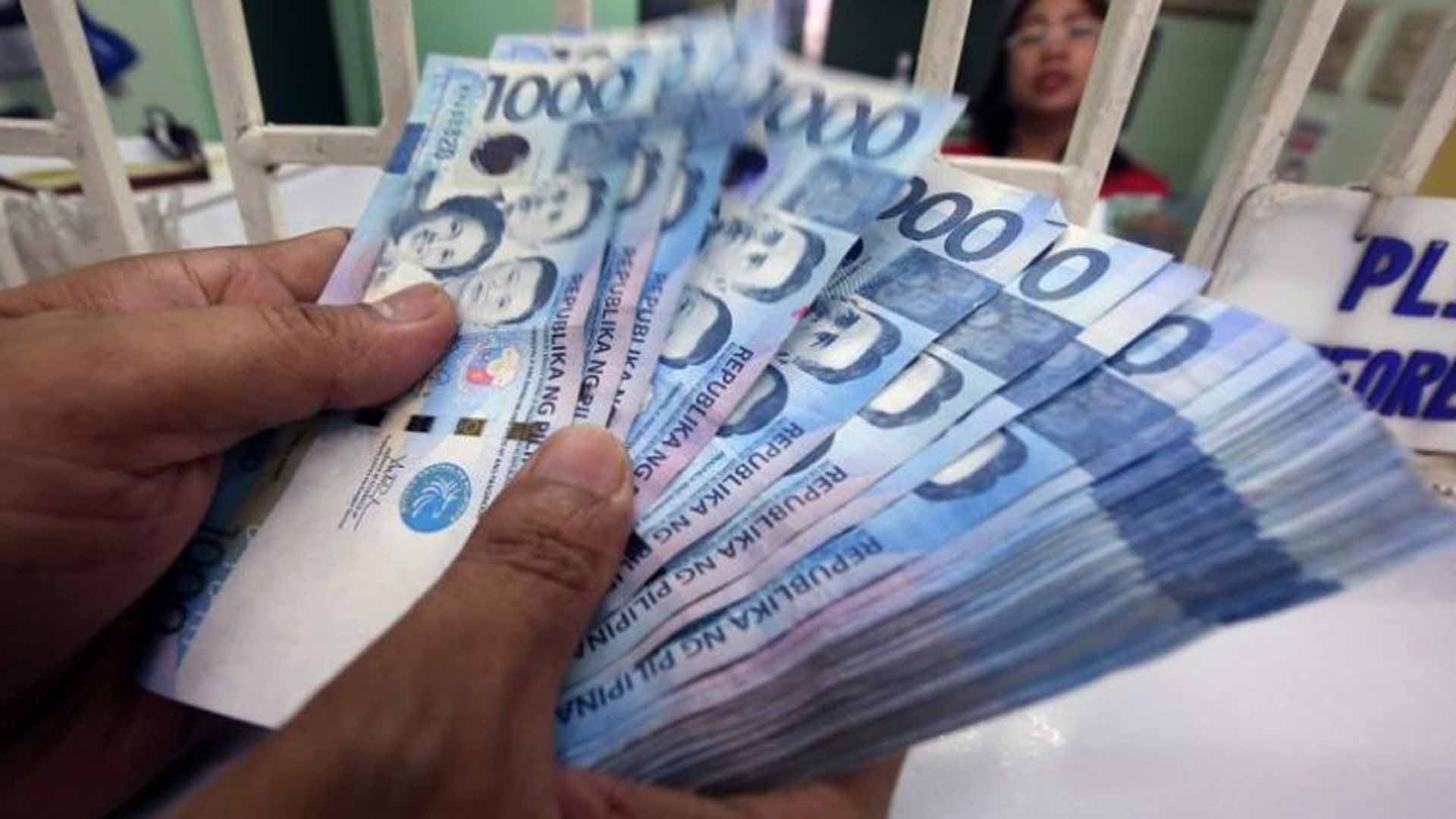






The Department of Labor and Employment (DOLE) has urged employers to support the electronic payment of salaries to their workers.
Labor Undersecretary Claro Arellano said instead of manual cash disbursements, the opening of formal accounts for payment of wages would be easier to verify and validate.
“A low financial inclusion among the wage earners may be a source of abuses against the workers and violations of labor laws as there can be difficulty in verifying and validating the payment of correct wages and other mandatory benefits,” he said in a statement issued on Wednesday.
Arellano added that only 6.6 percent of the country’s private sector wage earners receive their salaries through a formal account, which is a deposit or e-money account held in a supervised financial institution, citing the 2017 Global Findex report.
“A low financial inclusion among the wage earners may be a source of abuses against the workers and violations of labor laws as there can be difficulty in verifying and validating the payment of correct wages and other mandatory benefits,” he said.
The DOLE partnered with the Bangko Sentral ng Pilipinas to promote financial inclusion through the e-payment of wages and benefits.
The initiative is part of the National Strategy for Financial Inclusion which signifies the country’s commitment to pursue a state wherein there is effective access to a wide range of financial products by all.
Although there is no law or regulation yet, Arellano said the advantages of paying salaries through formal accounts.
“For the employers, electronic payment of salaries will not only cut the transaction, administration, and overhead costs but will also reduce the incidence of leakages during disbursements,” he said.
“For the employees, meanwhile, a formal account translates to easy access to financial products, including savings, credit, insurance, and investment,” Arellano said.
Among the groups in the workers’ sector identified by the Financial Inclusion Steering Committee which may immediately benefit from the e-payment of wages are the construction workers, bus drivers and conductors, kasambahay, factory workers, and workers in the retail and service industries.
The value of the payment of wages and salaries through formal accounts has also been acknowledged in countries such as Thailand, Qatar, India, Finland, Singapore, and Bangladesh. (PNA)


